

 Tribal Guide to Maritime Washington
Suquamish Tribe
Introduction to the Suquamish Tribe
Suquamish is life. Everything in my being that I know to be true comes from here.
Robin Little Wing Sigo (Suquamish)
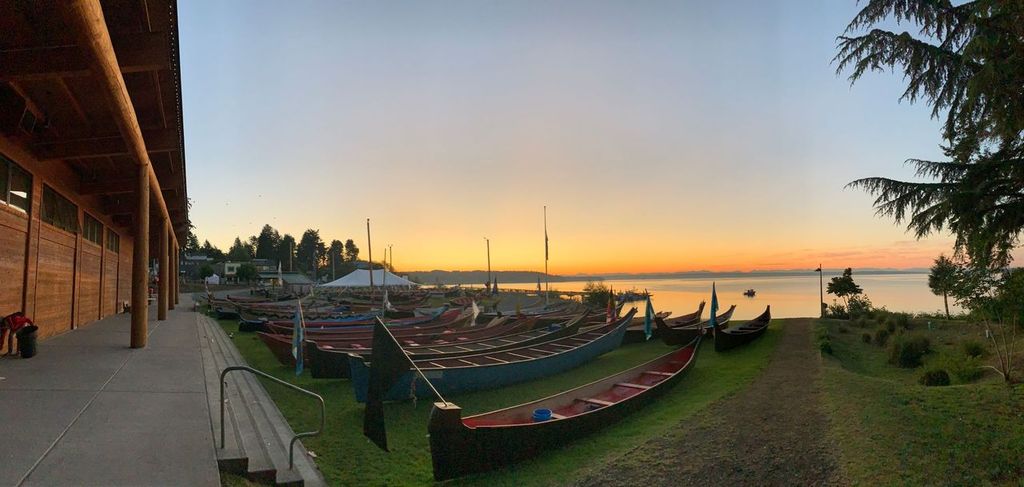
Since time immemorial, the Suquamish people have navigated the waterways of the x̌ʷəlč (a Lushootseed word for the Salish Sea). Traveling by dugout canoe, the Suquamish have sustained relationships with relatives at ancestral villages as widespread as Indian Island, Quilcene, Olalla, Seattle, and beyond. Nourished by abundant shellfish, kelp, and bounties of land and sea, the Suquamish maintain vibrant communities along the x̌ʷəlč today. ti txʷəlšucid gʷəɫ ti swatixʷtəd (the Lushootseed language belongs to this land).
The information offered here is not intended to represent a comprehensive or singular history; the stories shared here may differ from those told by others within the Suquamish Tribe or other Tribes. Any references made to usual and accustomed areas are intended for educational purposes, and should not be considered legal claims.
It’s rewarding just being out on the water, being around the water. The saltwater gets in your veins, and you don’t want it to go away. I just wouldn’t know what to do if I didn’t have it, if I wasn’t around the saltwater.
Bill Gemmell (Fisherman)
Visit: The Suquamish Museum
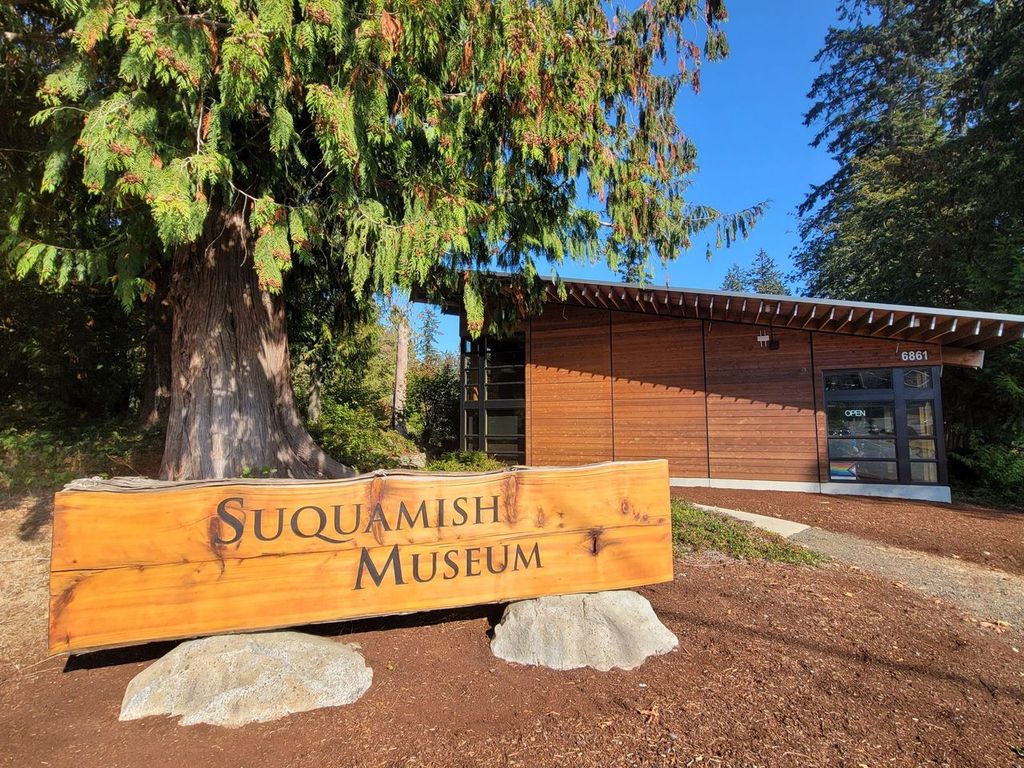
Already feeling called to learn more? Start your deep dive in Suquamish history and culture with a trip to the Suquamish Museum. A short 15-minute drive from both the Kingston and Bainbridge Island ferry terminals, the Suquamish Museum welcomes visitors to explore the dynamic, diverse cultural heritage of the Tribe. With impressive permanent exhibits, engaging temporary installations, and hands-on weaving and beading workshops, the Suquamish Museum offers something for visitors of all ages and backgrounds.
Our World Is Centered Around the x̌ʷəlč
Saltwater is the middle of our territory. Our food, travel, and trade all come from there, and our villages are along all the lands that touch the saltwater.
Barbara Lawrence (Storyteller)
Long before George Vancouver and his team began charting the waterways they dubbed “Puget’s Sound,” Suquamish ancestors had an intimate knowledge of the region’s diverse waterways. From the shellfish-rich shores of Indian Island to kelp forests at Doe-Keg-Wats and beyond, they wove a maritime network connecting them to sustenance, relatives, and spiritual meaning. Today, as in the past, the Suquamish orient life around the x̌ʷəlč, whether cresting waves during the annual Canoe Journey, sifting through sand for delectable clams, or hunkering down in the winter to share stories and cultural teachings.
We lived on the water my whole life. It was really nice—I never knew anything else. That’s where we spent most of the summer, on the beach. And then in the wintertime, we’d hang out down there. If we ever needed anything, all we had to do was go down to the beach.
John Bagley (Fisherman)
Listen to sõ-yôxw-tun Duran George as he shares about the values he learned growing up in Suquamish:
00:00 / 00:00
And we grew up on the beach constantly. We would learn very special values growing up on the beach. And simple, simple things, from our great-grandmother passing it down to my dad. Telling us when the tide goes out, you’ll never be broke or never go hungry. The tide goes in and out two times a day. The tide goes in two times a day, it goes out two times a day. Where, what lines clams and all the different species live on, on different shelf lines from low tide—in a minus—is, geoduck and horse clam. White necks and bluebills. Horse clam. Above them is butters. In the sand flats and the eel grass, there’s gonna be cockles. Above that, up in high, up in the high tide, is gonna be little necks and manilas. Oysters are wild and natural here—they’re all through Agate Pass, and we live on the other side of Agate Pass is Point Bolin and that’s our family property right down here. Very special and unique place, of being able to be fortunate enough to be able to have that, and then teach our children that.
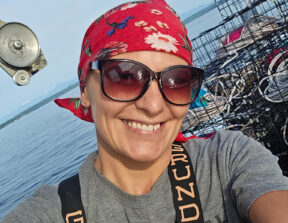
In this audio, sõ-yõxw-tunnot Shellene George recounts her own memories of growing up in and around the x̌ʷəlč:
00:00 / 00:00
It’s a blessing, to be able to grow up on the beach. When we were hungry, we picked apples on the trees. I used to fill up my shirt with apples on the way down to the beach, and then we’d hang out at the beach and we’d eat our apples and we’d gather stuff on the beach and snack around, and that’s how we lived as kids. A free, carefree life. We would swim—my brother was a fish! He wouldn’t get out of the water! We would be down there cold, and it would be raining, and Duran would be swimming, and we’re like: “Duran! It’s time to go home!” And he’s like: “No! Get in the water!”[…] When we were cold, we’d build a fire. When we were hungry, we found something to eat. And we had each other—we were a family, a really close family. And we had each other, our brothers and sisters—that’s what we had. We looked out for each other. And… that’s how we grew up. We grew up eating clams—my parents taught us how to dig. My grandma always said: “That as long as the tide goes out, you better not starve. No reason to starve—you should never go hungry. The tide’s out, the table’s set.” And so it’s important to us, in our culture, to take care of this water—to only take what we need. Never take too much. Always give back. When we catch that first salmon? You give it back, to the water. You catch that first anything of the year, you give it back.
This is the soul of Suquamish, right here.
Rob Purser (Suquamish)
History Bite: Old Man House
Throughout the Salish Sea, archeological findings confirm that Suquamish ancestors had at least thirty-three distinct villages. For generations, one of these villages held a stately longhouse on shores of the x̌ʷəlč, near what is today known as Agate Passage. Believed to be the largest winter house in the region, Old Man House provided a haven for Suquamish ancestors and their guests. Potlatches (ceremonial gift-giving feasts to mark important events), governance, and cultural learning took place at Old Man House. Between the archaeological record and the memories passed down by elders, it’s easy to imagine Suquamish elders bathed in the warmth of the hearth and cedar-scented air, sharing stories of Creator or the Basket Ogress with wide-eyed youth.
Suquamish ancestors and their guests enjoyed the rich community life that Old Man House provided. But in 1870, the U.S. government burned the longhouse down in its effort to erase the Suquamish Tribe. This dealt a devastating blow to the Suquamish people, who lost not just a home but also a treasured community and governing space.

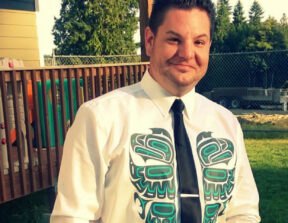
Listen to Ian Lawrence describe the intergenerational grief he associates with the razing of Old Man House:
00:00 / 00:00
It’s a sad story for us. The U.S. Army burnt that down. And there’s stories about Princess Angeline there, on her knees crying, trying to throw sand on the fire. Like she was the only one trying to put it out. And you look at her life: what was Suquamish like for her? What was her life being Suquamish?
Visit: xʷsəq’ʷəb (Old Man House Park)
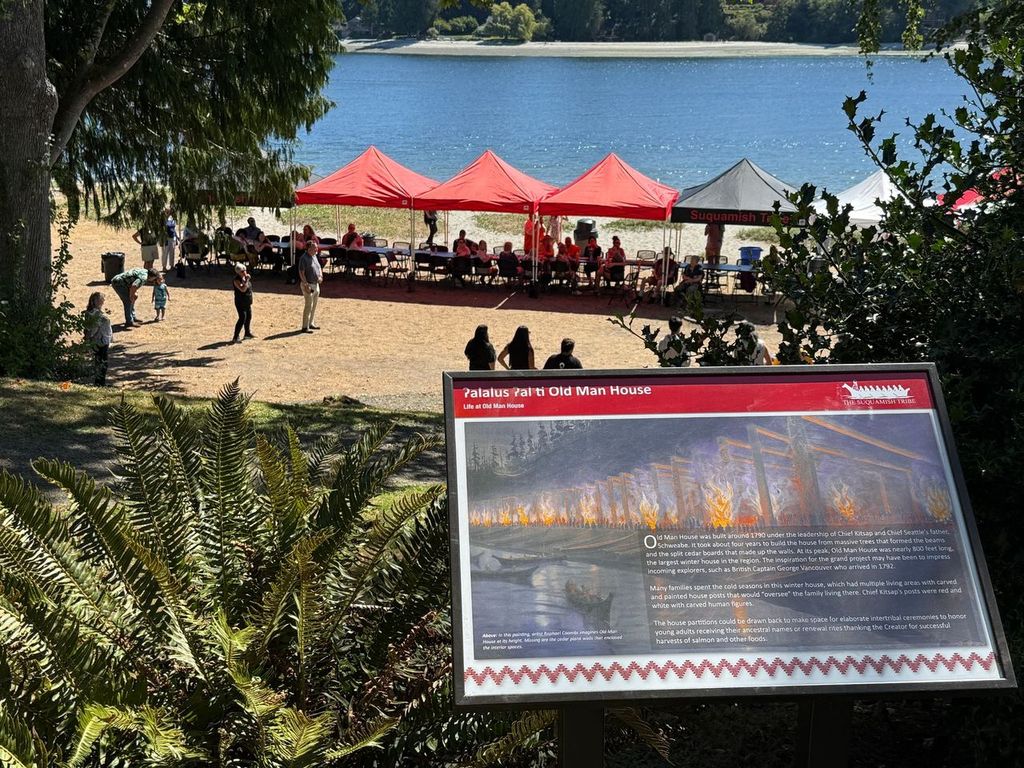
After more than a century, the State of Washington finally returned the xʷsəq’ʷəb (the Old Man House site) to the Suquamish Tribe in 2004. Signage at xʷsəq’ʷəb now tells a story of community care, injustice, and the Suquamish Tribe’s refusal to be erased.
Old Man House Park is open to the public and we invite people who want to learn more about the history of the Tribe and this particular sacred place to come down and read the panels looking out over the water. And maybe imagine yourself there, two or three thousand years ago.
Leonard Forsman (Suquamish Chairman)
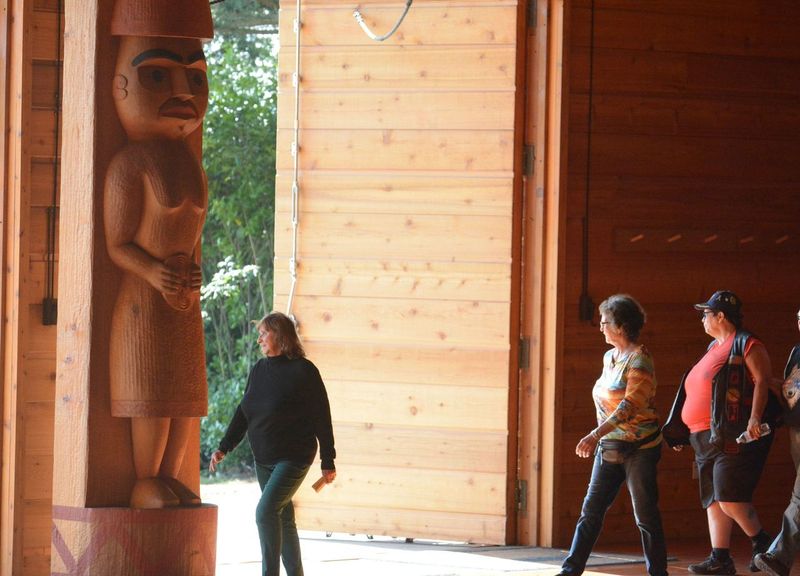
When you make the trek out to Old Man House Park, you can see the Suquamish Tribe’s gʷədᶻadadalʔtxʷ (House of Awakened Culture) a half mile north. Opened in 2009, gʷədᶻadadalʔtxʷ is a longhouse reminiscent of Old Man House. Today, the Tribe uses the gʷədᶻadadalʔtxʷ to convene for ceremonies, celebrations, and cultural activities. In both form and function, the House of Awakened Culture connects the legacy of Old Man House to the resurgence of Suquamish culture today. While visiting the park, you might be lucky enough to catch a glimpse of a Suquamish Canoe Family gliding through the water on their canoes.
The x̌ʷəlč Connects Us
We probably wouldn’t have picked “maritime” as our word. We talk about the Salish Sea. We talk about the ancestral highways that are the water.
Nigel Lawrence (Canoe Skipper)
Rather than something that separates people, the Salish Sea is a force that binds us together. This is especially true for the Suquamish Tribe, whose expansive waters offer both physical transportation via canoe and connection with ancestors through teachings and tradition. Whether paddling on Canoe Journey, learning histories of great floods, or harvesting shellfish, the x̌ʷəlč continues to anchor generations of Suquamish to this place, and to each other, no matter where in the Salish Sea they make their current home.
Maritime heritage is canoes. It’s our people being on the water.
Joshua Bagley (Suquamish Vice-Chairman)
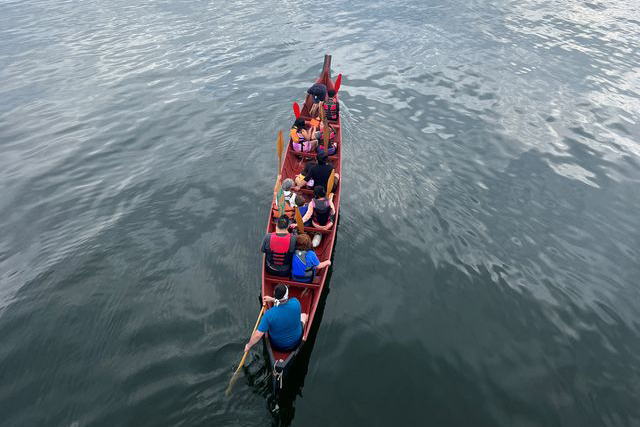
Listen to Shayna Bagley (fisherman) describe the sense of connection she experiences when paddling in a canoe:
00:00 / 00:00
But it’s a good feeling, though, being able to paddle out there and… to be in sync with ten other people that are in the canoe. For everybody to be on the same page, everybody to have the same goal, the same mindset. It’s like—it’s good. Because you all feel connected to each other, to the canoe, to your paddle, to the water. To just the whole goal of it. And, you know, you’re not supposed to have any kind of negativity while you’re in there, thinking bad or… You know, there’s etiquette. And you could feel when one person is off in there with you. You don’t get there as fast. Like it just—something’s pulling on the canoe. In the opposite direction. So it’s… it’s good to be mindful of your actions and your thoughts. Especially when you’re out there. Because you’re not in your world anymore. You’re in Atlantis!
Listen to Suquamish elder Betty Pasco describe her pride seeing young Suquamish girls learn to paddle in traditional canoes:
00:00 / 00:00
Anyway, he took these girls out on one of his canoes, and they just didn’t wanna get out! They just loved it. And so he taught them how to paddle, you know, in unison. And he taught them the traditional way. And so they did wonderfully well. But boy! They got some kind of ovation when they were paddling by the, you know, in front of the whole village.
Visit: Charles Lawrence Boat Ramp and the Suquamish Veterans Memorial
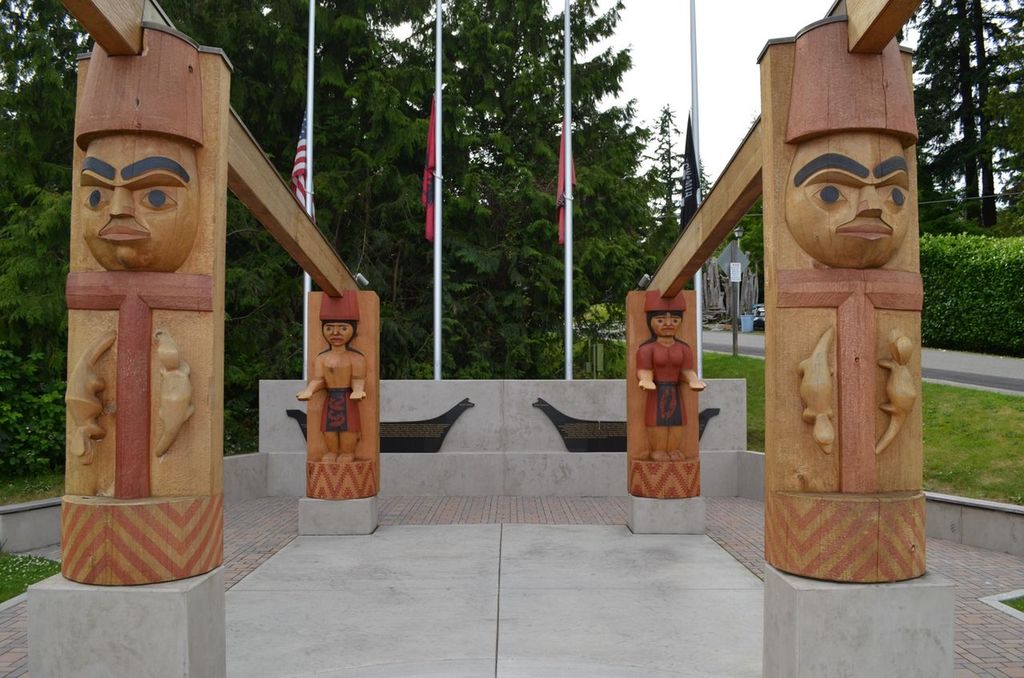
The Suquamish Waterfront is full of testaments to Suquamish ancestors whose legacy continues to reverberate throughout the Tribe. The Charles Lawrence Boat Ramp, located along Northeast Parkway overlooking Port Madison, honors Charles Russell Lawrence (1923-1962). Lawrence survived Chemawa Indian Boarding School, World War II’s Normandy Invasion, and tuberculosis. Despite these challenges, Lawrence became a revered Tribal leader with a steadfast commitment to Suquamish rights. A memorial pole dedicated to Lawrence serves as the boat ramp’s sentinel. Just up the hill from the Charles Lawrence Boat Ramp, a memorial to Suquamish Veterans stands guard. Symbolizing both home and warriors, the Suquamish Veterans Memorial honors those who have protected their community, past and present. For visitors craving salty air and whispering evergreens, nearby benches are a perfect place to rest, meditate, or enjoy a picnic lunch. Whether you’re traveling by car or on foot, you’ll enjoy the proximity (a quarter mile) to the Suquamish Museum.
x̌ʷəlč: An Ancestral Highway
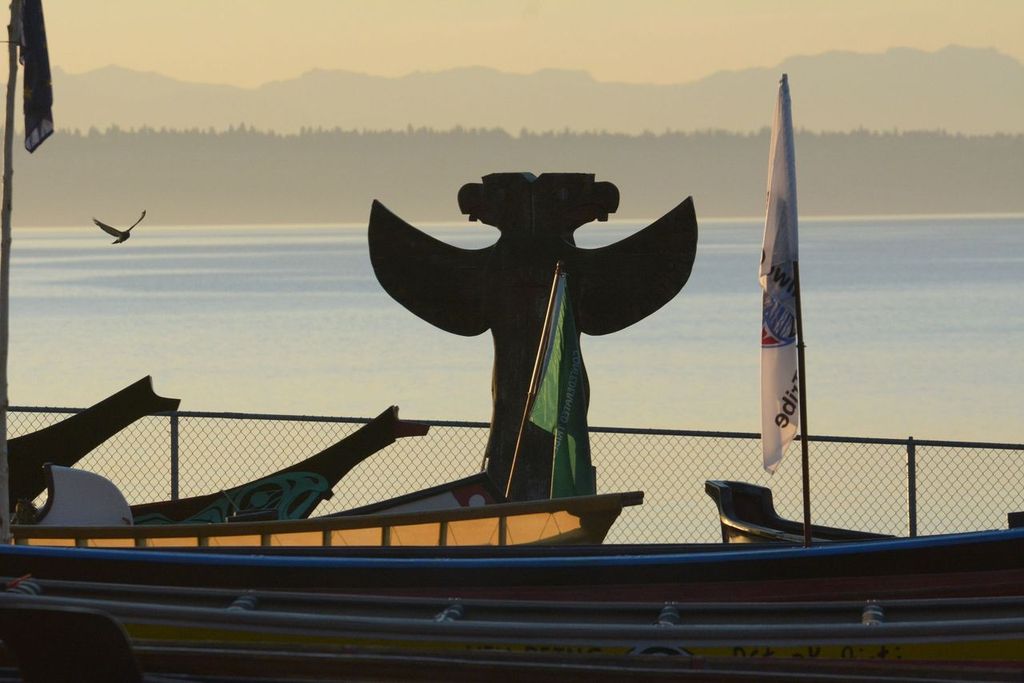
Canoes link the Suquamish people to both ancestors and descendants. Suquamish canoe culture carries future generations along their ancestral highway. Historically, the dense forest and mountainous terrain around Suquamish territory made land travel difficult. In response, Suquamish ancestors traveled mainly by water. They harvested cedar, carved canoes, and navigated waterways with generations of expertise. Today, many Tribal members have taken up paddles and continue to traverse the waters of x̌ʷəlč in a continuation of ancient traditions.
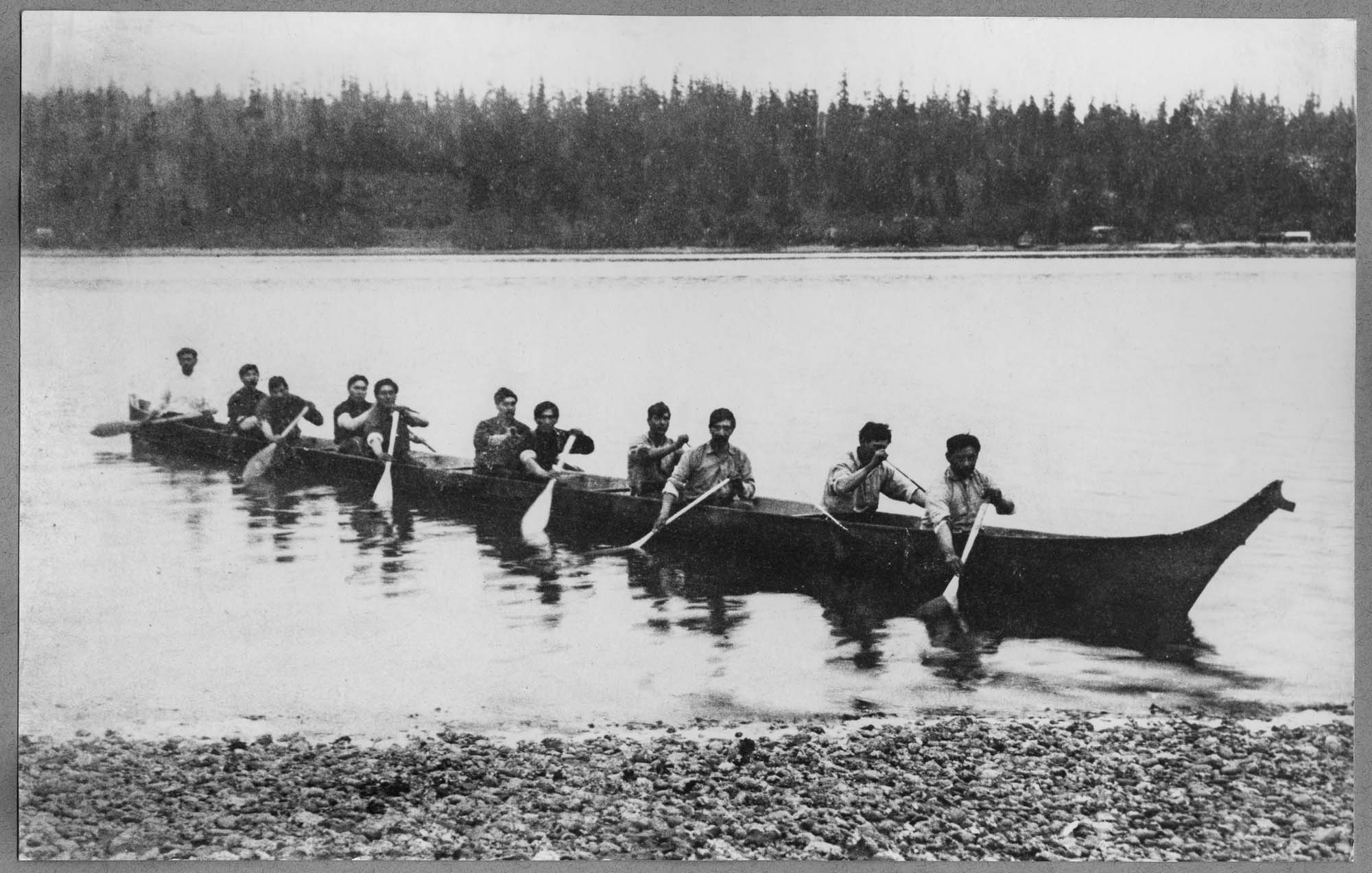
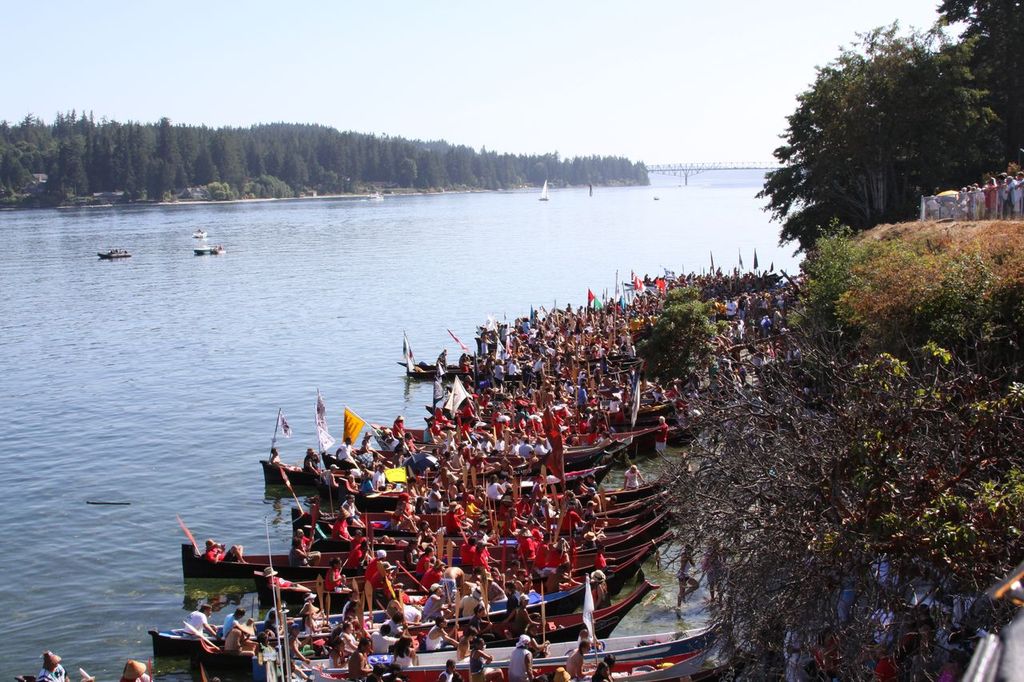
Here, Suquamish canoe skipper Ian Lawrence describes the importance of working with water conditions and canoe pullers alike:
00:00 / 00:00
As a skipper you’re trying to read all of that. You can read the water right now. So you’re able to read that. And so, if you need to work with that tide and wind—and you do! When you’re in a man-powered vessel, you need to work with the tide and wind. When the tide’s going out, you can ride back eddies. So when the tide’s working against you, you have to find the back eddy, And you can ride that back eddy forward—even when the tide’s going against you. You gotta read that water. And sometimes you can see it with the way the sun reflects off of it; sometimes you feel it. Um, sometimes they’re hard to find. Sometimes it’s a tough day, and when you find it you get so excited—you know that song, it’s an old rock song? Where they’re saying, “Black Betty”? [sings] MH Oh yeah. IL: When I find a back eddy that I’ve been looking for for a while, I say “Whoa-oh back eddy, bam-ba-lam!” You’re so excited that you found it, ’cause now it’s easier to paddle. And you know, a lot of times with youth, you don’t wanna tucker ‘em out, you don’t wanna make ‘em work too hard. You wanna show them that you’re working with them; you wanna show them that “Hey—we found this back eddy, it’s gonna easier now.” Or we’re working with this wind here. You never want somebody to feel like you’re going to just make them work work work. You wanna show them that there’s a reward, you know? And so I’m doing everything I can to show them that I’m working with them, that I’m maximizing their energy.
Listen to Suquamish canoe skipper Rob Purser describe how his experiences as a fisherman prepared him for steering canoes:
00:00 / 00:00
I wasn’t that experienced in the canoe when I took over as skipper. But where I was experienced is navigating the water. I knew tides, I understood tides and I understood currents. And direction. A lot of the basic things a skipper would need to know. And I guess the only thing I was really short on was protocol. But that was—quickly learned. Yeah, probably still my strength is understanding tides and currents. And um, how they can impact—how they impact your travel when you’re in a canoe.
History Bite: Reclaiming the x̌ʷəlč Through Canoes
In 1883, the Interior Department imposed the Code of Indian Offenses. This criminalized Indigenous cultural and religious practices. Suddenly, it was illegal for the Suquamish to maintain sacred relationships to the water through song, ceremony, or potlatch.
Listen to Suquamish elder Barbara Lawrence describe the impact of the Code of Indian Offenses:
00:00 / 00:00
So, we didn’t have access to canoes when I was a kid. Because I’m 67 now. So those didn’t—there was this big blank space between when our people weren’t allowed to carve canoes, or do anything cultural. Ceremonial, cultural, all that for… for like way before I was born, until 1978 when AIRFA happened. And that’s when the doors opened for us. Now, it wasn’t instant, because we still had to, as a Tribe, as a community, build up enough money, and then find resources and people who knew—who still knows language? Who still knows weaving? Who still knows carving? All that kind of stuff, because everybody when it was prohibited, only people who were able to keep it going in secret, you know, still had some of that knowledge.
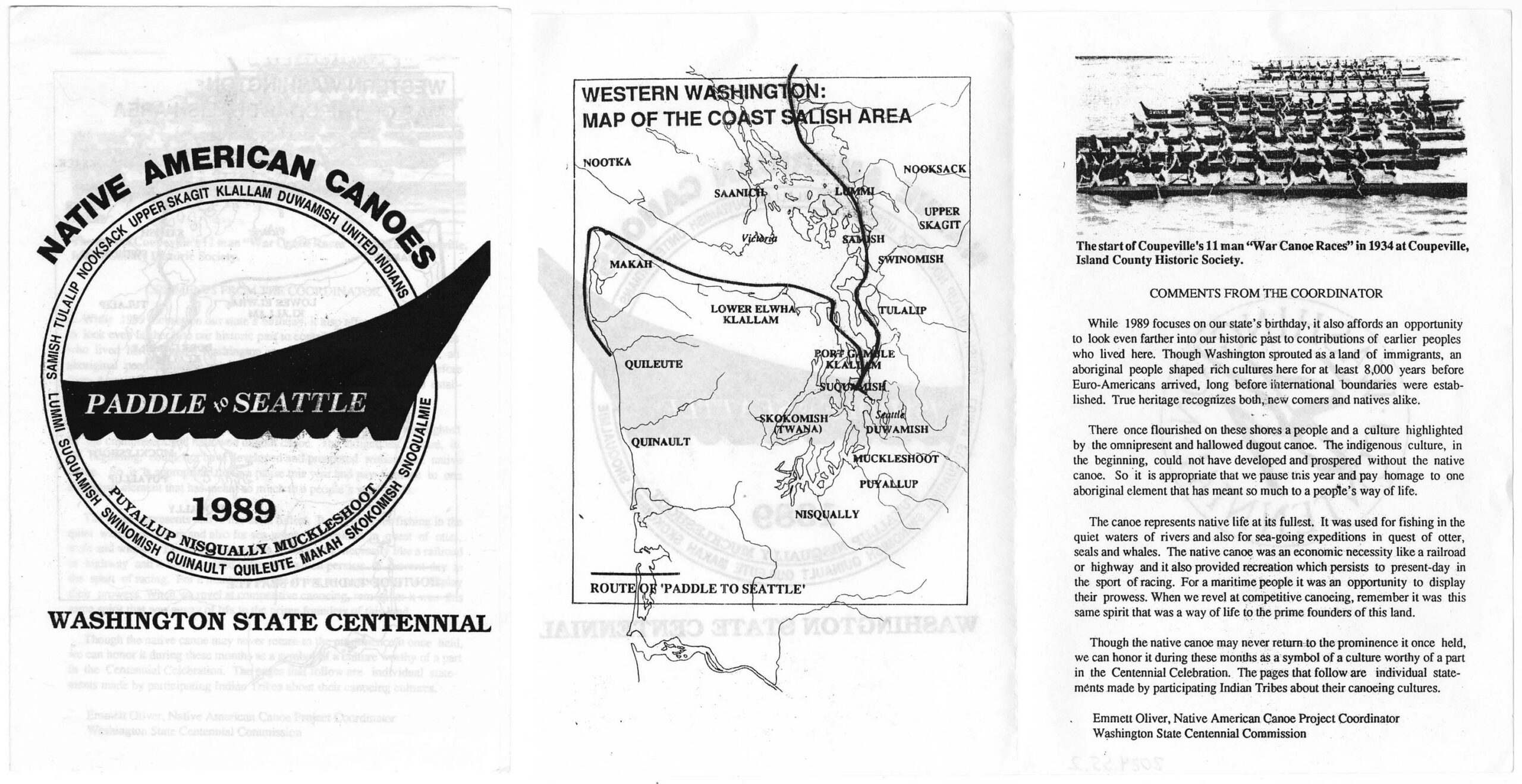
The 1978 American Indian Religious Freedom Act (AIRFA) prompted Tribal nations to bring banned practices out of hiding. Years of cultural revitalization followed. In 1989, the Suquamish Tribe joined sixteen other Tribal nations in the Paddle to Seattle. Forty canoes from Canada and Washington traveled from Suquamish to Golden Gardens beach in Seattle, where they celebrated enduring canoe culture.
Listen to the following stories of Suquamish Tribal members Barbara Lawrence and Nigel Lawrence explain the groundbreaking event that sparked canoe culture’s revitalization—and which launched from Suquamish shores:
00:00 / 00:00
So even though I was involved in the Centennial Commission from the beginning, and in the planning process of Paddle to Seattle and all that kind of stuff – I had no idea that it was gonna open up not just canoe carving, but paddle-making, and cedar weaving, and language speaking, and songs, and ceremony. And then multiply every year, bigger and bigger and bigger and really just –culture resurgence unparalleled in history. Even though I was in the planning of it, I had no idea that it was just going to keep unfolding more and more cultural gifts to us.
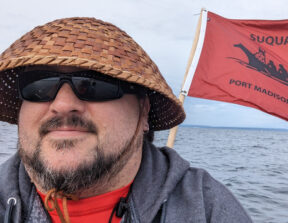
00:00 / 00:00
I knew at ten years old that we were bringing something back. That this reconnection to our canoes, the culture, the water—all of that was a big deal. And that it didn’t happen in my first ten years of life, and decades before that. But eventually, being able to bring our own kids on Canoe Journey was amazing. Because I knew it wasn’t something that my mom got to do, that her dad got to do. And being able to pass this on is an amazing privilege and responsibility. And now I’ve had four generations of us in one canoe: my mom, me, my kids, and my grandkid all in the canoe at the same time. And that’s amazing! I can’t get over how awesome that is.
Canoe Journeys: Connecting Generations
For more than thirty years, the annual Tribal Canoe Journeys have connected Indigenous peoples across the Pacific Ocean and Salish Sea. In an assertion of their enduring presence, Tribal nations—both federally recognized and not—depart their shores on traditional canoes before convening on the lands of the hosting Tribe. There, canoe families participate in a week of protocol including ceremony, celebration, meals, and reconnection.
Every year during Canoe Journey, the Suquamish Canoe family travels to the shores of their friends and relatives to celebrate a thriving canoe culture. Known as generous hosts, the Suquamish Tribe is a favorite stop on the Canoe Journey route. Guests enjoy abundant seafood, song and dance, and rest before continuing their journey.
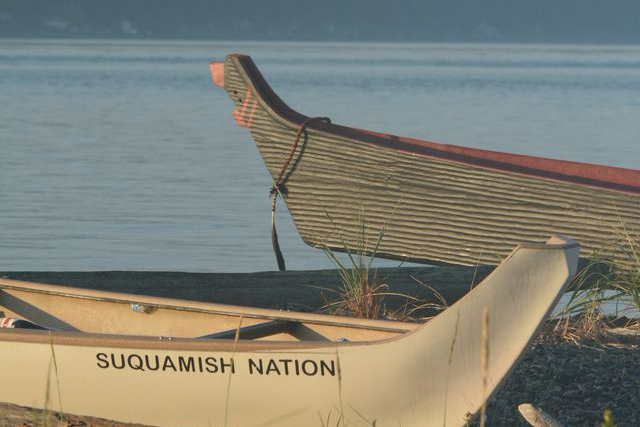
We paddled fifty miles one day on Canoe Journey. That was an eye-opener for me, because I realized that the ancestors must have done this every day. They must have done that easily—and more!
Rob Purser (Fisherman)
Listen to canoe skipper Nigel Lawrence explain the importance of Canoe Journeys for Suquamish youth:
00:00 / 00:00
I think it was 2000, maybe 2001, where a family was—they were both parents, and their younger kids, and a newborn. Like three months old or something that they brought on the Canoe Journey. They were ground crew. Baby was never in the canoe or anything, but I just love that this brand-new human is on Canoe Journey in the first months of her life. And that she’s an adult year. And that every single year—global pandemics notwithstanding—there’s been a canoe journey every single year. And that’s something she can rely on. That’s no reawakening for her. That’s been her whole life. So that’s amazing, that’s huge, that’s awesome. That every year they get to be in the saltwater and paddle our ancestral highways and do what our ancestors did. So it’s a big deal.
Hear from Suquamish elder Bill Gemmell as he reflects on the purpose of Canoe Journey:
00:00 / 00:00
Well, we are the Tribe of Clear Water. And made our living, ancestral-wise, off of the water, mainly. They had, I mean our canoes, which I don’t know whether you’ve ever seen ‘em, the Canoe Journey that we do every year. We’ve, which is hosted by a different Tribe every year. And—but that’s just a celebration of our way of life, and our connection with the water. And with each other! Because every time you go to another destination, and you—the Canoe Journeys are just that, they’re a journey. It’s what it takes you to get there. And a lot of our youth, when they go on those journeys, it gives them something meaningful to carry on. I remember going on a journey up to Canada, to Vancouver, and when we got up there, I jumped on a support boat to head back because I had other things to do, and someone said, “Well, aren’t you gonna stay? This is what it’s about, this destination, this was–” I had to remind him, No, it was the journey to get here. Not the destination.
Visit: Chief Seattle Days
Since 1911, Chief Seattle Days has honored Chief Seattle’s life and legacy. Free and open to the public every August, guests can expect canoe races, Coastal Jam, graveside ceremonies, salmon bake, and a celebration of Coast Salish culture. Visit the Suquamish website for more information on attending Chief Seattle Days, including that year’s event schedule.
The x̌ʷəlč Sustains Us
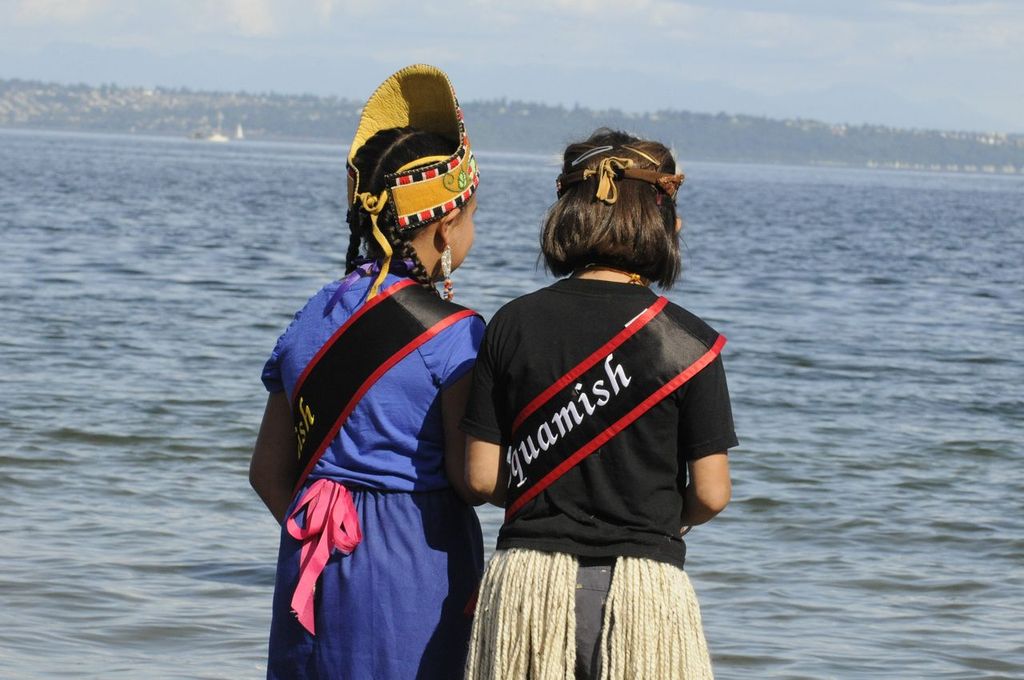
That’s the history of our people, traveling these waters chasing the fish. That’s what you do during the right season: you clam dig, or you load the canoes and you follow the salmon. So, we are people of the clear water: because our water always runs clear here, and I’d say it’s more plentiful than other waters.
sõ-yõxw-tunnot Shellene George
Clams, cockles, kelp, oysters, geoducks, salmon, cod, flounder, shrimp, crab, octopus, herring, smelt: the x̌ʷəlč is rich in resources. For the Suquamish Tribe, the Salish Sea’s abundance is both a gift and a responsibility. Food, travel, culture, and spiritual sustenance all derive from the x̌ʷəlč, so its health is paramount to the Suquamish people. Historically and today, the Suquamish Tribe has viewed the x̌ʷəlč as a relative deserving of love and care.
Suquamish ancestors fished the Salish Sea long before a border divided Canada and the United States. They navigated inlets, bays, canals, and rivers to trade, visit relatives, and fish. Seasonal fishing destinations included the Duwamish and Snohomish Rivers, the San Juan and Rosario Straits, and even as far as the Fraser River! The waters surrounding Kitsap Peninsula offered plentiful harvests year-round. Dried fish kept the Suquamish nourished through the cold winter months.
History Bite: The Treaty of Point Elliott
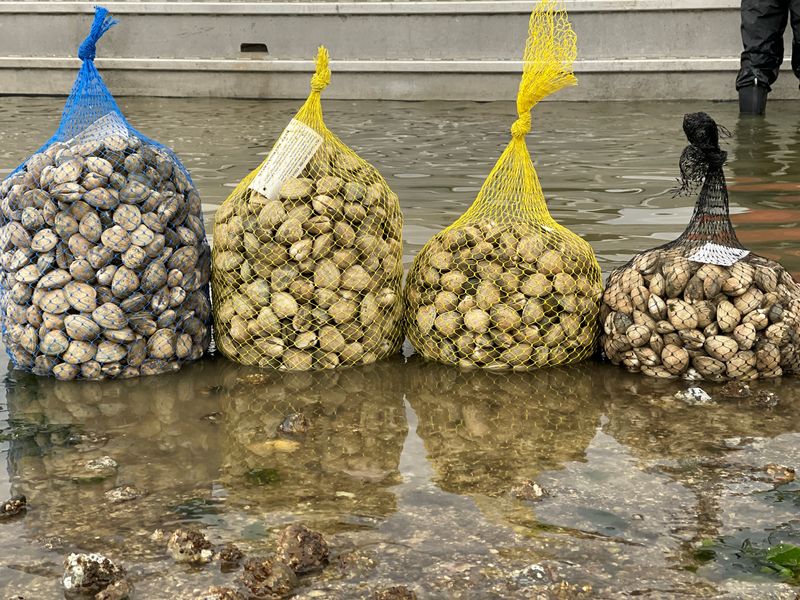
The Suquamish Tribe signed the Treaty of Point Elliott in 1855. Through the treaty, Tribal nations reserved the perpetual right to fish as they always had.
The Suquamish leaders who signed the Treaty of Point Elliott include Sealth (or Seattle), Chul-whil-tan, Mis-lo-tche (or Wah-hehl-tchoo), Sloo-noksh-tan (or Jim), Moo-whah-lad-hu (or Jack), Too-leh-plan, and Hoovilt-meh-tum. These leaders knew that Suquamish lifeways depended on long-held fishing rights.
When Suquamish Tribal members fish or harvest shellfish today, they exercise a right held since time immemorial. The Treaty of Point Elliott preserves this right as federal and international law.
Hear from Rob Purser as he explores Chief Seattle’s motivation for signing the Treaty of Point Elliott:
00:00 / 00:00
Treaty rights were reserved by our ancestors in exchange for giving up land. Promises were made in those treaties to protect future generations, and that’s why I think our ancestors signed those treaties, is because of the resource for future generations—if they’re gonna survive, they need that.
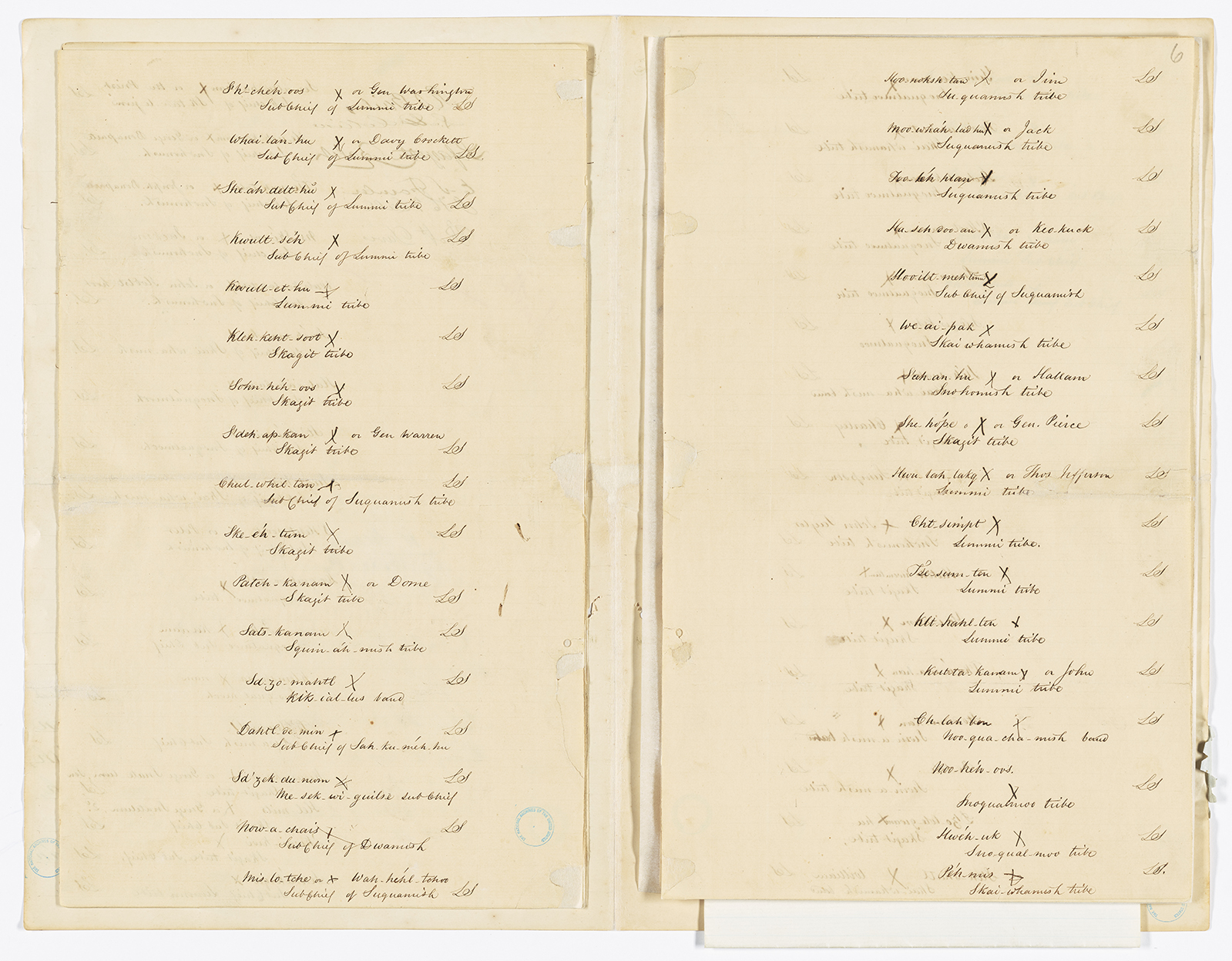
The 1855 Treaty of Point Elliott created the Port Madison reservation for the Suquamish people. These new boundaries prevented Suquamish access to the usual stocks of salmon, steelhead, and other migratory fish. To survive, the Suquamish relied on the reservation’s beaches for their plentiful shellfish. To this day, Suquamish Tribal members honor the Coast Salish proverb that “When the tide is out, the table is set.”
Listen to Suquamish clam digger Christy Roberts describe her experience being arrested for exercising her treaty rights to harvest in all usual and accustomed areas:
00:00 / 00:00
Even when I had my full-time job, I dug when we could. Then one time we got busted. It was about probably 3 weeks before Cassy was born, she was my first, and I was pregnant, and it was winter. And we launched our boat from Silverdale Boat Launch. And it was frosty when we got back, but I, we all noticed it – we seen footprints on the dock, and we’re like: “why the heck is there footprints there?” But we didn’t see anybody! And then all of a sudden they jumped out of garbage cans and threw us all on the ground and arrested us all! And then everybody got all twisted because I was pregnant and they were throwing me around. So they let me up first and handcuffed me to make sure I wouldn’t go anywhere, and then we had to stay out there for about 45 minutes to an hour until they contacted Suquamish Police. So they said that we could do 3 days in jail or pay 500 dollars. So I said, “I’ll go, we’ll go to jail! I’ll go to jail.” So my mom drove us, like 9 of us, up there to do our 3 days. And we did our 3 days, and then we were free—because if you didn’t pay your fine, or do that, you wouldn’t be able to go back digging. But I thought it was so funny–”what you doing? What are you in jail for?” “Clam digging!” [laughs].
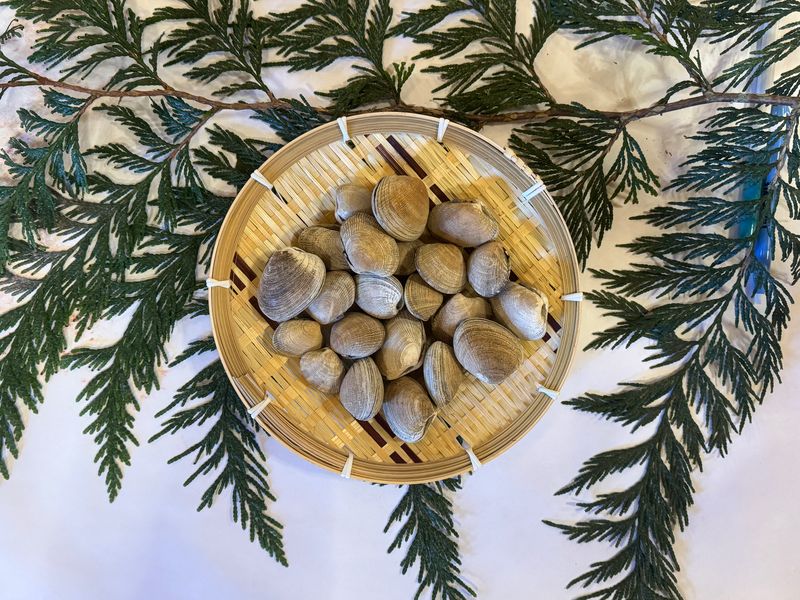
Here, fisherman sõ-yôxw-tun Duran George recounts the magic of his son’s first clam dig:
00:00 / 00:00
I brought my son down just recently to have him dig his first clam, and he’s three and a half… It was magical. It’s that connection, right? It’s that father-son. My parents are gone, my grandparents are gone. But they’re with us every day, and just knowing that is the sensibility of joyful happiness to get to share what I got shared with me and share with them. So it’s like that connection—I always look up to the skies, and I always look down the, down the beach line and stuff, gaze upon the past—because I know they’re out there. They’re watching, and they want us to show our kids the right way. And it was, it was magical! It was like, it couldn’t be better than that. For a father-son’s… to me, it’s more than teaching him how to ride a bike. Teaching him how to write the alphabet, teaching him to tie his shoes, right? This is, this meaning has a thousand-fold more, because of where we come from and who we are as Suquamish people. As a, a community and as the George family.
Listen to Robin Little Wing Sigo discuss how clam bakes bring people together:
00:00 / 00:00
I always like to think of it like any time that there’s a bonfire of some sort, like, humans come out and they wanna stand next to it! They wanna stand next to the heat, they wanna stand next to the food, they wanna stand next to each other! There’s just this great feeling of waiting for it to come. And the stories that are there! So it just nourishes on so many levels. Clam bakes are, I feel like that’d be the best way to collect stories. And then you take them off and everybody’s jumping in to like grab some, and you burn your fingers because the shells are so hot, and the meat is so hot, and you give thanks for everything. And the salty smell…
Visit: Suquamish Seafoods
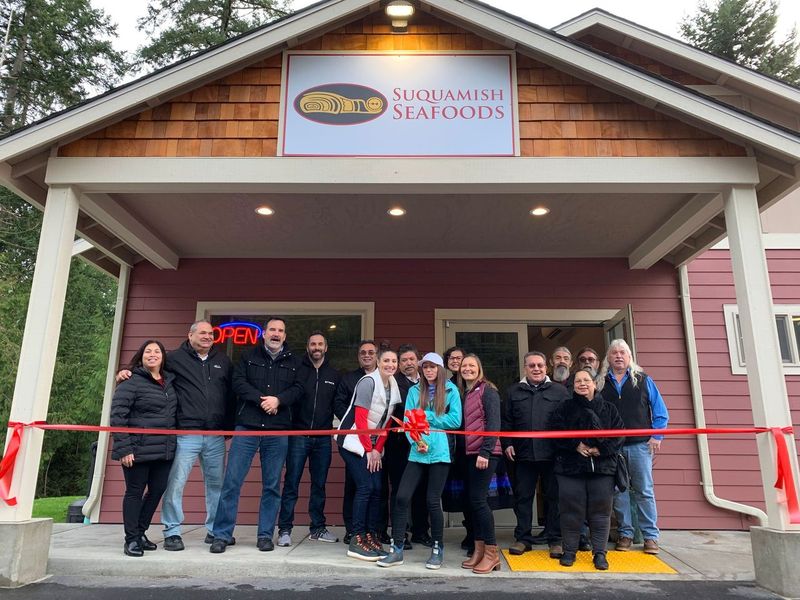
Since 1996, the Suquamish Tribe has operated Suquamish Seafood Enterprises on the Port Madison Reservation. The enterprise provides Tribal fishers and shellfish harvesters access to seafood markets, while offering visitors the highest quality seafood around. Located just off of Highway 305 near the Suquamish Clearwater Casino and Resort, Suquamish Seafoods’ retail shop is open to all visitors, selling manila clams, geoduck, salmon, and whatever fresh catch is in season.
We Sustain the x̌ʷəlč
Our people have respect and responsibility to the Animal People and the Plant People.
Barbara Lawrence (Storyteller)
From the youngest children to the wisest elders, Suquamish society teaches respect for the non-human world. They know that the abundance of the x̌ʷəlč is not guaranteed—it depends on us to treat it well for the next seven generations. Today, environmental care is one of the Suquamish Tribe’s top priorities. The Tribe hires biologists and law enforcement to monitor fishing and shellfish harvesting. Tribal initiatives, partnerships, and facilities all work to integrate environmental research and restoration. These efforts reflect the Tribe’s dedication to protecting the Salish Sea for generations to come.
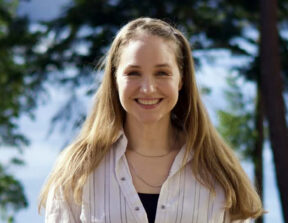
Listen to Suquamish geoduck diver Jennifer Hess explain her commitment to stewarding the x̌ʷəlč for generations to come:
00:00 / 00:00
Like, I would tell my children: we’re eating the descendants of the salmon that our ancestors ate. And that’s such a beautiful line! You know, it’s like this beautiful relationship that we’ve had with them for so long. And so it really means something to us. And, it’s so scary that the Puget Sound is not healthy, and that we don’t know how much longer we’re gonna have salmon and shellfish. And I don’t know who we are without that. It’s a huge part of our culture. I mean we love the Puget Sound the way that we do, and this, you know, earth around us, but—it’s not something that we were taught, it’s something that we remember. And so I feel like everybody is born with this love for this land, you know. And everybody has a love for the Puget Sound, I feel like, they just—aren’t… we just remember, and we pass that down, and so we encourage that in our children. But everyone’s born—every child is born with that.
That’s my main goal: to have this for the next seven generations. To make sure the next generations are still able to go out and dive, get geoducks, clam dig—all the things that I’ve done. And to teach the younger generations the right way to do things.
Joshua Bagley (Suquamish Vice-Chairman)
History Bite: Cockle Revitalization
Like clams, cockles have long been a staple food source for the Suquamish people. Cockles may be enjoyed steamed on open fire as part of a clam/cockle bake, or dried and strung onto a necklace for teething children.
But cockles are becoming harder and harder to find, likely due to environmental stressors like pollution, ocean acidification, and warming waters. As this culturally significant food source declines, the Suquamish Tribe is charting a path forward for restorative cockle aquaculture. The Suquamish Tribe’s shellfish biologists are currently working with Tribal members and other scientists to survey cockle populations, investigate potential transfer strategies, and ultimately restore subsistence access to cockles for Suquamish.
Although cockles are a favorite treat for Suquamish Tribal members, these shellfish do not have much commercial value. Yet the Tribe recognizes that cockles are valuable for the connection they bring to the past and to one another—not for the money they might bring in. The Tribe therefore commits time, resources, and expertise to restoring cockle populations so that future generations of Suquamish can enjoy the ancestral flavor of a cockle.
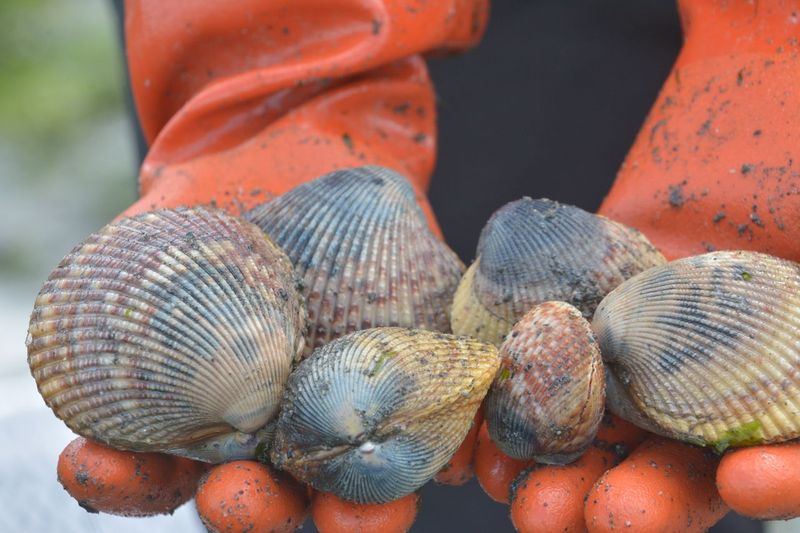
Listen to Robin Little Wing Sigo discuss the Suquamish Tribe’s efforts to restore native cockle populations:
00:00 / 00:00
Oh, the cockle revitalization program is a really great program that really–again, it stems from this place of, you know, so often we fight for our basic rights. And to maintain our sovereignty. But suddenly we were in a place where we had some extra money. And that money could be used for things that mattered to us, almost like a secondary need, right? Like a chance for us to bring back this cultural food that was so important to us, that we hadn’t had in a long time. Whereas, I was somebody who, when I was little, I didn’t like clams but I liked cockles. So like, my dad and my uncles, and cousins would always make sure that I got some cockles because there were always cockles in the clam bake. And sometimes they’re even just cockle bakes, like we had so many of them. And then they just started going away, and getting less and less often. And suddenly there just weren’t any. And my dad would be like: “Sorry hon, no cockles this time.” And you know, growing up you just start seeing those things like, realizing that my kids had never had a cockle, that they were teenagers and had never had that experience.
Visit: Merle A. Hayes Salmon Enhancement Center
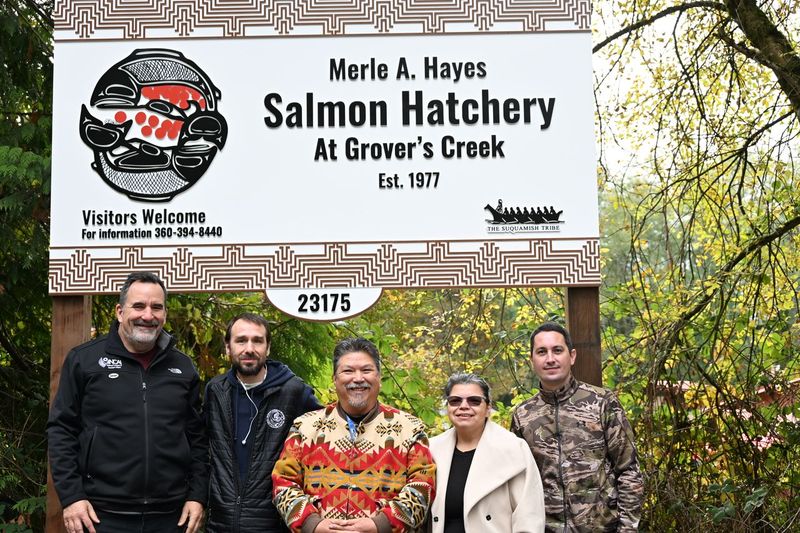
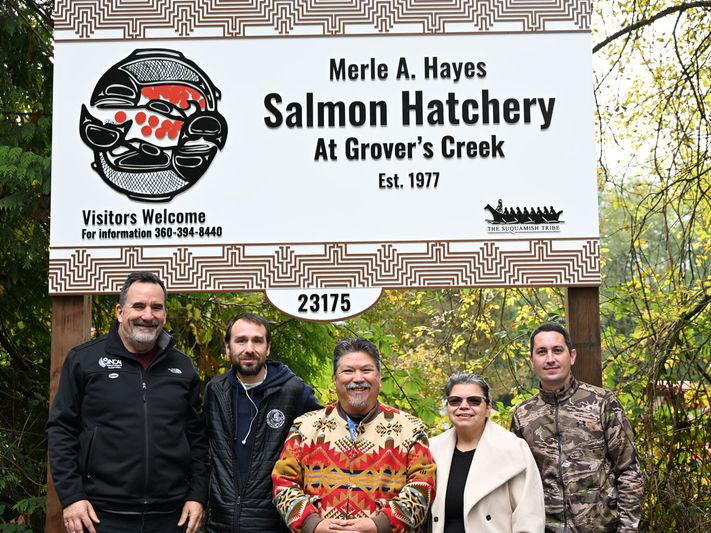
One way the Suquamish Tribe restores salmon runs is through the Merle A. Hayes Salmon Enhancement Center. Both a hatchery and a rearing facility, the Center contributes approximately 500,000 chinook and 250,000 chum salmon into the wild each year. Fish biologists monitor the salmon life cycle and migration. When the facility first opened in the 1980s, it was called the Grovers Creek Hatchery. But in 2023, the Suquamish Tribe renamed the facility after Merle Hayes, a Suquamish elder who spent his life advocating for salmon health and Tribal treaty rights. The Merle A. Hayes Salmon Enhancement Center offers tours of the facility daily. If you’re interested in seeing operations to restore salmon firsthand, book a tour below!
Visit
Ready to experience Suquamish maritime heritage firsthand? Explore the list below for recommended activities, cultural experiences, local cuisine, and places to stay in Suquamish.
We can bond over that saltwater. We can bond over that clam bake at the beach. We love to connect—it’s just part of being human. That’s something people can learn from Suquamish: our ability to be good hosts and to share with others makes us stronger. It sustains us and it grows us.
Robin Little Wing Sigo
When you visit Suquamish homelands and waters, you are in a place of connection: between ancestral histories, future descendants, and the people who continue to build life and community along these shores.
To be a respectful visitor in these precious places, keep the following guidelines in mind:
Be aware: Pay attention to signage and obey Tribal regulations. Do not visit places marked as private or Tribe-only, and follow Suquamish fisherman Bill Gemmell’s advice on photography: “Ask if you want to take pictures or film something. Because we may have ceremonies that we don’t want photographed—but we’ll respect that you asked.”
Be open-minded: Suquamish Tribal members have recorded their history for generations, often in ways that history textbooks ignore. For today’s Suquamish Tribal members, difficult topics like genocide, boarding schools, and displacement are ongoing realities rather than historical events. When you visit Suquamish, be open to confronting new and uncomfortable truths. As Suquamish fisherman sõ-yõxw-tunnot Shellene George reminds us, we all have a responsibility to learn these histories: “People really just don’t know what my great-grandma went through, what her mom went through—what we’ve gone through just to stay together as a family. People don’t understand, so I think it’s important for people to educate themselves on our history. Our real history—not just what you read in the books.”
Be curious: After thousands of years sustaining relationships with the Salish Sea, the Suquamish Tribe has an extraordinary amount of cultural knowledge and expertise. Visiting Suquamish is an opportunity to learn about this heritage, and you can make the most of your visit by exercising curiosity and humility. According to Suquamish Vice Chairman Josh Bagley, “To me, there’s no questions off the table. If you’re respectful, and ask in a sincere way? That’s all I look for.”
Keep coming back: With its rich maritime heritage and generous hosts, Suquamish is a place you’ll want to return to. The Tribe encourages you to come back for annual events like Chief Seattle Days, to explore rotating exhibits at the Suquamish Museum, and to taste each season’s catch at Suquamish Seafoods. Once you start building these relationships with Suquamish people and places, you’ll want to nurture them time and time again.
Activities & Experiences
A curated list of activities and experiences at Suquamish, endorsed and approved by the Tribe. All photos below courtesy of the Suquamish Tribe.
Old Man House Park
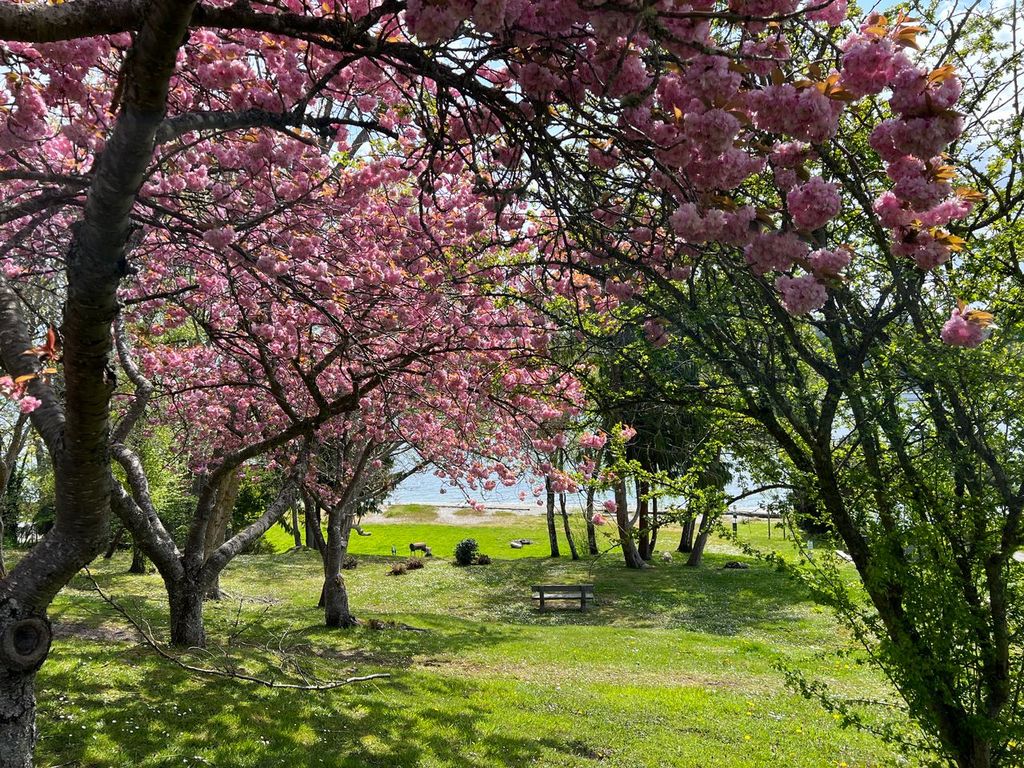
On the site of the largest known Suquamish winter house in the region, Old Man House Park is a perfect place to picnic, play, or dip your toes in the cool water of the x̌ʷəlč. Depending on the season, a visit to Old Man House might yield fragrant blossoms, choppy waters, or fallen apples. Year-round, visitors can read newly installed signage documenting the history of Old Man House.
Suquamish Museum
Start your deep dive in Suquamish history and culture with a trip to the Suquamish Museum. A short 15-minute drive from both the Kingston and Bainbridge Island ferry terminals, the Suquamish Museum welcomes visitors to explore the dynamic, diverse cultural heritage of the Tribe. With impressive permanent exhibits, engaging temporary installations, and hands-on weaving and beading workshops, the Suquamish Museum offers something for visitors of all ages and backgrounds.
Merle A. Hayes Salmon Enhancement Center
Tucked into the forest where Grover’s Creek meets Miller Bay, the Merle A. Hayes Salmon Enhancement Center is a salmon hatchery and rearing facility owned and operated by the Suquamish Tribe. With close monitoring by fish biologists, the Salmon Enhancement Center contributes hundreds of thousands of quality salmon into the wild annually.
The Merle A. Hayes Salmon Enhancement Center offers tours of the facility daily. If you’re interested in seeing operations to restore salmon firsthand, book a tour here!

Chief Seattle’s Gravesite
A trip to Suquamish is incomplete without a stop at the grave of Chief siʔaɬ (anglicized as “Seattle”). Located near the St. Peter’s Catholic Mission, the grave of Chief siʔaɬ stands as a testament to the visionary leader’s commitment to his people, lands, and waters. Known for his savvy negotiating skills and prescient environmental ethics, Chief siʔaɬ remains a model for outstanding leadership worldwide.
When visiting the grave of Chief siʔaɬ, be sure to read the interpretive signage at the cemetery’s entrance. Follow the meandering stone path to the gravesite, where you’ll often see offerings of tobacco, flowers, or small items left in siʔaɬ’s honor.
gʷədᶻadadalʔtxʷ (House of Awakened Culture)
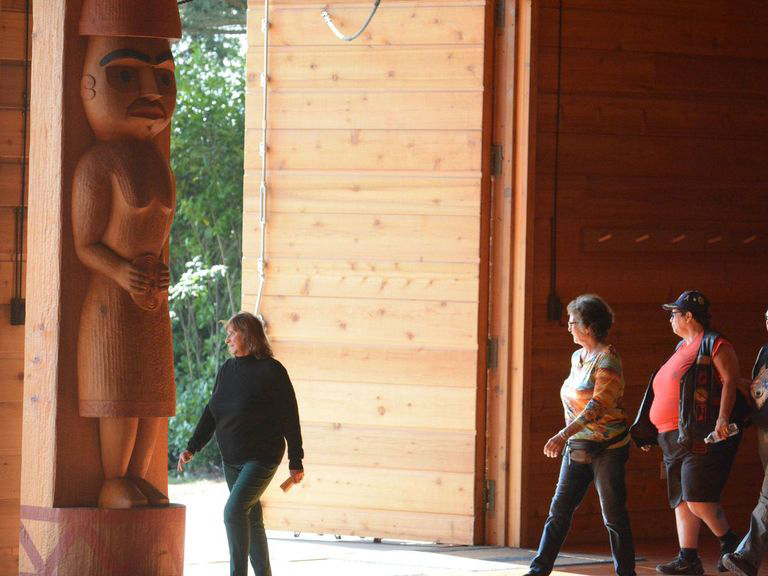
Designed in the Coast Salish style of great houses like Old Man House, gʷədᶻadadalʔtxʷ (House of Awakened Culture) serves as a vital space for community connection and cultural expression. Here, Tribal members participate in ceremony, Lushootseed language classes, regalia making, traditional carving and weaving, and celebrations of life’s milestones.
With a sprawling waterfront lawn, the outdoor area of gʷədᶻadadalʔtxʷ is the perfect spot for a picnic lunch. Listen for bird calls, inhale the fresh air, and watch for the pod of porpoises that frequents the area.
The interior of gʷədᶻadadalʔtxʷ is open only during events. Before attending an event, confirm that it is open to the public.

Charles Russell Lawrence Memorial Pole and Boat/Canoe Ramp & Suquamish Veterans Memorial
The Suquamish Waterfront is full of testaments to Suquamish ancestors whose legacy continues to reverberate throughout the Tribe. A memorial pole dedicated to veteran and leader Charles Lawrence serves as the boat ramp’s sentinel. Just up the hill from the boat ramp, a memorial to Suquamish Veterans stands guard. Symbolizing both home and warriors, the Suquamish Veterans Memorial honors those who have protected their community, past and present.
For visitors craving salty air and whispering evergreens, nearby benches are a perfect place to rest, meditate, or enjoy a picnic lunch. Whether you’re traveling by car or on foot, you’ll enjoy the proximity (a quarter mile) to the Suquamish Museum.
While the Boat Ramp is generally open for public use, the Suquamish Tribe reserves the right to restrict access, for example during canoe practice or Chief Seattle Days.

Chief Seattle Days
Since 1911, Chief Seattle Days has honored Chief Seattle’s life and legacy. Free and open to the public every August, guests can expect canoe races, Coastal Jam, graveside ceremonies, salmon bake, and a celebration of Coast Salish culture. Visit the Suquamish website for more information on attending Chief Seattle Days, including that year’s event schedule.

Kiana Lodge
The Suquamish Tribe’s stunning event space rests upon 1,000 feet of no-bank waterfront surrounded by lush gardens, towering trees, and the unmistakable backdrop for the fan-favorite television series Twin Peaks.
For those seeking an event venue, Kiana Lodge’s experienced event planners can help you arrange weddings, fundraisers, corporate events, and more. Accessible by car, boat, and even seaplane, Kiana Lodge is the ideal spot to blend indoor and outdoor activities in an award-winning venue.
Fans of Twin Peaks can get a firsthand view of the Great Northern Hotel and Blue Pine Lodge (both filmed in part at Kiana Lodge’s Main Lodge), and even see where Laura Palmer’s body washed ashore. While the Tribe welcomes visitors to see these iconic locations, they kindly ask that you call in advance to confirm that Kiana Lodge is open for public visits: 360-598-4311.
Food & Lodging
A curated list of food and lodging at Suquamish, endorsed and approved by the Tribe. All photos below courtesy of the Suquamish Tribe.
Suquamish Clearwater Casino and Resort
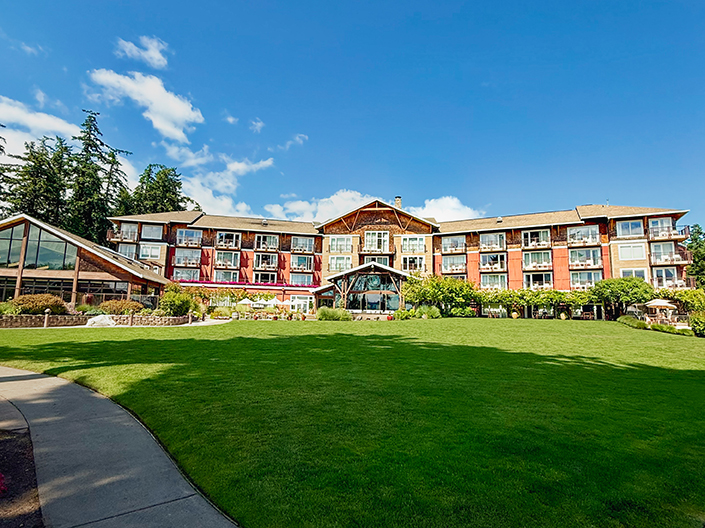
Whether you’re looking for luxurious accommodations, ocean-to-table seafood, a rejuvenating spa day, or the thrill of winning big, Suquamish Clearwater Casino and Resort has something for everyone. Beach access and a tranquil boardwalk reveal breathtaking views of Agate Passage, while the Native American Art Gallery grounds guests in the vibrant maritime heritage of the Suquamish and other Coast Salish peoples. Stop by the Clearwater Casino and Resort for a leisurely lunch on your way to the Suquamish Museum, or book a room to enjoy the full suite of amenities after a day on the water.
Suquamish Seafoods
Since 1996, the Suquamish Tribe has operated Suquamish Seafood Enterprises on the Port Madison Reservation. The enterprise provides Tribal fishers and shellfish harvesters access to seafood markets, while offering visitors the highest quality seafood around. Located just off of Highway 305 near the Suquamish Clearwater Casino and Resort, Suquamish Seafoods’ retail shop is open to all visitors, selling manila clams, geoduck, salmon, and whatever fresh catch is in season.
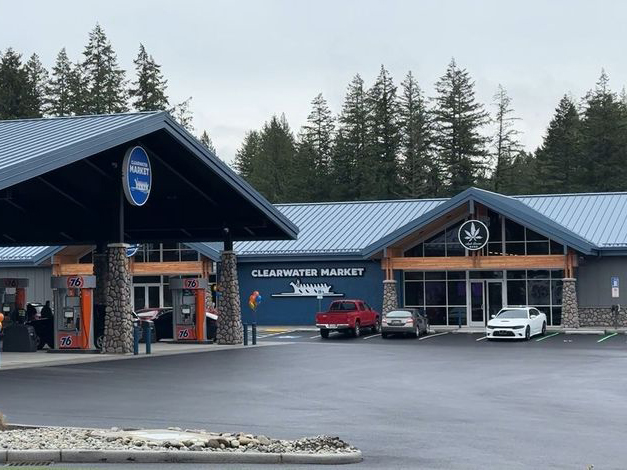
Clearwater Markets
The Suquamish Tribe operates several retail stores and gas stations. Whether you’re fueling up for a day on the water or seeking a mid-afternoon pick-me-up, Clearwater Markets in Poulsbo and Bremerton are the place to go for gas, snacks, drinks, and supplies.
Learn More
Eager to learn more about the Suquamish Tribe and their enduring ties to the x̌ʷəlč? Check out the resources below, which have been vetted by the Suquamish Culture Committee.
Suquamish Tribe Website
The Suquamish website includes contact information, various resources related to history and culture, the Suquamish newsletter, and a range of other resources.
Suquamish History & Culture
The Suquamish Tribe’s History & Culture webpage provides an overview of Suquamish history since time immemorial, including a map of known village sites located throughout the Salish Sea region.
Suquamish Tribe YouTube Channel
The Suquamish YouTube channel features videos created by the Tribe and addressing such topics as Canoe Journey, shellfish harvesting, history, education, and more.
Port Madison Dialogues: An Exploration of the History, Culture, and Current Issues Facing the Suquamish Tribe
This four-part panel discussion series features Suquamish Tribal leaders sharing the history of the Suquamish Tribe, current issues facing the Tribe, and the impacts of the sometimes difficult relationships between Tribal and non-Tribal communities. Three of the four panels were recorded, and address the following topics: Since Time Immemorial: Early History, Tribal Sovereignty and Governance and Current Issues Facing the Tribe.
Seattle Waterfront Park Grand Opening
This five-minute video shows footage of the 2025 Seattle Waterfront Grand Opening, featuring a speech by Suquamish Chairman Leonard Forsman and song and dance by the Suquamish Canoe Family.
Suquamish Language Program
Access resources compiled by the Suquamish Tribe’s Language Program, including videos such as Suquamish Places, which teaches viewers about Suquamish places in southern Lushootseed.
Suquamish Places
Created by the Suquamish Tribe’s Language Program, this video introduces viewers to Suquamish places and their Lushootseed names.
The Eyes of Chief Seattle
This 56-page exhibit catalogue was created by the Suquamish Museum and tells a history of the Suquamish Tribe. The Eyes of Chief Seattle contains resources collected by the Suquamish Tribal Cultural Center, including photographs, oral histories, and written records. Take your time perusing this beautiful text, which can be purchased at the Suquamish Museum.
Suquamish Museum YouTube Channel
The Suquamish Museum’s YouTube channel contains videos including: How Agate Pass Came to Be, a beautifully animated short that recounts the Suquamish history of the water known today as Agate Pass; Waterborne: Gift of the Indian Canoe, which documents the revival of Indigenous canoe culture throughout the region; and Come Forth Laughing: Voices of the Suquamish People, which features eight Suquamish elders discussing their lives and experiences.
Suquamish Museum Mobile App
Follow this link to download the Suquamish Museum’s app, which connects educators and learners to Suquamish stories in culturally respectful and engaging ways.
Weaving Words – 1990 Suquamish-Indianola Oral Histories
This webpage, created by Melinda West, provides video access to several oral history interviews conducted with Suquamish Tribal members in 1990. Tribal narrators include Ida Purser, Ethel Kitsap Sam, Reine Enschede, Eva Meacham, MacKay Family, Pickrell Family, Joan Sunde, Lawrence Webster, Marilyn Wandrey, and Ed Carriere.
haʔɫ kʷ (i) adsəslabcəbut/Watch Over Yourself Well: (Re)writing Two-Spirit Coast Salish Bodies through Canoe-Based Practices
This doctoral dissertation by Suquamish scholar Kyles Gemmell engages the 10 Canoe Rules of the annual Tribal Canoe Journeys. Gemmell’s work integrates Coast Salish knowledge, personal experience, and understandings of Two-Spirit, trans, and queer identities to develop community-based methods for research and healing.
Generationally-Linked Archaeology: “Living-Off-the-Land” For 4,000 Years on the Salish Sea
This brilliant text, co-created by Suquamish elder Ed Carriere and archaeologist Dale R. Croes, blends Ed’s Indigenous ecological knowledge with Croes’ archaeological tools to illustrate how intergenerational resource use has sustained Coast Salish peoples for millennia. With accessible writing and beautiful photographs, Generationally-Linked Archaeology is an excellent starting point to learn about Suquamish resource use and cultural longevity.
Ed Eugene Carriere (Suquamish): NEA National Heritage Fellows Tribute Video
Suquamish elder Ed Carriere shares how he learned the art of Salish basketry from hundreds of generations of ancestors, and how he passes this cultural heritage on to future generations.
Re-Awakening Ancient Salish Sea Basketry, Fifty Years of Basketry Studies in Culture and Science
Suquamish elder and basket maker Ed Carriere and archaeologist Dale Croes present their work on Coast Salish basketry, introducing what they call Generationally-Linked Archaeology.
Lushootseed is Alive
Written and performed by Suquamish Tribal member Calina Lawrence, this music video is sung entirely in the Lushootseed language.
Lushootseed First Language Speaker Series: Lawrence Webster
This video, produced by the Puyallup Tribal Language program, honors the late Suquamish Tribal member Lawrence Webster, who contributed Suquamish-specific dialect to the Lushootseed Dictionary.
Canoe Journey 2017: Catching Songs from Suquamish
As part of Project562—a photography project dedicated to photographing more than 562 federally recognized Tribal nations—Swinomish and Tulalip photographer Matika Wilbur recorded the Suquamish Tribe’s welcome during the 2017 Canoe Journey. Watch this short, 2-minute video to hear from Suquamish Tribal members about the significance of their songs.
Salish Cedar Canoes
This episode of Woodlanders—an online film series—follows Suquamish elder, canoe skipper, and basket maker Ed Carriere on the annual Tribal Canoe Journey.
Kings of Gorst Creek
This 10-minute documentary short examines the Suquamish Tribe’s salmon hatchery system at Gorst Creek. Kings of Gorst Creek challenges the persistent narrative that Tribal nations over-harvest or over-exploit marine resources, instead showing the care and reciprocity that characterize Suquamish fisheries management.
The Techniques Behind Harvesting the Best Clams on the West Coast
This video depicts the importance of shellfish to the Suquamish Tribe, demonstrating how Tribal members have harvested clams and oysters for generations. Watch this video for insight into how clam harvests work, how the Suquamish Tribe manages these resources, and how clam bakes provide an opportunity for people to connect over a delicious meal.
Identity, Treaty Status and Fisheries of the Suquamish Tribe of the Port Madison Reservation
This report by anthropologist Barbara Lane examines the historical record related to Suquamish treaty status and fisheries. Lane wrote this report during US v. Washington (the court case that resulted in the 1974 Boldt Decision).
Lushootseed Chief Seattle speech of 1854 and the Shamanic Odyssey: An Anchored Radiance
In this audio file, Suquamish Chairman Leonard Forsman narrates an iconic speech attributed to Chief Seattle in 1854. You can also read the text of this speech here. This speech was first published and attributed to Chief Seattle in an 1887 Seattle Sunday Star article by Henry Smith.
Princess Angeline Photograph and Postcard Collection
Princess Angeline was the daughter of Chief Seattle who remained in Seattle after her people were relegated to the Port Madison reservation. This collection consists of photos, portraits, and postcards depicting Princess Angeline in a variety of media formats.
Ernest B. Bertelson Papers
Ernest Bertelson was a freelance journalist who often wrote about the Suquamish Tribe and collected artifacts from the beach at Old Man House. In particular, consult Folder 17 in Box 1 titled “The Suquamish.”
Clarence Bagley Papers
Clarence Bagley was an early settler in Washington Territory who went on to serve as a journalist, politician, and historian with notable publications including Indian Myths of the Northwest and The History of Seattle, as well as a 1931 article about Chief Seattle. Bagley’s collection at the University of Washington includes correspondence, legal documents, speeches, reports, materials related to the Washington territorial Indian wars, and more.
Chief Seattle Bibliography
It is difficult to overstate the legacy of Chief Seattle and the many ways his life and work have been interpreted by Native and non-Native commentators alike. This bibliography, created by the Bill Holm Center at the Burke Museum, provides a starting point to learn about Chief Seattle’s historical and contemporary significance.
Charles Wilkes and the Exploration of Inland Washington Waters
This text reproduces the journals and narratives of Charles Wilkes, a nautical surveyor who led a U.S. expedition through inland Washington waters in 1841 and documented his contact with Suquamish people.
Chief Sealth
This 1903 master’s thesis by Frank Carlson was written under the guidance of Professor Edmund S. Meany, and provides a partial biography of Chief Seattle. Importantly, the paper references interviews conversations with Suquamish people residing on the Port Madison Reservation who remembered Chief Seattle.
Vancouver’s Discovery of Puget Sound
This text draws on George Vancouver’s journals, as well as an extensive set of archival materials, to provide a detailed narrative of the British naval officer’s expedition around the Puget Sound area including interactions with the Suquamish people. Selections from Vancouver’s journal are reprinted, as are numerous photographs.
Journal of Vancouver’s Voyage
Archibald Menzie served as a naturalist during Vancouver’s 1792 expedition. Menzies’ journal includes detailed botanical accounts, as well as his observations regarding life aboard the Discovery and encounters with Indigenous people (including the Suquamish) in the region.
Physician and Fur Trader: The Journals of William Fraser Tolmie
This 1963 publication re-prints the original journals of William Fraser Tolmie, a physician and fur trader for the Hudson’s Bay Company who recorded his observations of life in the Pacific Northwest. The journals cover the years 1830-1943, and include Tolmie’s stints at Fort Nisqually, Fort Vancouver, Fort McLoughlin, and Fort Simpson. Tolmie’s journals include his observations of Chief Seattle and the Suquamish people.
Indians of the Urban Northwest
This edited volume includes research essays related to Indigenous culture and society in the Pacific Northwest. In particular, see the chapter written by June Collins titled “The Personal Document of a Coast Salish Indian.”
Vecinos: A Bit of History From the Northwest Indians
This 1989 interview features Suquamish Museum staff Barbara Lawrence, Lawrence Webster, Marilyn Jones, and Candi Bohlman discussing the museum’s film “Come Forth Laughing.”
Acknowledgements
Maritime Washington would like to offer its deepest gratitude to the following people, whose expert guidance and generous support made this Tribal Guide possible:
Suquamish Tribal Council
Suquamish Culture Committee
Cassy George
Barbara Lawrence
Betty Pasco
Bill Gemmell
Christy Roberts
Erin Bischoff
Ian Lawrence
Jennifer Hess
JimBob Armstrong
JoAnn Joe
John Bagley
Jon Anderson
Joshua Bagley
Nigel Lawrence
Shayna Bagley
Rob Purser
Robin Little Wing Sigo
sõ-yôxw-tun Duran George
sõ-yõxw-tunnot Shellene George