

 Tribal Guide to Maritime Washington
Squaxin Island Tribe
Introduction to the Squaxin Island Tribe
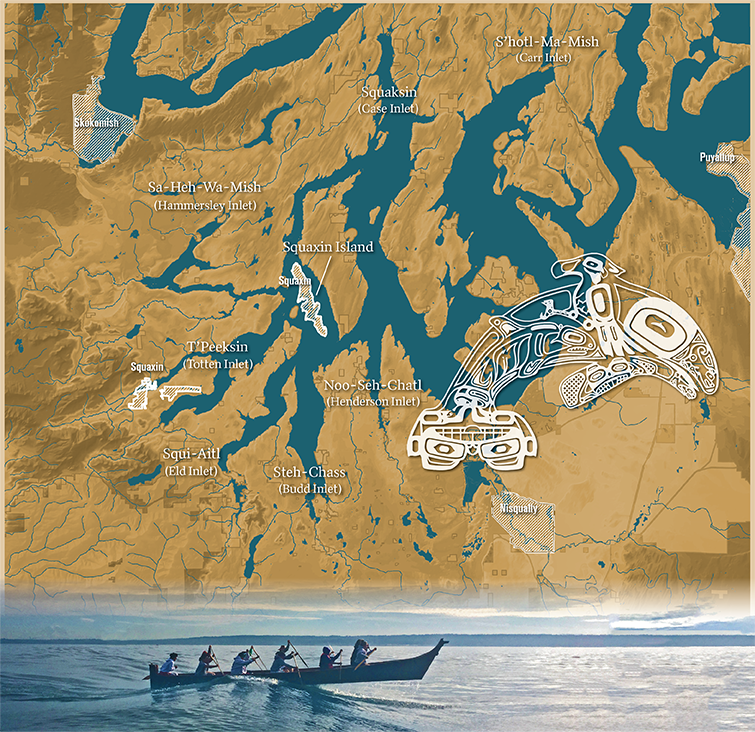
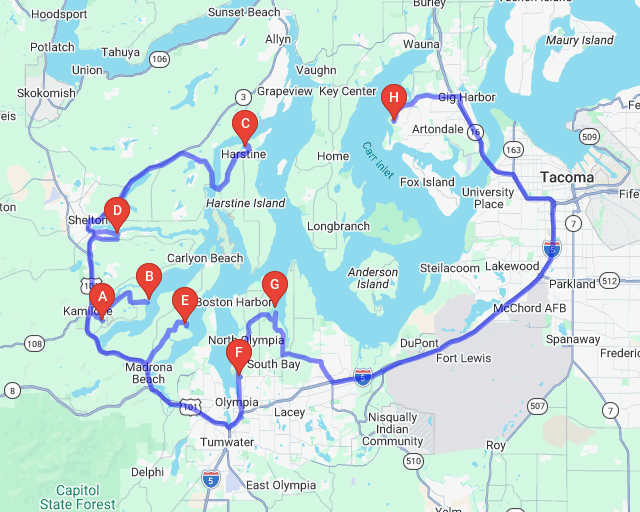
In the sparkling waters of the southern Puget Sound, seven flowing inlets converge: dəxʷč̓aʔč̓aʔał Noo-Seh-Chatl (Henderson Inlet), st̓əč̓as Steh-Chass (Budd Inlet), sq̓ʷayaił Squi-Atl (Eld Inlet), təpikʷsəd T’Peeksin (Totten Inlet), sʔəhiw Sa-He-Wa-Mish (Hammersley Inlet), sqʷax̌səd Squaksin (Case Inlet), and sx̌əƛ̓əb S’Hotle-Ma-Mish (Carr Inlet).
For countless generations, the clean saltwater of these inlets, their abundant sea life, and the fertile forests lining their shores have sustained a vibrant culture and people. The descendants of these expert mariners comprise the Squaxin Island Tribe, whose government offices are located in the valley of Kamilche, near Shelton, WA.
The information offered here is not intended to represent a comprehensive or singular history; the stories shared here may differ from those told by others within the Squaxin Island Tribe or other Tribes. Any references made to usual and accustomed areas are intended for educational purposes, and should not be considered legal claims.
sqʷax̌sədəbš Creation Story
As told by Charlene Krise
Raven had the ability to change his image. One day, he walked along the shores of the Salish Sea, somewhat bored with little to do. With each step, Raven’s shoulders sagged. His breath sighed.
All of a sudden, he heard a commotion coming from the waters. It reverberated like a powerful song. An energy, sounding like the rhythm of shoreline waves, demanded Raven’s attention. Raven stopped, frozen—listening. He looked for the source of this unique sound, grown by now into a loud clamor.
Raven was fascinated. There, near the shoreline, he could see large clam shells partially open. Inside the shells, there were humans! They peered out of the shells, some emerging with beaming smiles.
Some of the humans helped one another; others bickered loudly. Some ran around, curiously exploring their new surroundings.
All the humans spoke at once. Together, they sounded like the voice of many waters.
Raven was amused by the humans. For days, months, and years on end he was entertained by the humans.
For a long time, Raven only watched. He brought them many gifts, and the humans displayed their genius by creating new items from those gifts. Amazed, Raven watched how the humans seemed to grow in stature. They multiplied constantly, growing larger than Raven in size and wisdom.
These humans made the Salish Sea their home. They became the caretakers of the land and sea.
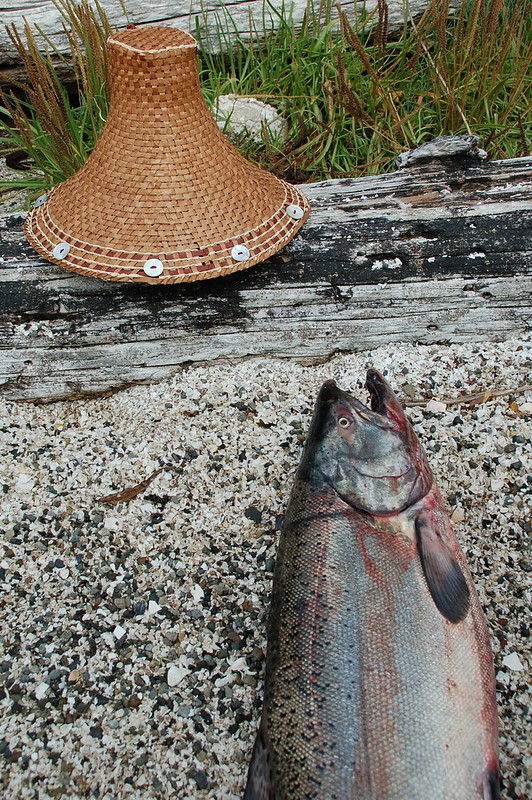
Today, these humans can still be found where the tide turns, salmon gather, and shellfish flourish. The humans gather these salmon, shellfish, and food from the land.
They are the sqʷax̌sədəbš: the Squaxin Island people. They are People of the Water.
Check out this digital Heritage Trail tour of the seven inlets.
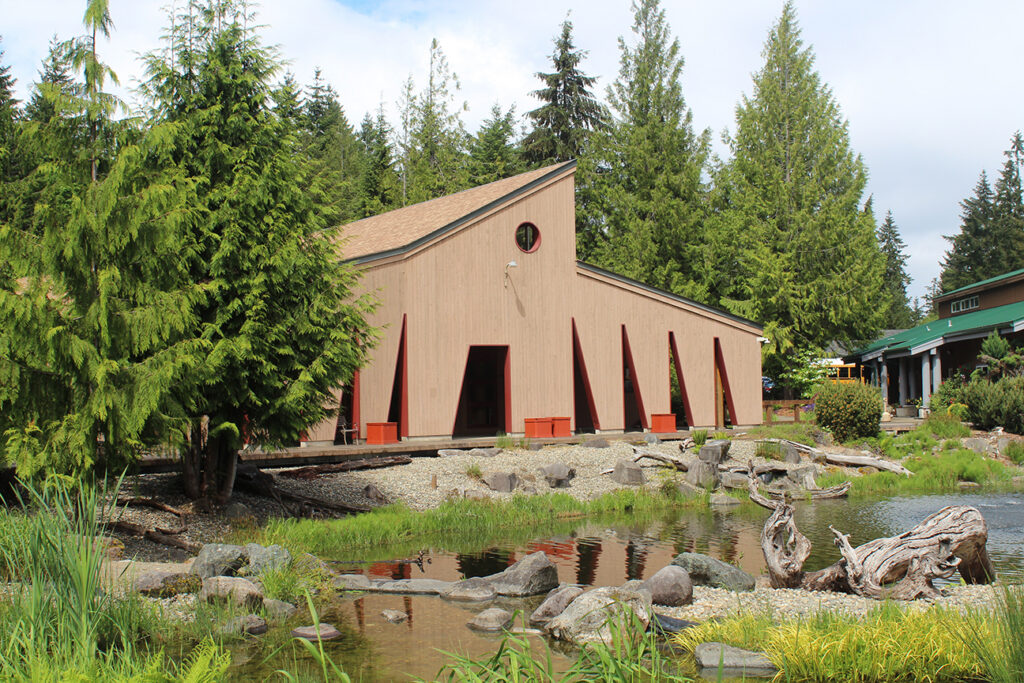
Visit: Squaxin Island Museum, Library and Research Center
Ready to learn directly from the Squaxin Island Tribe, and to visit these life-giving waters yourself? Head to the Squaxin Island Museum Library and Research Center, where you can encounter the history of Squaxin through artifacts and storytelling in a building stylized architecturally after a traditional longhouse. Click below to find regular opening hours. We also recommend calling in advance to confirm: 360-432-3839.




















sqʷax̌səd Squaksin: Case Inlet
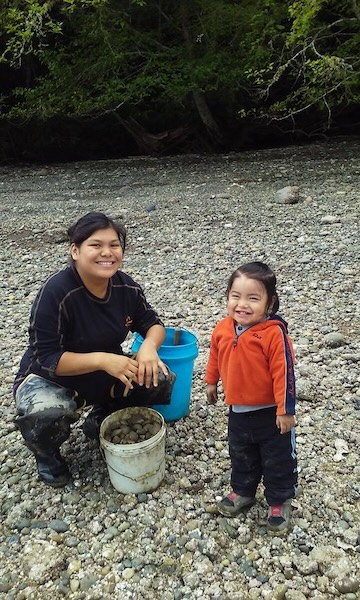
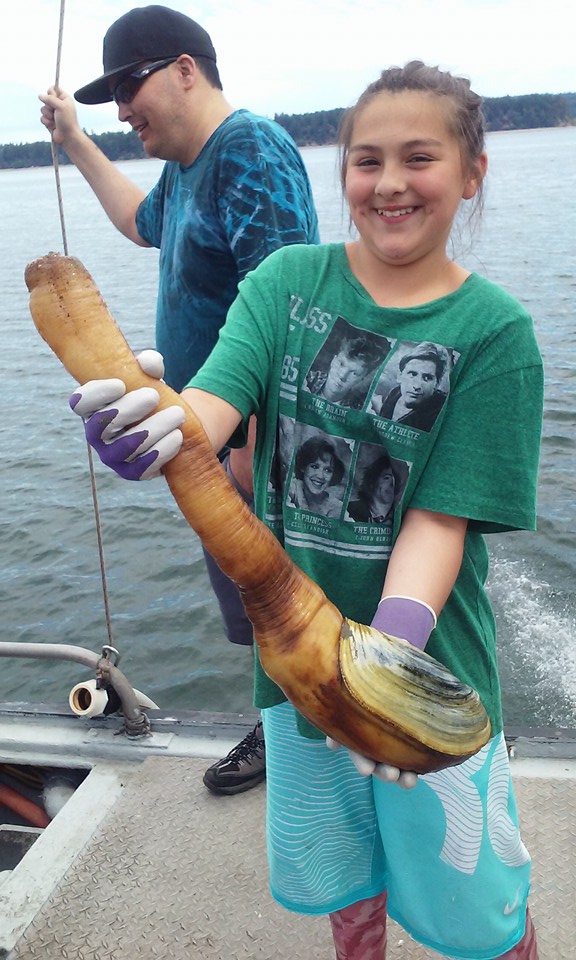
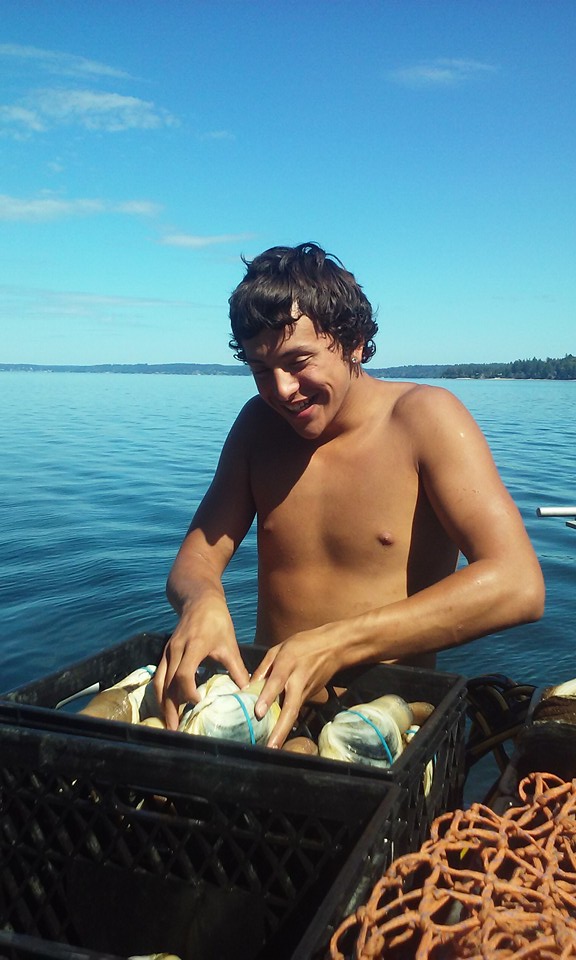
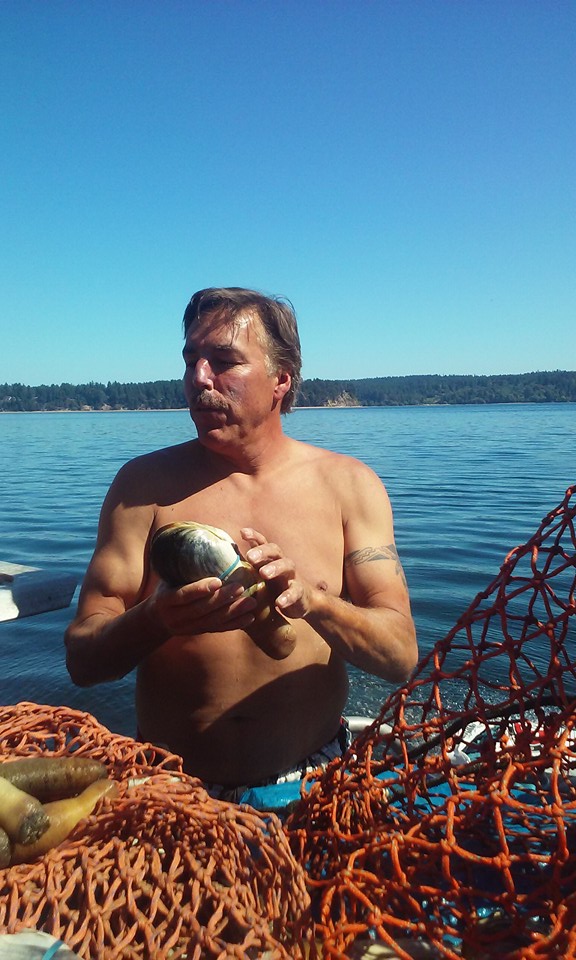
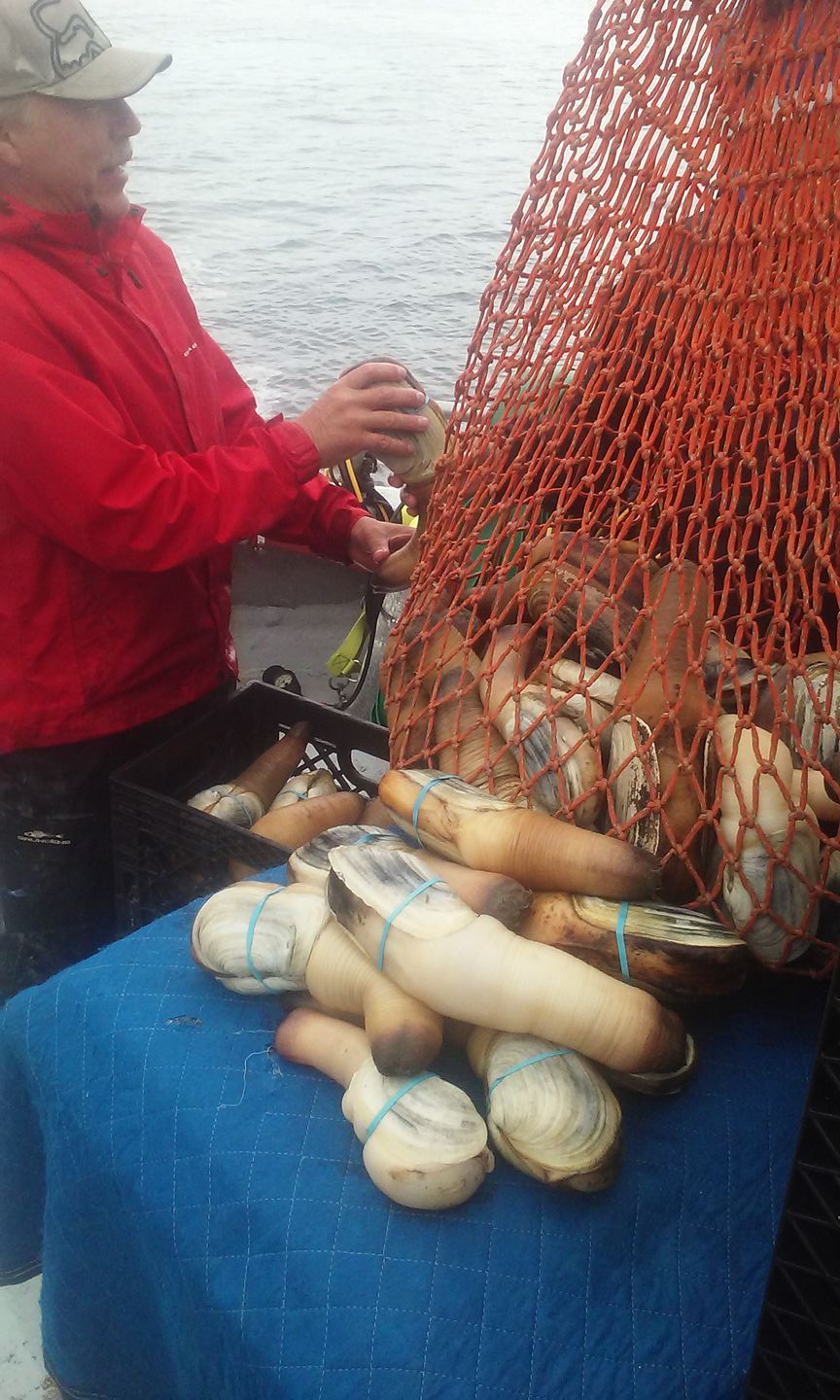
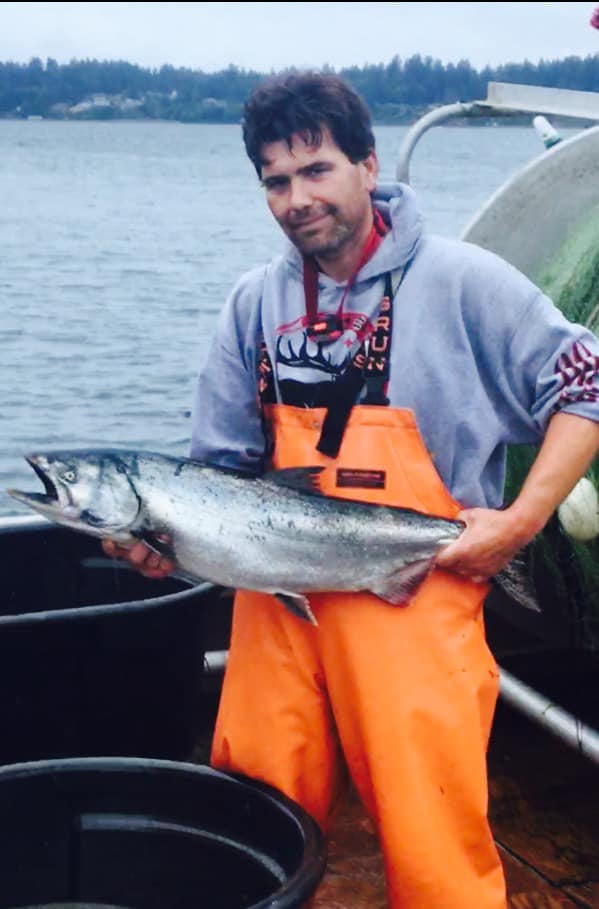
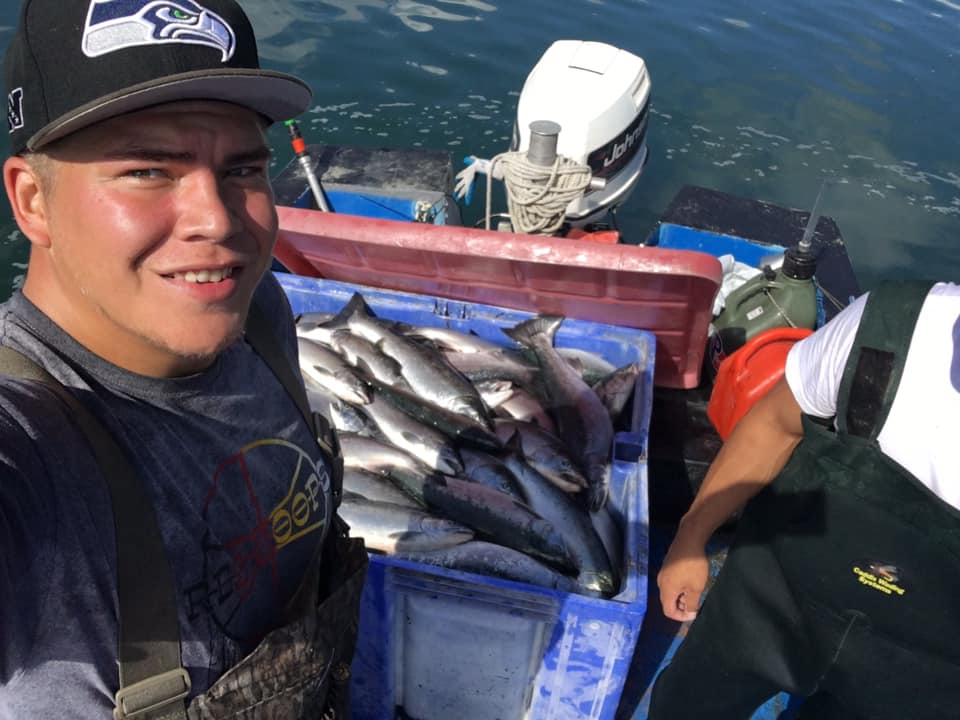
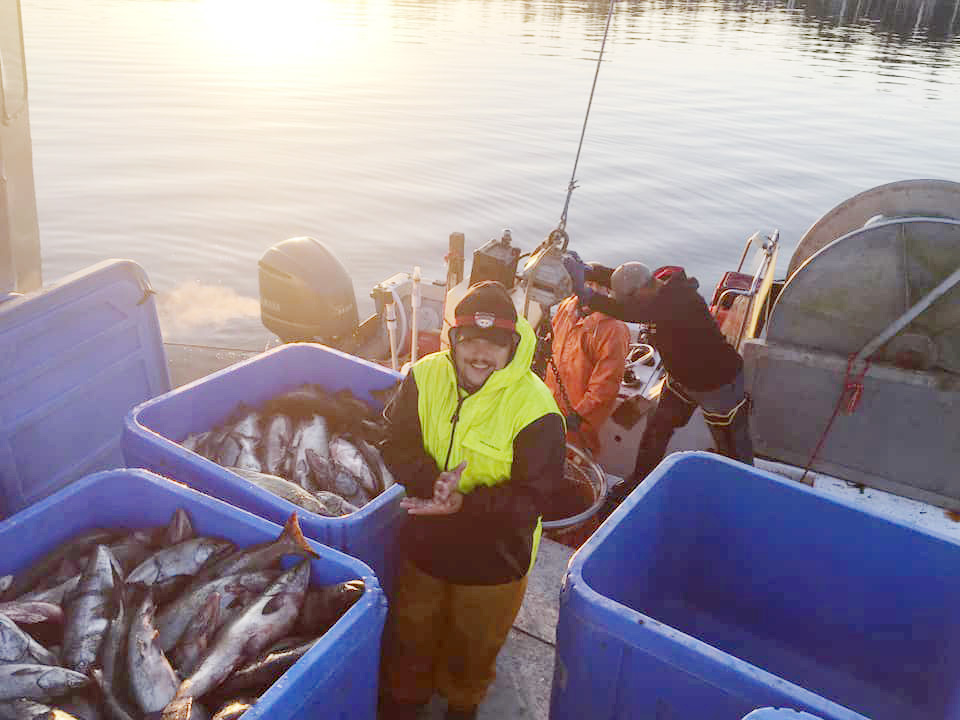
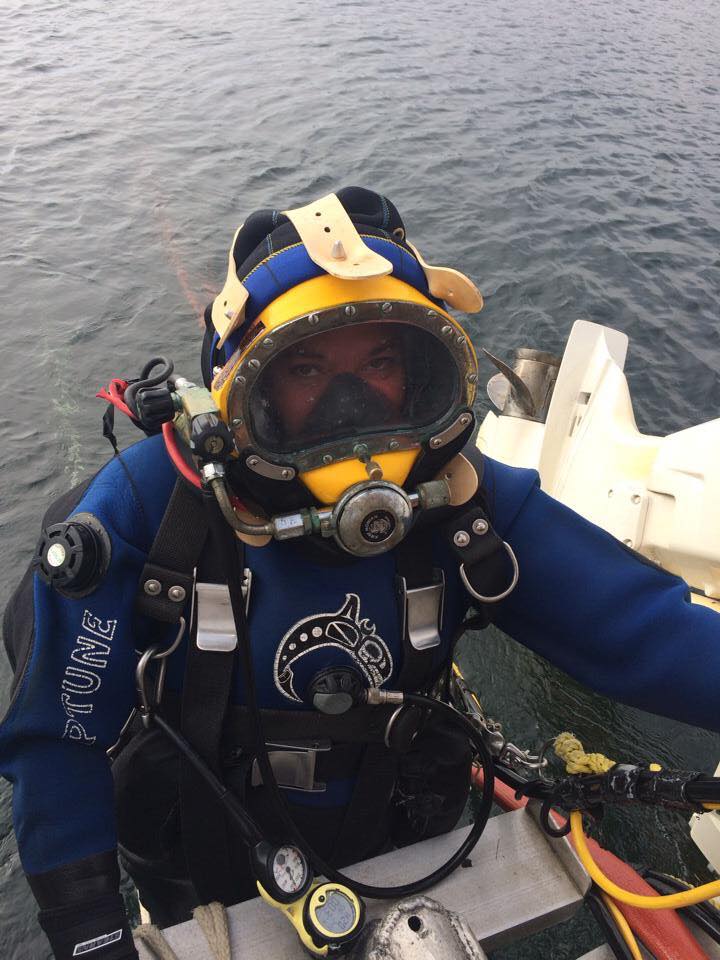
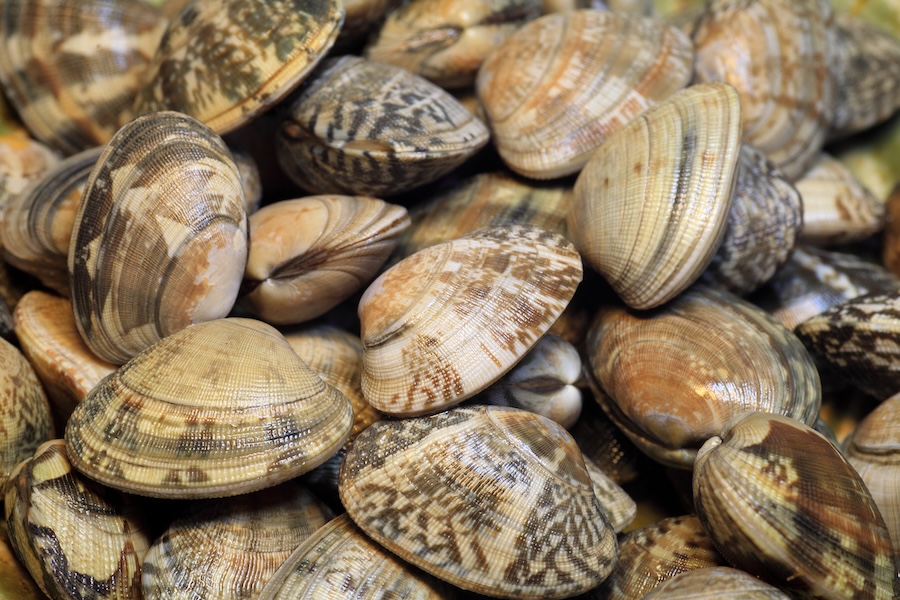
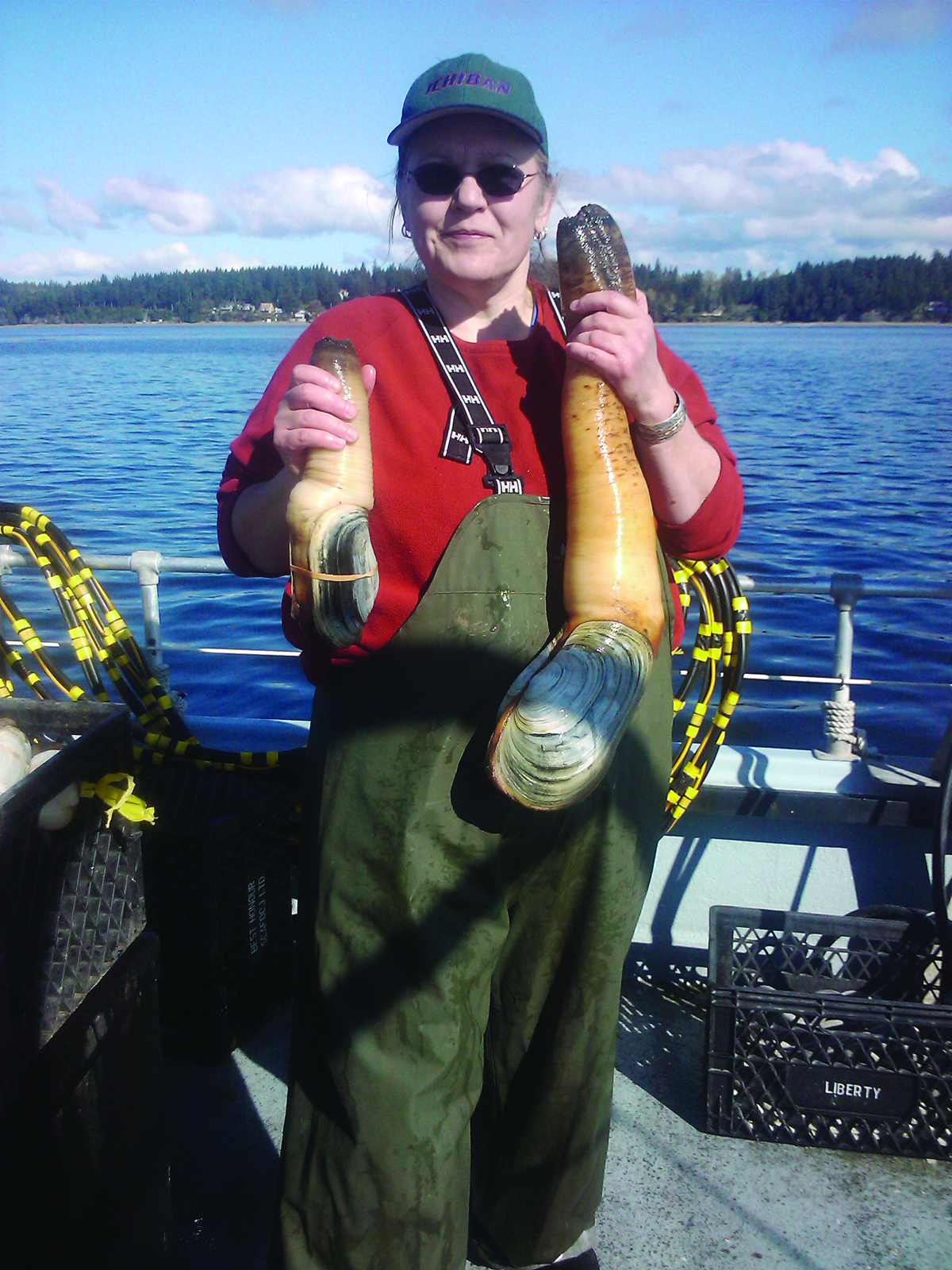
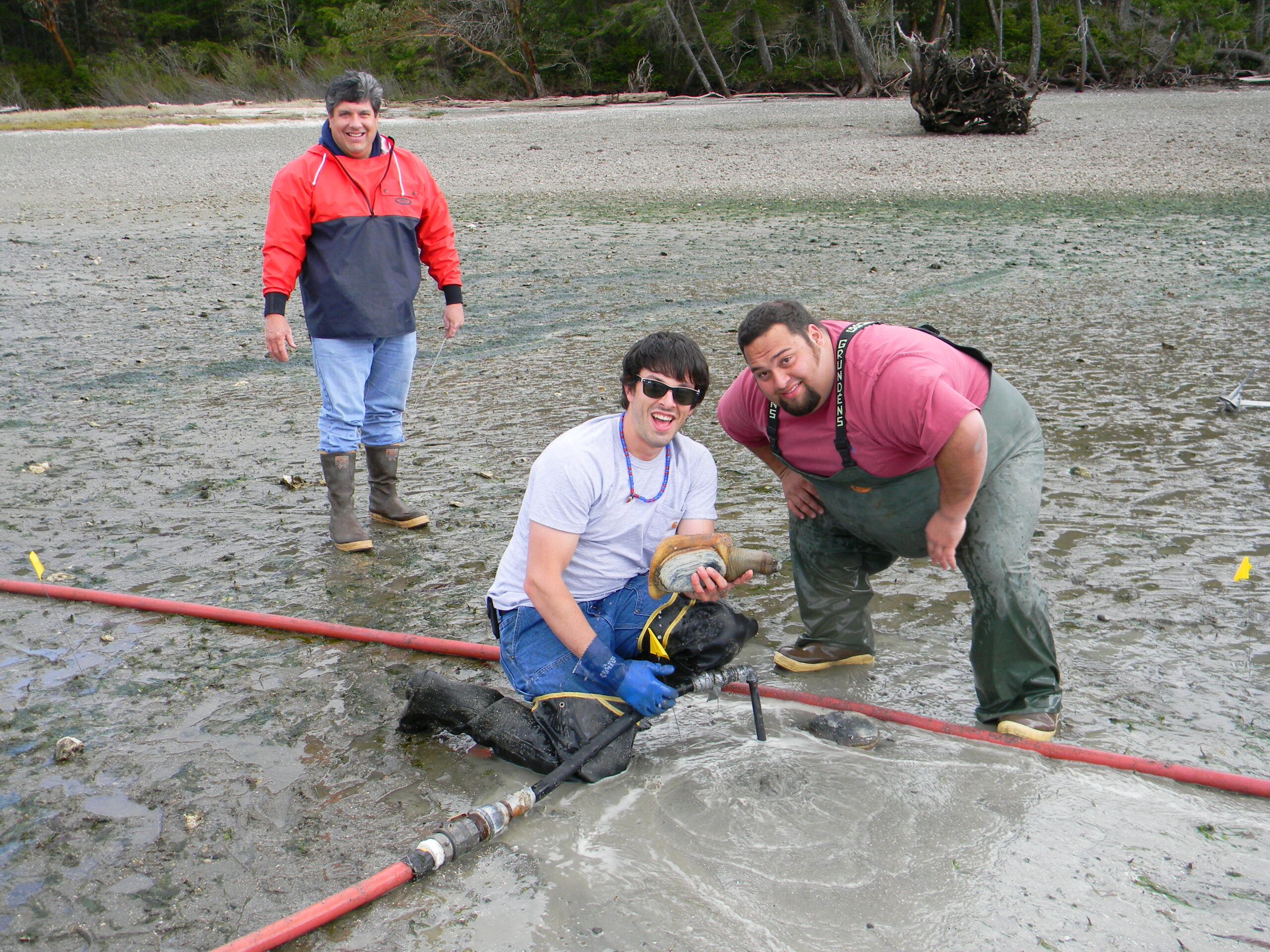
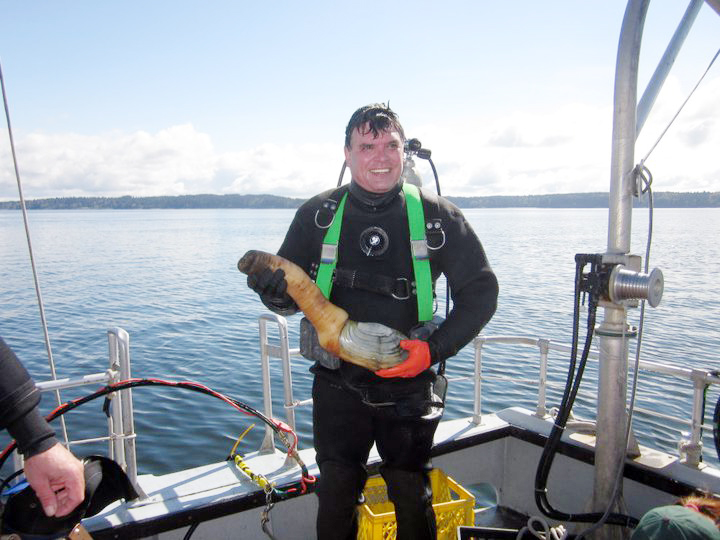
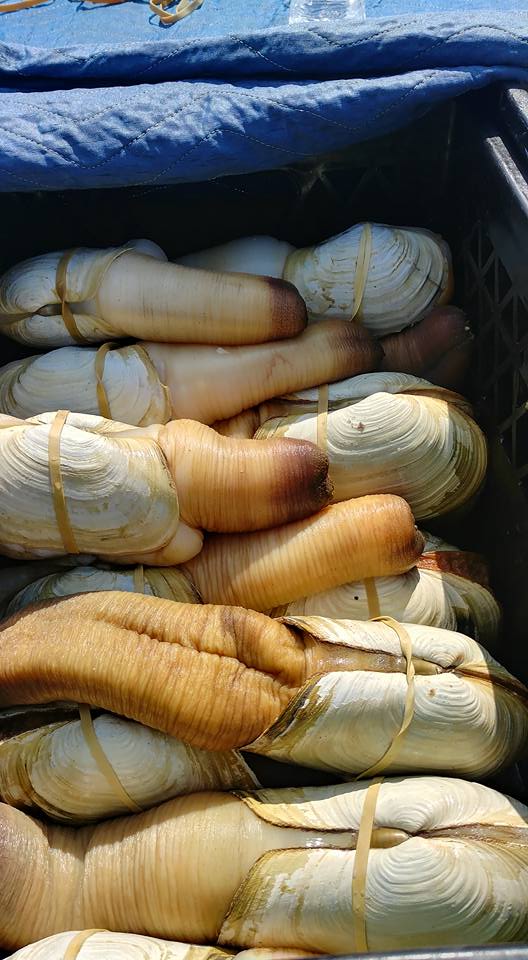
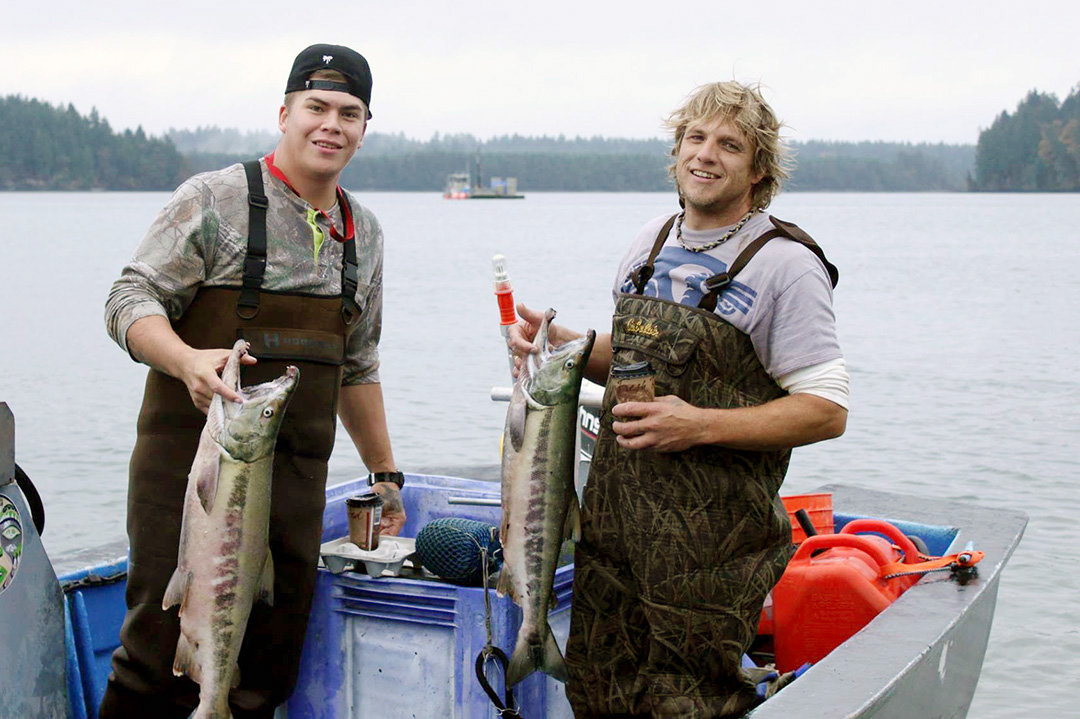
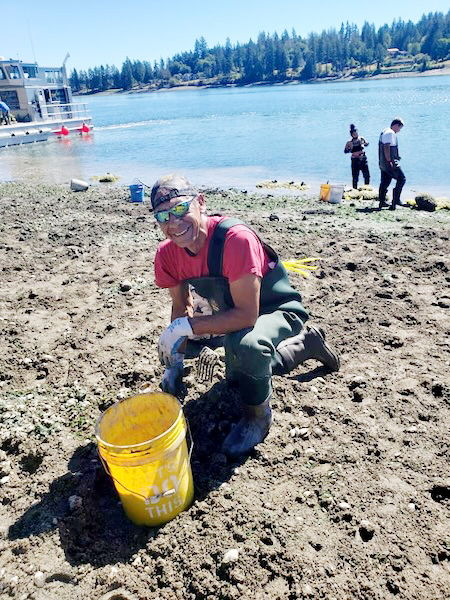
Shellfish, clams, geoduck—that’s our medicine. It feeds our spirit and gives strength to heal.
Barbara Henry
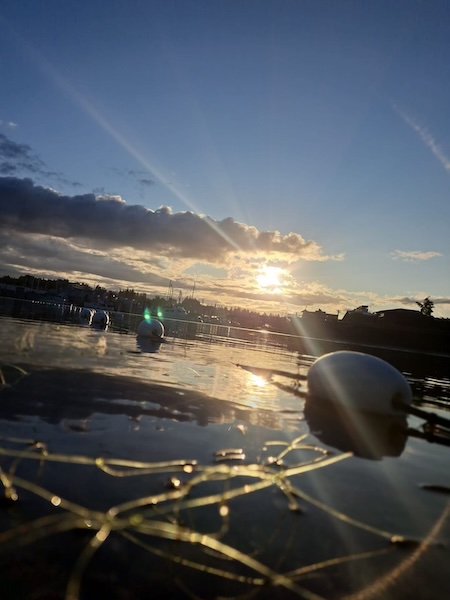
Today’s Squaxin Island Tribe bears the name of the ancestors who lived along sqʷax̌səd (Squaksin), also known as Case Inlet. This large inlet connects several smaller waterways, bridging the surrounding lands and creating opportunities for trade and socialization.
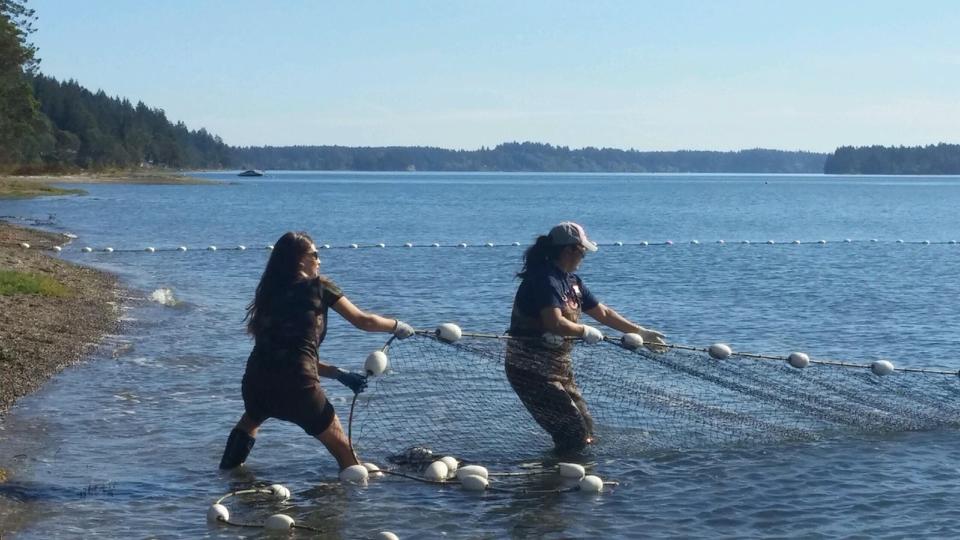
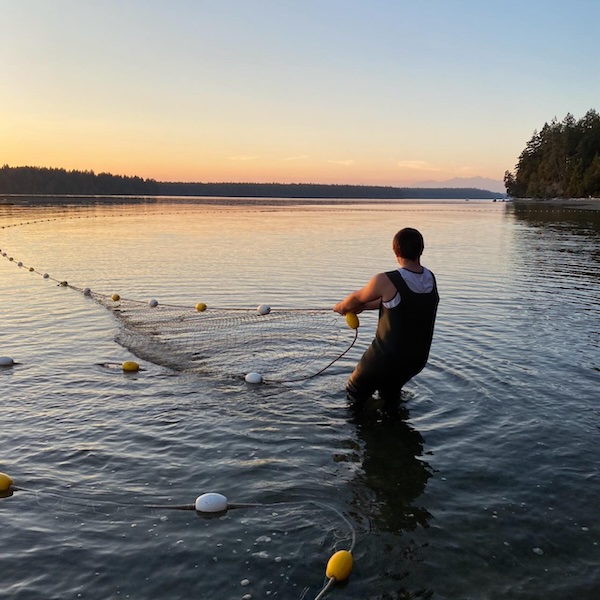
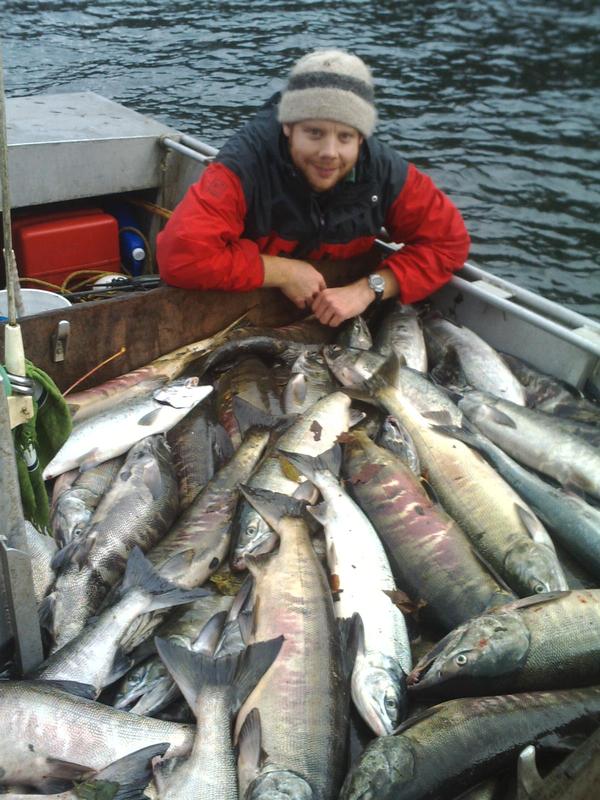
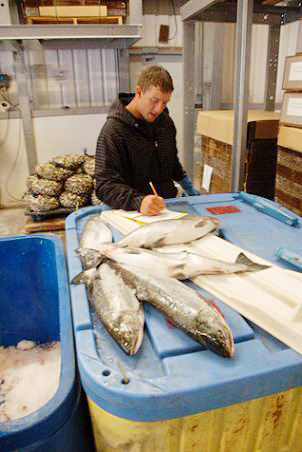
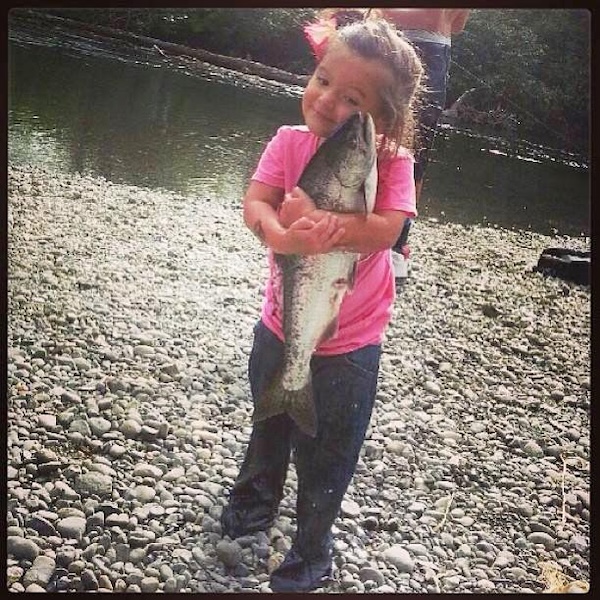
The deep waters, healthy shorelines, and rich soil make sqʷax̌səd a place of abundance. The foodways of Squaxin Island ancestors were nutritious and held great cultural significance. Harvesting elk, deer, shellfish, salmon, and plants was accompanied by ceremonies that recognized the gift of life given by plant and animal relatives. These ancestral teachings persist today, honoring and respecting the nonhuman relatives.
As Americans moved to Squaxin territory in the 1800s, they brought with them very different understandings of land, plants, and animals. Rather than live in reciprocal relationships with these creatures, settlers (and the laws that governed them) saw resources to claim and exploit. While there were certainly happy encounters between settlers and Squaxin ancestors, the legal frameworks carried by newcomers would prove incompatible with preexisting Indigenous relationships to land and sea.

History Bite: Treaty of Medicine Creek and Squaxin Island
We were a different people. We didn’t put up fences and NO TRESPASSING signs. No, to this generation you could no more sell a breath of air than own a piece of land. This treaty started the whole problem.
James Krise
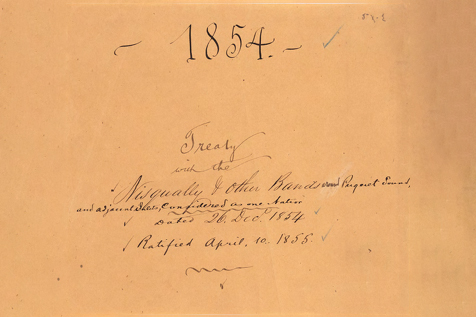
In December 1854, leaders of the Nisqually, Puyallup, Steilacoom, Squaksin, S’Hotlemamish, Steh-chass, T’Peeksin, Squi-aitl, and Sa-heh-wa-mish communities, along with Washington Territory Governor Isaac Stevens, signed the Treaty of Medicine Creek. The treaty negotiations were conducted in Chinook Jargon, even though Territorial officials were familiar with Lushootseed (the region’s indigenous language). As a trade language, Chinook Jargon had limited words to explain the complex agreements. The cultural norms of treaty negotiation, signing, and the text itself were unfamiliar to the area’s Indigenous peoples.
For these reasons, the Treaty of Medicine Creek was—and remains—a contentious document. The circumstances and terms of the agreement, in fact, prompted the United States to declare war against the Indigenous communities in the Puget Sound soon after its signing. Still, Indigenous leaders ensured that the treaty reserve their peoples’ right to fish, gather, harvest, and hunt as they always had. For its part, the U.S. government claimed authority over an enormous amount of land previously inhabited by Indigenous communities.
For more than a century following the Medicine Creek Treaty, the U.S. government ignored its treaty obligations. Tribal communities were forcibly removed from their expansive homelands and placed on Squaxin Island, an island of about two square miles without adequate food or freshwater. A once abundant life rich in food, spiritual nourishment, and social connection became one of scarcity as Indigenous communities adapted to the harsh conditions.
Still, Squaxin ancestors survived. Oral histories reveal the perseverance that sustained those on the island. For example, one Tribal member named Dick Jackson regularly paddled from Squaxin Island to what is now the man-made Capital Lake. This area was once an important estuary for salmon, where Jackson could harvest salmon to feed his people. Jackson kept paddling, even when hostile settlers shot at him.
As time passed, Squaxin ancestors left the island in search of employment, family, and better conditions. Today, there are no year-round residents of Squaxin Island, although Tribal members continue to visit the island that unites their past, present, and future.
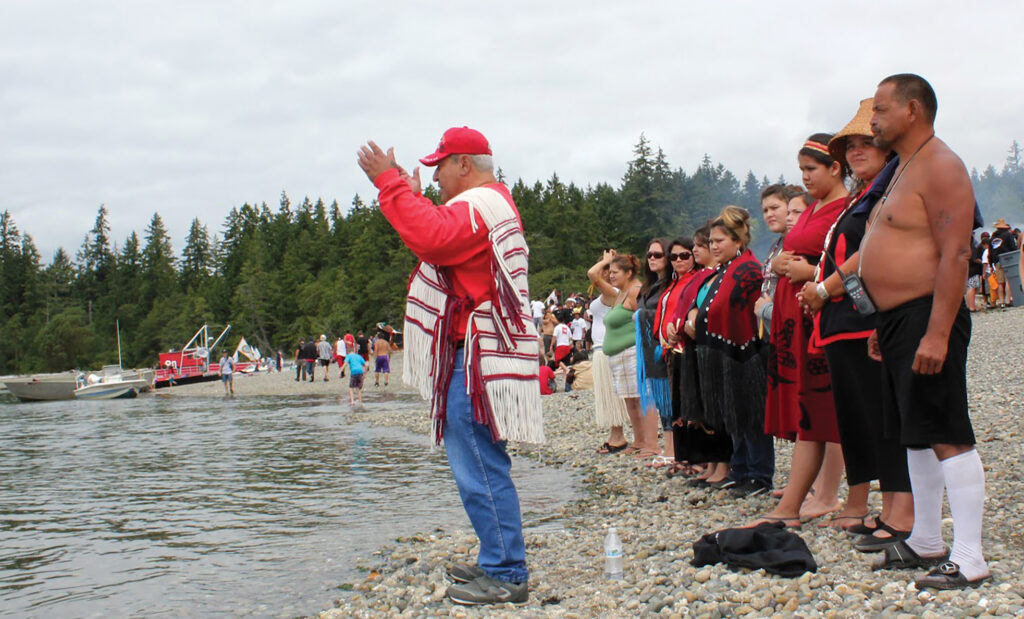
Learn more about the Treaty of Medicine Creek and its aftermath from the four-part Puget Sound Treaty War Panel with representatives of signatory Tribes—including Squaxin Island’s own Charlene Krise and Margaret Henry.
dəxʷč̓aʔč̓aʔał (Noo-Seh-Chatl): Henderson Inlet
Known as the People of the Water, the Squaxin people have long recognized the interdependence of land and sea. One group of Squaxin ancestors, called the dəxʷč̓aʔč̓aʔał (Noo-Seh-Chatl), were a skilled maritime people living in the area known today as Henderson Inlet. Flowing into st̓əč̓as (Steh-Chass, also known as Budd Inlet) to the west and the Nisqually Reach to the east, the waters of Noo-Seh-Chatl nurtured daring navigators.
But the dəxʷč̓aʔč̓aʔał people’s seafaring skills relied upon the land, too. They forged trails through the surrounding forests, connecting villagers to the massive cedar trees used to carve canoes. Land trails also allowed for the quick exchange of trade and information, acting as a channel for the knowledge and goods gleaned from maritime trade to trickle inland. The convergence of land and sea at dəxʷč̓aʔč̓aʔał connected Squaxin ancestors to the resources, information, and social networks that enabled an abundant life.

History Bite: The Making of Great Canoes
Carving a canoe is sacred work honoring the cedar tree which has given its life, transforming into a canoe.
David George Krise
The great cedar canoe shows us how land and sea are inseparable. Born in dense forests, shaped by human hands, and sailed across rough waves and raging channels, cedar canoes prove that we are bound to earth and sea alike.
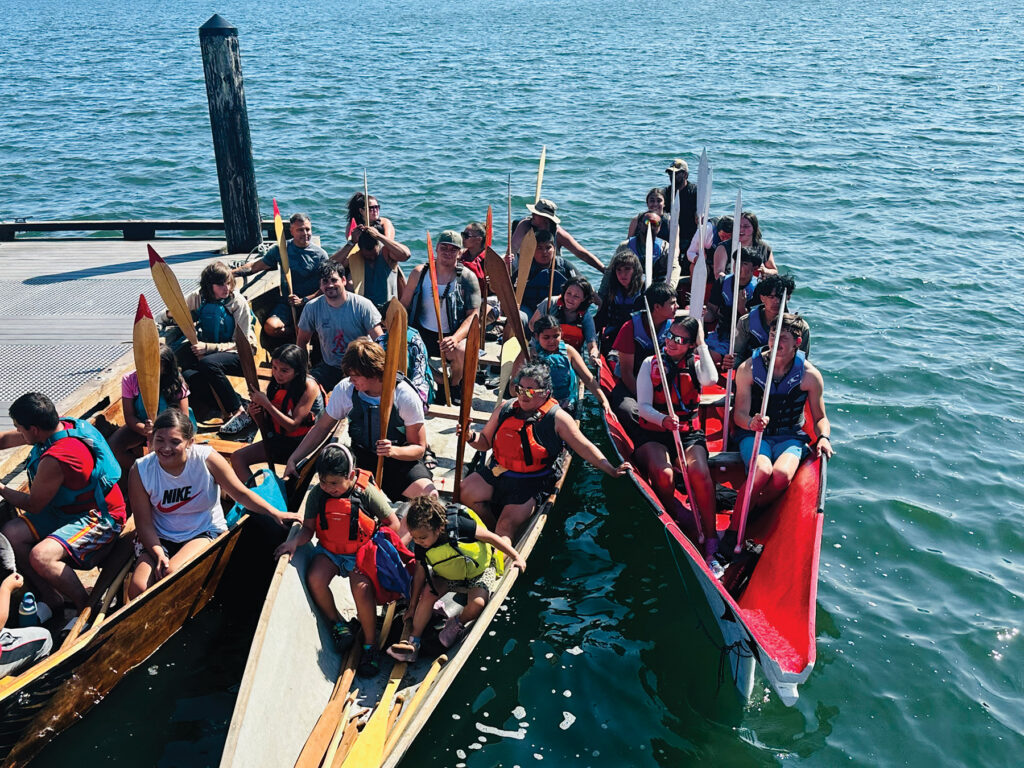
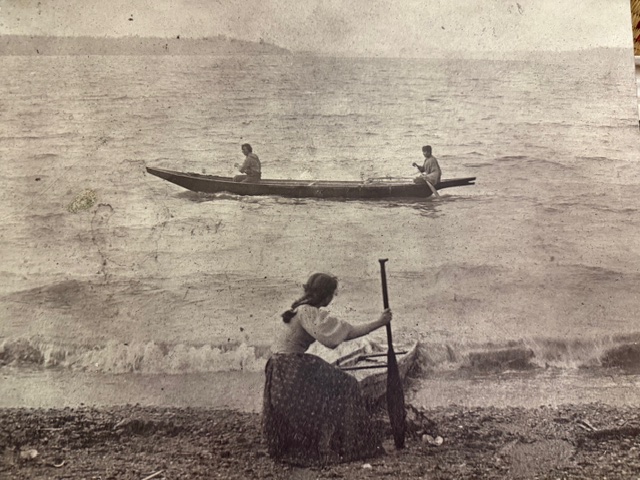
My teacher and I used the ancient traditional body measurements: arm span (six feet), elbow to fingertips (1.5 feet), finger width for the depth or width of the siding, the use of wooden pegs instead of calipers.
David George Krise
The dəxʷč̓aʔč̓aʔał (Noo-Seh-Chatl) people were expert canoe crafters. Before harvesting the tree of life, sacred protocols had to be followed along with proper traditional etiquette. Crafting a canoe required both strength and precision. Even today, the age-old indigenous design is engineered to endure rough weather and crashing waves while maximizing speed and maneuverability. With a standardized shape and form refined over the course of generations, the result is a perfected, seaworthy vessel.
Generations of dəxʷč̓aʔč̓aʔał were masters of the marine waters, and this is evident in their canoe engineering which could also master the tides, currents, and rhythms of the sea. With skies above, sea below, and canoes to connect people to one another, Squaxin ancestors forged a cultural identity as People of the Water.
Many teachings travel with the canoe, helping people to understand inner strengths and empowering respect for each other.
David George Krise
st̓əč̓as (Steh-Chass): Budd Inlet
When I was only a small kid, my kaya (grandmother) and I paddled to Olympia. I remember seeing white beaches. She said it was our land… The old people would say that Steh-Chass (Olympia) once had been a beautiful garden of Eden.
Randy Krise
Squaxin Island Tribal members also trace their lineage to st̓əč̓as (Steh-Chass), an ancient name for the place known today as Budd Inlet which includes the city boundaries of Olympia. With a wealth of natural resources and easy access to the Salish Sea, st̓əč̓as provided a setting for the exchange of resources, language, animals, and ideas. The st̓əč̓as watershed mingles the flowing fresh streams from the spəkʷəł (Deschutes River) with the saltwater of the sea, resulting in a complex ecosystem. Nearby inland forest hosted deer, elk, plant pharmaceuticals, migratory birds, and other boundless gifts. Towards the sea, salt marshes provided ecosystem protection, while freshwater creeks offered spawning beds for salmon and homes for beavers and otters. Kelp forests also flourished in the deep, cool sea waters.
The plentiful lands and waters of st̓əč̓as sustained the people, plants, and animals who lived there. But despite thousands of years spent in close relationship with the environment, the Squaxin Island Tribe would eventually be forced to fight for its ancestral right to harvest the bounties of the st̓əč̓as.

History Bite: Fish Wars
When Squaxin ancestors signed the Medicine Creek Treaty in 1854, they did so with the expectation—which they had been assured was specifically mentioned in the treaty document—that their descendants would retain permanent access to fish as they always had. But for over a century, Indigenous fishers were systematically prevented from accessing their ancestral fishing grounds. Settler prejudice—and, later, that of Washington residents—culminated in violence against Indigenous fishers. Tribal members often encountered armed commercial and sport fishermen who threatened them on the water up into the 1970s.
I have been shot at a few times on the water. It’s very scary, I’m out there earning my living… The second I go out on the water using my Indian heritage, then the slander starts. Just because I’m on the water! It hurts, it hurts deep.
Mark Peters
Nor was it nonindigenous vigilantes alone who targeted Tribal members. Official agents of the State of Washington repeatedly arrested and beat Tribal fishers exercising their treaty rights. Game wardens confiscated Tribal fishing boats, nets, motors, and even fresh catch.
But Washington’s Indigenous peoples knew that they held rights the State couldn’t deny. Long before treaties even existed, Squaxin ancestors spent thousands of years practicing their rights and responsibilities with the nonhuman natural world. With immeasurable ties to the waters of the seven inlets, the Squaxin Island Tribe joined their neighbors at Nisqually, Puyallup, and other Tribes in nonviolent resistance to the settler state. No matter how many times they were arrested or jailed, Tribal leaders like Billy Frank, Jr. (Nisqually & Squaxin), Ramona Bennett Bill (Puyallup), and Janet McCloud (Tulalip) exercised their right to fish as their ancestors had.
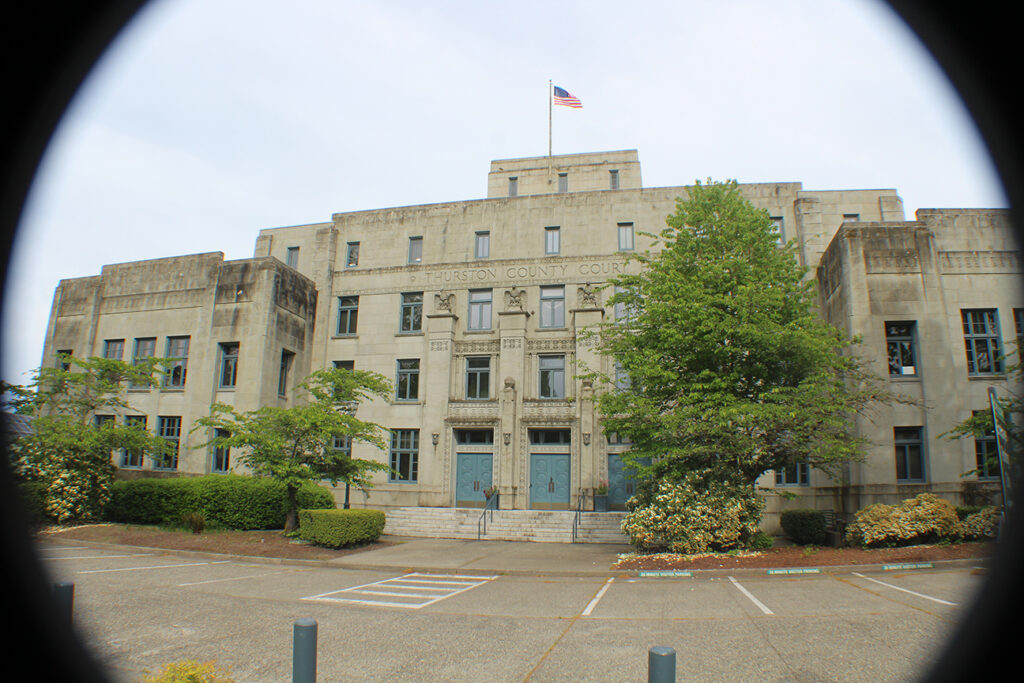
By the 1970s, this battle was playing out at the old Thurston County Courthouse in downtown Olympia. On February 12th, 1974, Judge George Boldt ruled that Tribal nations had granted settlers limited rights to fishing in the Medicine Creek Treaty. In turn, Tribes had reserved fifty percent of the available harvest for themselves. As co-managers with the State of Washington, the Squaxin Island Tribe now enjoys the legal affirmation of rights they’ve held since time immemorial.
Visit: Squaxin Park
Craving a respite from traffic or office drudgery? Check out Squaxin Park, a short 2.5 mile walk, drive, or bike ride from downtown Olympia. Secluded from the bustling streets of downtown, yet close enough for a lunchtime stroll or afterschool adventure, Squaxin Park offers scenic activities for all ages. Throughout the 314-acre nature park, visitors can enjoy around four miles of hiking trails, two miles of beachfront access, basketball courts, a playground, and picnic areas of various sizes.
Squaxin Park is notable not only for its picturesque trails and refreshing sea breeze, but also for its ties to Native Squaxin ancestors. The present-day location of Squaxin Park was once a vibrant port where the st̓əč̓as (Steh-Chass) people engaged in trade. Although Catholic missionaries displaced the st̓əč̓as in the mid-1800s, and park ownership went to the City of Olympia in 1905, the ties between st̓əč̓as and the area did not disappear. In 2022, the park was renamed Squaxin Park in recognition of the site’s indigenous roots—replacing the former name of Priest Point Park, which recognized the nineteenth-century Catholic mission there.
Today, Squaxin Park honors the enduring connections between Squaxin ancestors and the Salish Sea, where land and water converge to sustain travel, trade, and cultural exchange.

sʔəhiw (Sa-Heh-Wa-Mish): Hammersley Inlet
The delicacies offered from the Heart of the Earth (the sea), such as clams, oysters and salmon, have always been highly respected by our people. The aquatic creatures that sustain us and give us life offer much more than mere physical nourishment; they provide spiritual sustenance as well.
Squaxin Island Heritage Committee
sʔəhiw̓ (Sa-Heh-Wa-Mish), today commonly known as Hammersley Inlet, is a narrow inlet of saltwater connecting the town of Shelton to the larger Salish Sea. At sʔəhiw, the water demands respect. As the tide ebbs, the inlet’s waters rush out at great speed, much like the flow of a strong river. For those traveling by water, these sudden changes in depth and speed can be deceptive.
Both saltwater and freshwater hold important places in Squaxin culture and spirituality. Whether fishing, navigating with a canoe, harvesting oysters, or simply observing the changing tides over time, the untamable power of the sea requires working with the water, rather than against it. Similarly, freshwater gives life to human and nonhuman creatures alike. sʔəhiw̓ (Sa-Heh-Wa-Mish) ancestors have spoken of a waterfall at the inlet’s entrance, where travelers could pause to drink and honor the life-giving freshwater.

I’ve been around the water so long, I understand how strong the spirit of the water is. When we go out there, we’re at the mercy of the water.
Joe Seymour (Canoe Skipper)
History Bite: The Indian Shaker Church
The sʔəhiw̓ (Sa-Heh-Wa-Mish) area is notable for the indigenous religion that originated near its shores and spread via local water and land trails.
In 1881, a Squaxin ancestor named John Slocum lay sick near the shore of Skookum Bay. Despite the best efforts of Native doctors and healers, Slocum’s breath ceased flowing and his heartbeat pulsed no more. By all accounts, Slocum died that day.
Yet Slocum would rise soon after, telling those around him of the great light he saw while in the throes of death, and the angels who directed him back to earth.
Following this experience, Slocum and his wife Mary Thompson founded a religion that came to be called the Indian Shaker Church, where they would blend Christian teachings with Indigenous ones.
By the time of the church’s founding, the sʔəhiw̓ people had been intertwined with neighboring villages and expansive trade and kinship networks for many generations. The existing land trails, as well as the familiar maritime waters, provided pathways for the spread of the Indian Shaker Church teachings. With its emphasis on healing heart, spirit, and illness through community support, the ceremonial songs and other practices of the Indian Shaker Church resonated with indigenous peoples far and wide.
Today, the Indian Shaker Church maintains an active membership that carries forward its teachings. Though these followers may be widespread, they remain deeply connected to the waters of sʔəhiw̓, where the Indian Shaker Church religion was founded.

We would go to the meeting to watch the people and how they rang the bell. After the bells had been rung we would cross ourselves, and then we would shake. We’d dance around the room.
Josephine Peters (Elder)
sq̓ʷayaił (Squi-Aitl): Eld Inlet
sq̓ʷayaił (Squi-Aitl) was once home to thriving villages of Squaxin ancestors and served as a key hub for travel and trade along the Salish Sea. Remnants of bone, stone, shell, baskets, and nets dated hundreds of years old reveal an important trade network.
Large shell middens in this area show that Squaxin ancestors consumed shellfish extensively for hundreds of years. Using terraces made with rocks or fallen trees, these ancestors actively cultivated the area’s only native oyster, today known as the Olympia oyster.


The natural abundance of sq̓ʷayaił has long sustained the health and traditions of Squaxin ancestors. In turn, both past and present-day Tribal members have fostered reciprocal relationships with land and water. This includes a deep commitment to caring for the natural resources that sustain them—including the waters themselves as well as the fish, shellfish, and marine mammals that live within them.
Today, the Tribe plays a major role in protecting and advocating for the Salish Sea ecosystem. With a robust Natural Resources Department, the Tribe partners with organizations including the Northwest Indian Fisheries Commission, the Puget Sound Water Quality Authority, the Washington State Department of Fish & Wildlife, and others to advance natural resources enhancement and protection initiatives.
The Squaxin Island Tribe’s Natural Resources Department mission is to maintain a leadership role in perpetuating natural resources including water quality, fish, shellfish, wildlife, timber and plants, while promoting, preserving, protecting and restoring habitat. Mother Earth and her natural resources are the cultural foundation for the people of Squaxin Island.
Visit: Salish Seafoods
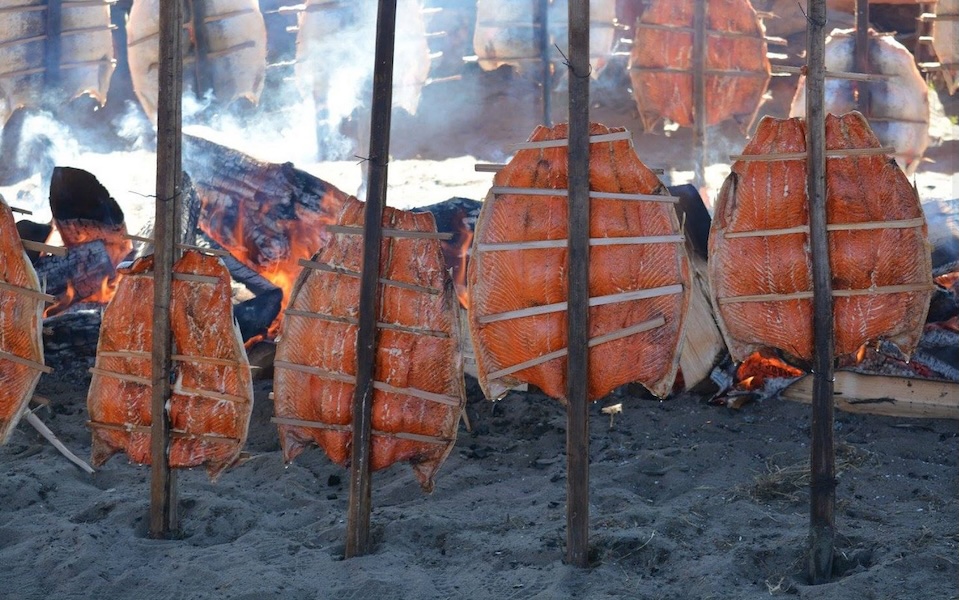
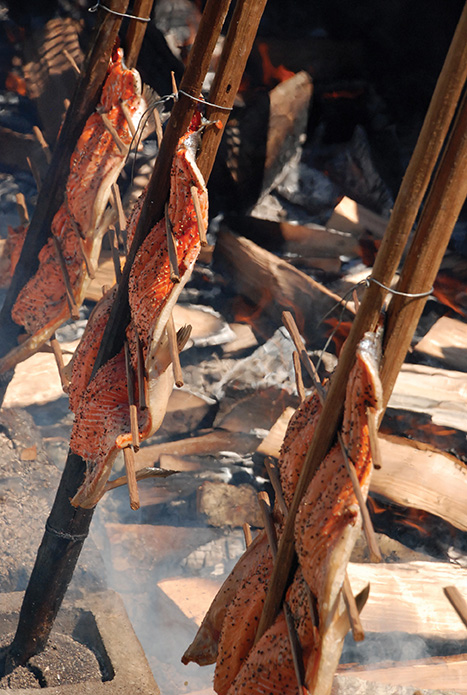
The Olympia oyster is Washington’s only native oyster—and it has long been a hallmark of Squaxin cuisine. Historically, Squaxin ancestors smoked the oysters with wood from local forests or beaches to enhance the flavor. Smoked oysters were then dried and used as an important part of intertribal trading.
However, starting in the mid-1800s, the colonial government stifled these generational traditions and prevented Squaxin ancestors from planting and harvesting oysters for many years. After decades of legal claims, advocacy, and protest to assert their treaty rights, the Squaxin Island Tribe purchased Harstine Oyster Company in 1971. This purchase marked a new phase in Squaxin Island commercial harvesting.
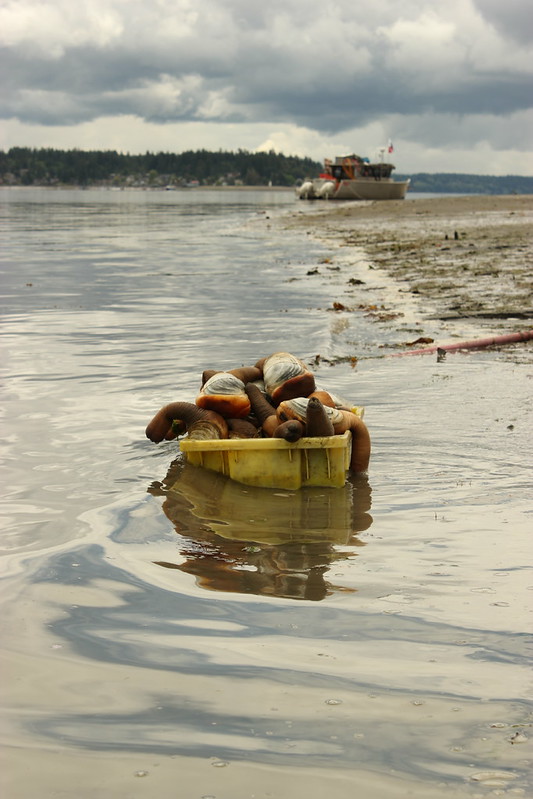
Today, you can enjoy Olympia oysters harvested straight from the Salish Sea by Squaxin Island Tribal members. At Salish Seafoods, you’ll find an array of succulent oysters, tender manila clams, and scrumptious geoduck. Not only will you have a delicious meal to share with your loved ones—you’ll also be supporting the living legacy of the Squaxin Island Tribe. Place your order online and pickup at any Squaxin Island Trading Post location in Shelton, Tumwater, or Olympia.
təpikʷsəd (T’Peeksin): Totten Inlet
My people called to-pay’-os when you busted oysters by pounding it… that’s how come they call T’Peek-Sudubsch. I was born and raised in Oyster Bay. That’s T’Peeksd.
Leonard Young
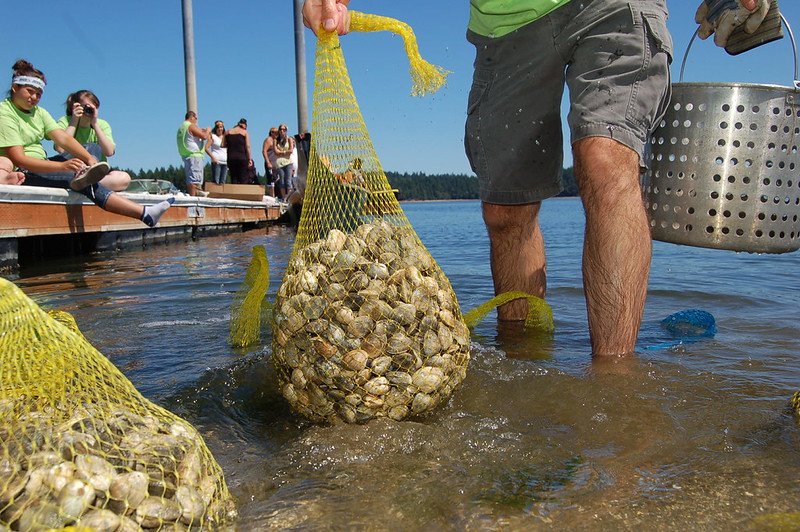
With historically plentiful oyster beds and other marine life, təpikʷsəd (T’Peeksin) has long nurtured human life. It continues to provide for the Squaxin Island people, whose relationships to the physical environment are informed by the principle of gʷədᶻadad. gʷədᶻadad is a form of Indigenous ecological knowledge translated from Lushootseed as “the teachings of our ancestors.” For the Squaxin people, gʷədᶻadad represents the braiding of ancestral teachings with the science of the natural environment.
gʷədᶻadad teachings are the foundation of Squaxin cultural identity and sovereignty. Together, these teachings facilitate a holistic understanding of physical, emotional, spiritual, social, and—most importantly—environmental wellbeing.
Read this story about the first salmon to understand how gʷədᶻadad teachings are passed down:
The First Salmon
As told by Cecil Sheeka
Once, there was a little boy, and he loved salmon. He played with salmon and he swam with salmon. Finally, the salmon people decided to take him home with them. He wanted to go, so they took him to the land where the salmon people live.
He lived there for several months, or maybe even years. The boy began to get homesick, so the salmon people agreed to take the boy back to visit his family. The salmon people knew they were coming for two reasons: to bring the little boy back to his family, and to bring them food. Messages were sent so the family would know what time of year the salmon people were coming.
And so his family prepared real carefully, cleaning the streams and cleaning the beaches, preparing for the salmon boy and the salmon people to come. The family had the ferns and the moss all ready and waiting. And they caught the first salmon, cleaned him real carefully, made sure everything was taken care of real nice, and then cooked the salmon.
But before they cooked the salmon, they took the skeleton very carefully and very ceremoniously back down to the beach. They placed the skeleton upstream to show the direction for the rest of the salmon people who were bringing the boy back for a visit. The message was clear: the family of the boy was taking very good care of the salmon that were coming back.
Every year, the salmon people still come back to visit. It is very important for us to make sure that they are welcome, taken care of, and that everything is waiting for them—including clean beaches and streams.
sx̌əƛ̓əb (S’Hotl-Ma-Mish): Carr Inlet
Imagine boarding a canoe to launch from shore before sunrise, with only the moon and stars to light your way. For Squaxin navigators, sx̌əƛ̓əb (S’Hotl-Ma-Mish) offers one such opportunity. For generations, these navigators have traversed the waters of the South Puget Sound in great cedar canoes. But the canoe itself is just one aspect of an intimate connection between people, environment, and culture.
For example, environmental factors such as weather, tides, and currents all influence how a canoe moves through water. Canoe skippers and pullers must develop precise mental maps of marine landscapes, shoal spits, mountaintops, and moon phases. To keep the crew safe, canoe skippers monitor tides, whirlpools, and wave patterns in all conditions.

Many years ago in my youth, before fancy equipment, my ancestral teachings of reading the sky, wave patterns, memorizing rising-setting points of the moon was my natural observation, my cultural wayfinding. I never worried in dense fog because of sensory awareness.
Dave Johns
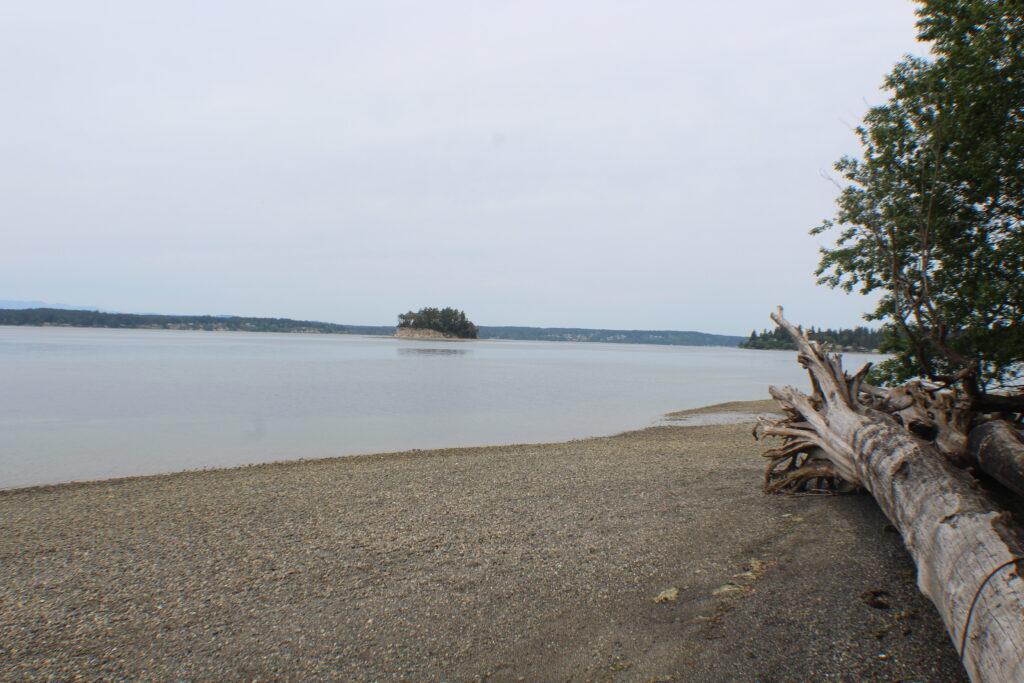
Even when it’s resting on shore, the canoe plays an important role in Squaxin culture. The canoe links today’s Tribal members with their ancestors who traveled the same waters. By teaching proper canoe etiquette alongside navigational technique, Tribal members ensure their knowledge carries forward to future generations.
It’s because of the canoe family that I learned how to make drums, I learned how to carve paddles. I became involved with our drum group. So it’s because of being on the water that I was able to use my loud voice to speak for my family.
Joe Seymour (Canoe Skipper)
Visit
Activities & Experiences
A curated list of activities and experiences at Squaxin Island, endorsed and approved by the Tribe.
Squaxin Museum, Library and Resource Center
Ready to learn directly from the Squaxin Island Tribe, and to visit these life-giving waters yourself? Head to the Squaxin Island Museum Library and Research Center, where you can follow the history of the Tribe through artifacts, storytelling, and the stunning Hall of the Seven Inlets exhibition. Click below to find regular opening hours. We also recommend calling in advance to confirm: 360-432-3839.
Squaxin Park
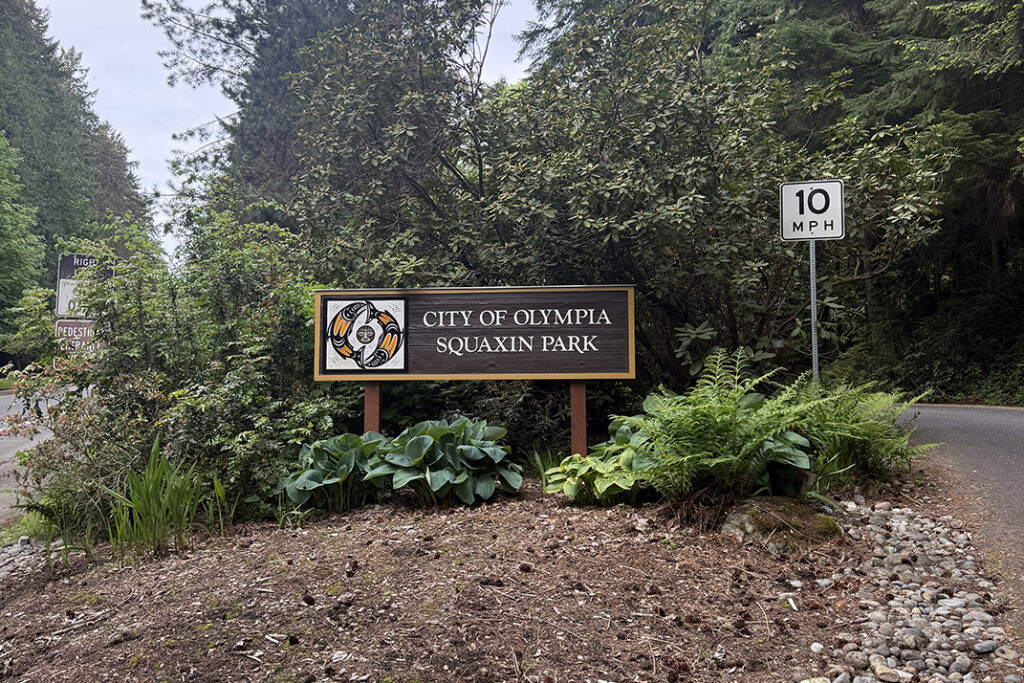
Craving a respite from traffic or office drudgery? Check out Squaxin Park, a short 2.5 mile walk, drive, or bike ride from downtown Olympia. Secluded from the bustling streets of downtown, yet close enough for a lunchtime stroll or afterschool adventure, Squaxin Park offers scenic activities for all ages. Throughout the 314-acre nature park, visitors can enjoy around four miles of hiking trails, two miles of beachfront access, basketball courts, a playground, and picnic areas of various sizes.
Squaxin Park is notable not only for its picturesque trails and refreshing sea breeze, but also for its ties to Squaxin ancestors. Today, Squaxin Park honors the enduring connections between Squaxin ancestors and the Salish Sea, where land and water converge to sustain travel, trade, and cultural exchange.
Food & Lodging
Restaurants, wholesalers, and accommodations owned by Squaxin Island Tribe and its members.

Salish Seafoods
The Olympia oyster is Washington’s only native oyster—and it has long been a hallmark of Squaxin cuisine. Historically, Squaxin ancestors smoked the oysters with wood from local forests or beaches to enhance the flavor. Smoked oysters were then dried and strung into necklaces used in intertribal trading and bartering.
However, starting in the mid-1800s, decades of decisions in the territorial legislature prevented Squaxin ancestors from planting and harvesting oysters in their usual and accustomed areas. After decades of legal claims, advocacy, and protest in efforts to assert their treaty rights, the Squaxin Island Tribe purchased Harstine Oyster Company in 1971. This purchase marked a new phase in Squaxin Island commercial harvesting.
Today, you can enjoy Olympian oysters harvested straight from the Salish Sea by Squaxin Island Tribal members. At Salish Seafoods, you’ll find an array of succulent oysters, tender manila clams, and scrumptious geoduck. Not only will you have a delicious meal to share with your loved ones—you’ll also be supporting the living legacy of the Squaxin Island Tribe. Place your order online and pickup at any Squaxin Island Trading Post location in Shelton, Tumwater, or Olympia.
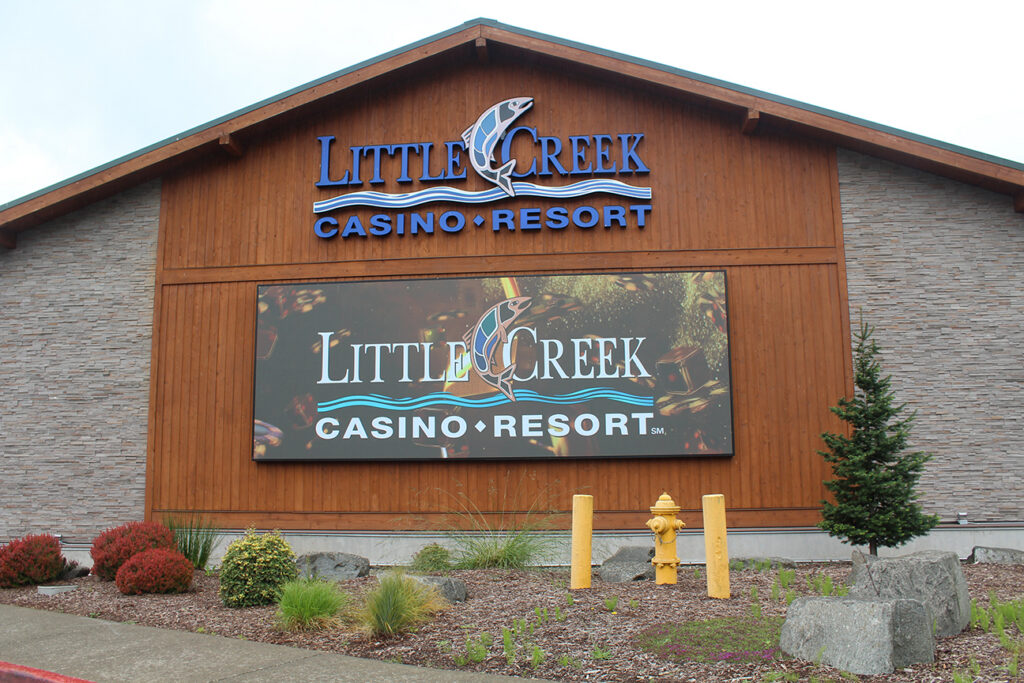
Little Creek Casino and Resort
Just fifteen minutes north of Olympia and an hour from Seattle, the Squaxin Island Tribe’s Little Creek Casino and Resort is your one-stop-shop for exhilarating games, mouth-watering meals, luxurious spa treatments, and leisurely rounds of golf. Wrap up a day of hiking with a bucket of clams at the Seafood Bar, or treat yourself to a customized Seven Inlets massage. Whether you’re staying, playing, or both, your time at the Little Creek Casino and Resort directly supports Tribal businesses—and you’ll leave feeling rejuvenated for your next adventure.
Dining at Little Creek Casino:
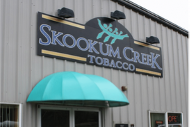
Skookum Creek Tobacco Company, Inc.
Photo courtesy of the Squaxin Island Tribe.
Since 1999, the Squaxin Island Tribe has owned and operated the Skookum Creek Tobacco Company, Inc. Formed to diversify Tribal enterprises, the profits of Skookum Creek Tobacco support Tribal healthcare, education, economic development, and employment. Stop by Skookum Creek Tobacco today, or call 360-462-3446 for more information or to schedule a tour of the facilities.
Additional Recommendations from the Squaxin Island Tribe
Activities and experiences recommended by the Squaxin Island Tribe for their longstanding working relationships with the Tribe, as well as their incorporation of Salish artwork, history, and plant identification.
Billy Frank Jr. Nisqually National Wildlife Refuge
Learn More
The Squaxin Island Tribe is a federally recognized Tribal nation signatory to the 1854 Treaty of Medicine Creek. Tribal headquarters are located in Kamilche near the city of Olympia. Squaxin Island Tribal members include ancestors of the Noo-Seh-Chatl of Henderson Inlet, Steh Chass of Budd Inlet, Squi-Aitl of Eld Inlet, T’Peeksin of Totten Inlet, Sa-Heh-Wa-Mish of Hammersley Inlet, Squaksin of Case Inlet, and S’Hotl-Ma-Mish of Carr Inlet. Because of the close enduring relationship between the Squaxin Island Tribe and surrounding waterways, the Tribe is known as the People of the Water. Learn more about the Squaxin Island Tribe’s history and culture on the Tribal website.
This section has been reviewed and approved by the Squaxin Island Tribal Council.
Tip: If you’re thinking about working on a project related to the Squaxin Island Tribe or their ancestral territory, start by reaching out to the Tribal government at 360-426-9781. They can direct you to the appropriate Tribal contacts to ensure that your project is aligned with Tribal prerogatives and tells the most complete story possible.
Squaxin Island Tribe’s History
This page, published on the Squaxin Island Tribe’s website, provides an overview of the Tribe’s history.
History of the Squaxin Island Tribe
Excerpted from a chapter in Native Peoples of the Olympic Peninsula, this three-page essay outlines key aspects of Squaxin Island history.
A People’s History of the Seven Inlets: Steh-Chass
Available free online or for sale at the Squaxin Island Museum, A People’s History of the Seven Inlets shares the story of the Squaxin Island Tribe’s connection to the southern Salish Sea since time immemorial. This rich text addresses Squaxin ancestral foodways, contemporary traditions, expert navigation, Indigenous trade networks, impacts of colonization, treaty rights, and more accompanied by historic and contemporary photos.
Journal of Vancouver’s Voyage, April to October, 1792
Archibald Menzie served as a naturalist during the Vancouver’s 1792 expedition. Menzies’ journal includes detailed botanical accounts, as well as his observations regarding life aboard the Discovery and encounters with Indigenous people in the region (including the Squaxin Island Tribe).
Some Tales of the Puget Sound Salish
Arthur Ballard spent much of his life collecting words and stories from Indigenous peoples in Washington. This text includes stories that he recorded, translated, and transcribed from conversations with members of various Tribal nations, including the Squaxin Island Tribe.
Cultural History of the Olympia Oyster
This article discusses the cultural history of the Olympia oyster, beginning with its place in the diet of Squaxin Island ancestors.
Squaxin Island Indian Shellfish Use
Anthropologist Eugene Hunn submitted this report in 1994 during what became known as the Rafeedie Decision recognizing Tribal shellfish harvesting rights. The report discusses Squaxin Island shellfish use at the time of treaty signing in 1854.
Also check out this 1999 chapter in Ethnoecology: Knowledge, Resources, Rights in which Hunn reflects on his role as an expert witness in the court case. The chapter includes a useful table with Lushootseed names for various shellfish species.
Pioneer Reminiscences of Puget Sound
Ezra Meeker was an American pioneer who traveled the Oregon Trail. Pioneer Reminiscences of Puget Sound, along with Meeker’s other publications, recounts Meeker’s interpretations of Native (including Squaxin Island ancestors) and non-Native life in Washington Territory and Washington State. You can learn more about Ezra Meeker on this HistoryLink webpage.
Lights and Shades of Pioneer Life on Puget Sound by a Native Son
This transcription of George Blankenship’s 1923 publication covers the author’s perspectives on settlers and Indigenous peoples (including Squaxin Island) in Washington. Like many twentieth-century anthropological accounts, the text contains biased and harmful language regarding Indigenous peoples, though some useful information can be gleaned from the text. Note that although Blankenship refers to himself as “a native son,” he does not have Indigenous ancestry.
Indian Tribes of Washington Territory
This 1978 publication of George Gibbs’ nineteenth-century work in Washington Territory includes the author’s research and perspectives on Tribes in the region, including the Squaxin Island Tribe.
A Voyage of Discovery to the North Pacific Ocean, and Round the World…
This 1801 printing of George Vancouver’s expedition records the British explorer’s travels, including a significant section on his time in the Pacific Northwest and the South Puget Sound.
Indians of the Urban Northwest
This edited volume includes research essays related to Indigenous culture and society in the Pacific Northwest. In particular, see the chapter written by Erna Gunther titled “The Shaker Religion of the Northwest.”
Squaxin Island Lives
This digital record contains materials from an oral history project conducted with four Squaxin Island Tribal members in 1993. In addition to a research essay by oral historian Carrie Bratlie, the record contains audio recordings and transcriptions of interviews conducted with Tribal members Mark Peters, Calvin Peters, Josephine Peters, and James Krise.
Learn more about Squaxin Island Lives in this article by former Maritime Washington intern Vanessa Chin.
The Indians of Puget Sound: The Notebooks of Myron Eells
American missionary Myron Eells compiled travel narratives, photographs, and other interpretations of Indigenous life from his travels during the late nineteenth century. Eells’ published notebooks offer insight into various aspects of Indigenous life, including his observations on foodways, ceremony, architecture, and more. The Eells notebooks include references to Squaxin Island.
Olympia Oyster History: A Walking Tour
This walking tour guides visitors to Olympia through a tour of sites relevant to oysters in the city. The tour includes stopping at the location of a Squaxin village, a place where Native harvesters sold oysters to settlers, and other locations that illustrate the role Indigenous people played in shaping Olympia’s oyster scene.
Vancouver’s Voyage: Charting the Northwest Coast, 1791-1795
This 1992 book traces British naval officer George Vancouver’s expedition of the Northwest American coast, including his observations on Indigenous places and peoples. Vancouver’s 1792 expedition included the South Puget Sound, where ancestors of today’s Squaxin Island Tribe lived, fished, and gathered.
John Slocum and the Indian Shaker Church
John Slocum founded the Indian Shaker Church in the 1880s Sa-Heh-Wa-Mish (Hammersley Inlet). This book details the founding of the Shaker Church and its trajectory in subsequent years.
Festival of the Steh Chass 2018
This 4-minute video shows highlights from the 2018 Festival of the Steh Chass hosted on Squaxin Island territory by Salmon Defense, the Deschutes Estuary Restoration Team, and the Tulalip, Puyallup, Nisqually, and Squaxin Island Tribal nations.
Medicine Creek to Fox Island: Cadastral Scams and Contested Domains
This article provides context for the 1854 Treaty of Medicine Creek (to which the Squaxin Island Tribe is a signatory), incorporating Indigenous testimonies and oral traditions into the authors’ analysis of the treaty’s negotiation and aftermath.
Medicine Creek Remediated: Isaac Stevens and the Puyallup, Nisqually, and Muckleshoot Land Settlement at Fox Island, August 4, 1856
This article examines Fox Island council proceedings following the 1854 Medicine Creek Treaty (to which the Squaxin Island Tribe is a signatory), tracing how Governor Isaac Stevens justified the subsequent modification of the already-ratified treaty.
Told By the Pioneers: Reminiscences of Pioneer Life in Washington, Vol. 2
This volume contains interviews with early settlers in what is now Washington State, organized largely by county. Of particular relevance to the Squaxin Island Tribe is the section titled “Early Days in Mason County” by Frank Mossman.
Dale R. Croes Papers
Archaeologist Dale R. Croes has worked extensively with Tribal nations in Washington, including working with the Squaxin Island Tribe at the qwuʔgwəs archaeological site near Mud Bay. This archival collection includes correspondence, grant proposals, course materials, surveys, photographs, maps, newspaper clippings, and more related to Croes’ work.
Handbook of North American Indians, Vol. 7, Northwest Coast
This text provides background information on the Indigenous peoples of the coastal northwest, including discussions on language, environment, history, art, and the Indian Shaker Church, which was founded by John Slocum (Squaxin Island).
Northwest Ethnohistory collection, 1790-1999
The Northwest Ethnohistory collection includes oral histories, manuscripts, correspondence, maps, bibliographies, publications and photographs relating to various Native American tribes in the Pacific Northwest. Federally recognized Tribes within the Maritime Washington National Heritage area that are documented in the collection include Lummi, Makah, Muckleshoot, Nisqually, Nooksack, Puyallup, Quileute, Quinault, Squaxin, Swinomish, and Suquamish. The records contain information on art, ethnic identity, fishing, whaling, ceremonies, government, and much more. See the contents of Series X for content specific to the Squaxin Island Tribe.
Acknowledgements
Maritime Washington would like to extend its deepest gratitude to the following people for their role in guiding this project:
Charlene Krise (Squaxin Island)
Jeremiah George (Squaxin Island)
Squaxin Island Tribal Council