

What does it take to make a rope?
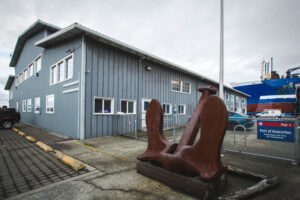
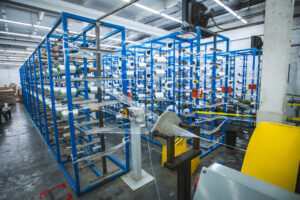
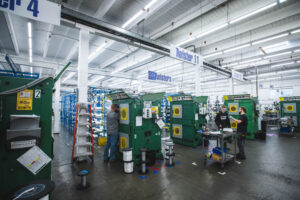
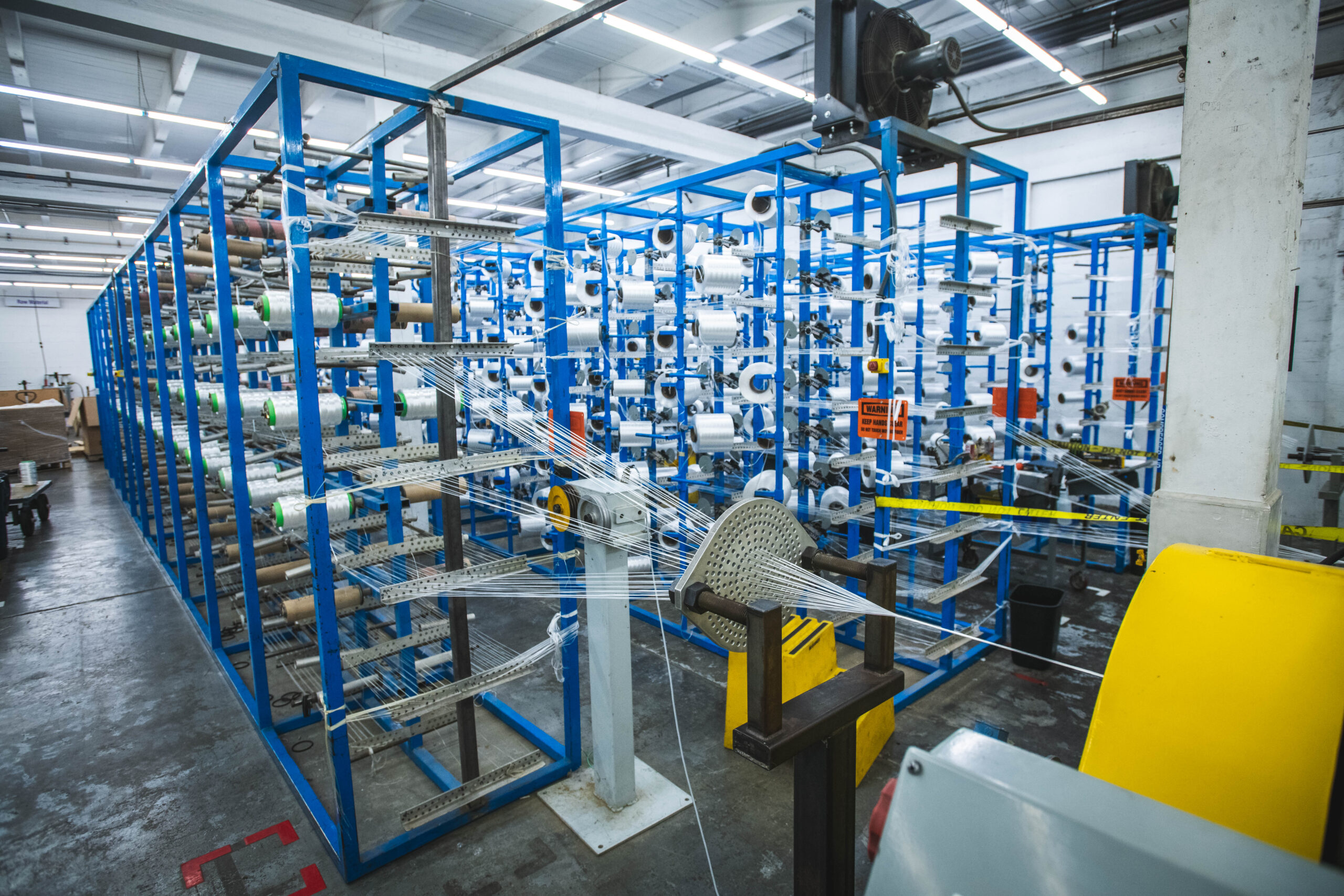
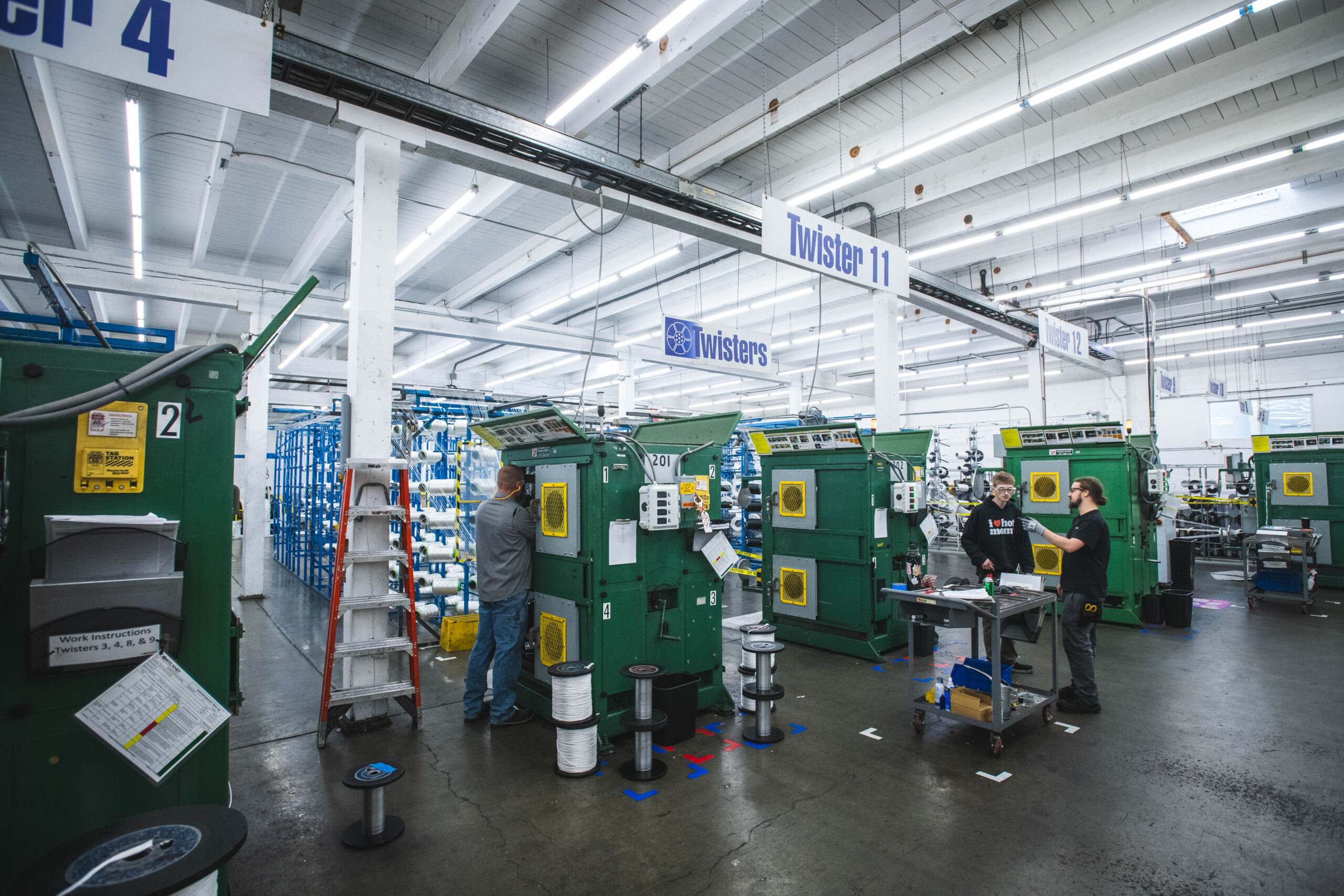
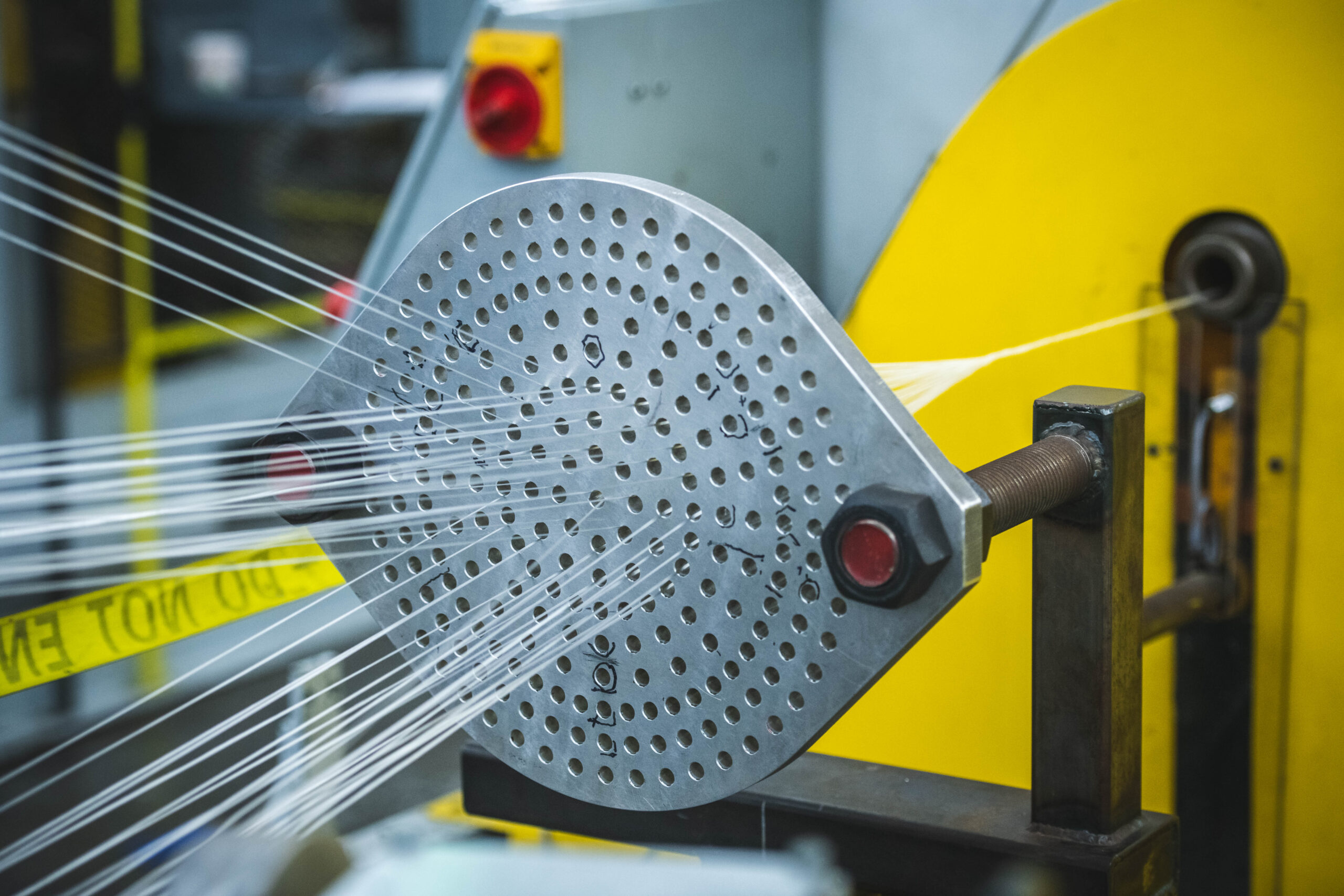
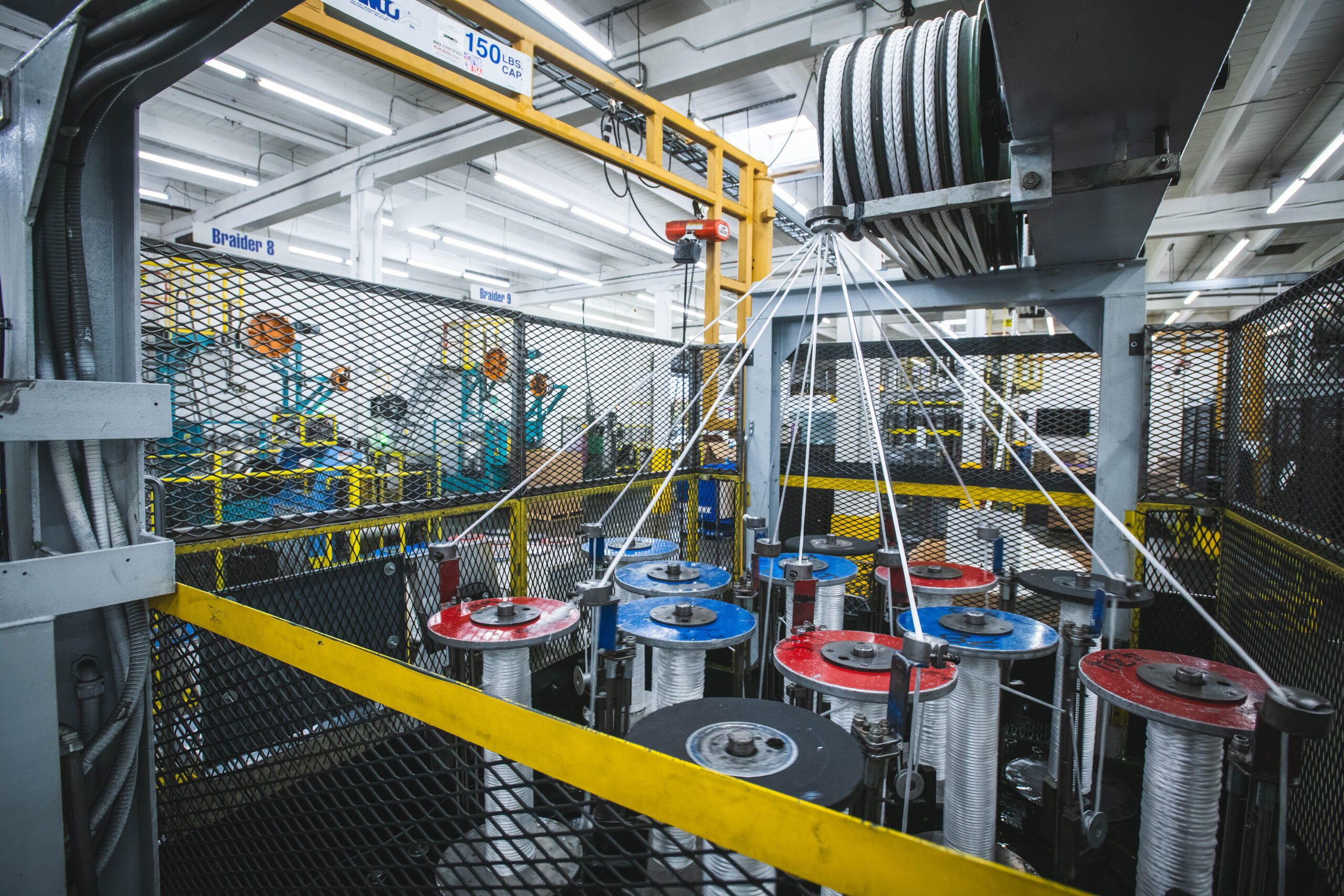
In an unassuming building on the Anacortes waterfront, skilled craftspeople feed spools of incredibly strong synthetic threads into machines that look like a loom built for giants. The machines process the fine synthetic fibers into thick ropes, eventually destined to shepherd the largest ships in the world into port.
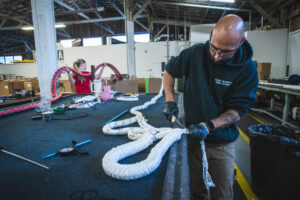
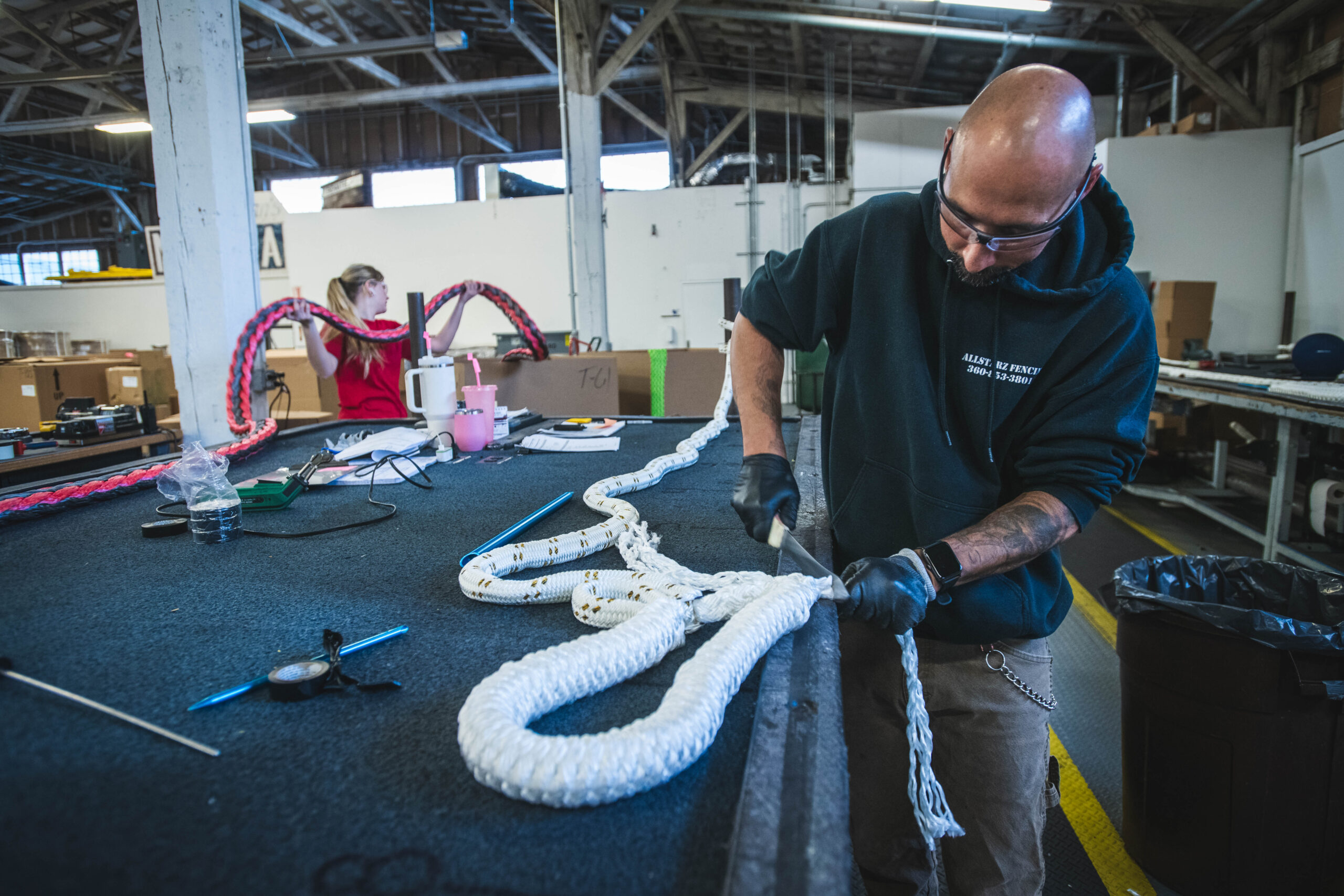
After the rope is completed, the team treats it for durability and secures the ends with splices, knots, and hardware before shipping it out the door. That rope could be headed for a tugboat just down the road, a container ship traveling across the ocean, or as far as outer space. While the ropes made at Cortland International have applications far beyond boats, these strong synthetic lines are especially critical to the maritime industry.
A lifeline to the maritime sector
Ropes made from natural fibers are an ancient technology, but synthetic ropes are a more recent invention. Cortland International grew out of several smaller companies over decades of development, one of which was an Anacortes business called Puget Sound Rope. That 1983 Anacortes business started in response to a surge of Alaskan fishers based in the Puget Sound.. Over the following decades, Puget Sound Rope experimented with their craft, eventually specializing in a new material that was just as strong as steel cable rope, but far lighter.




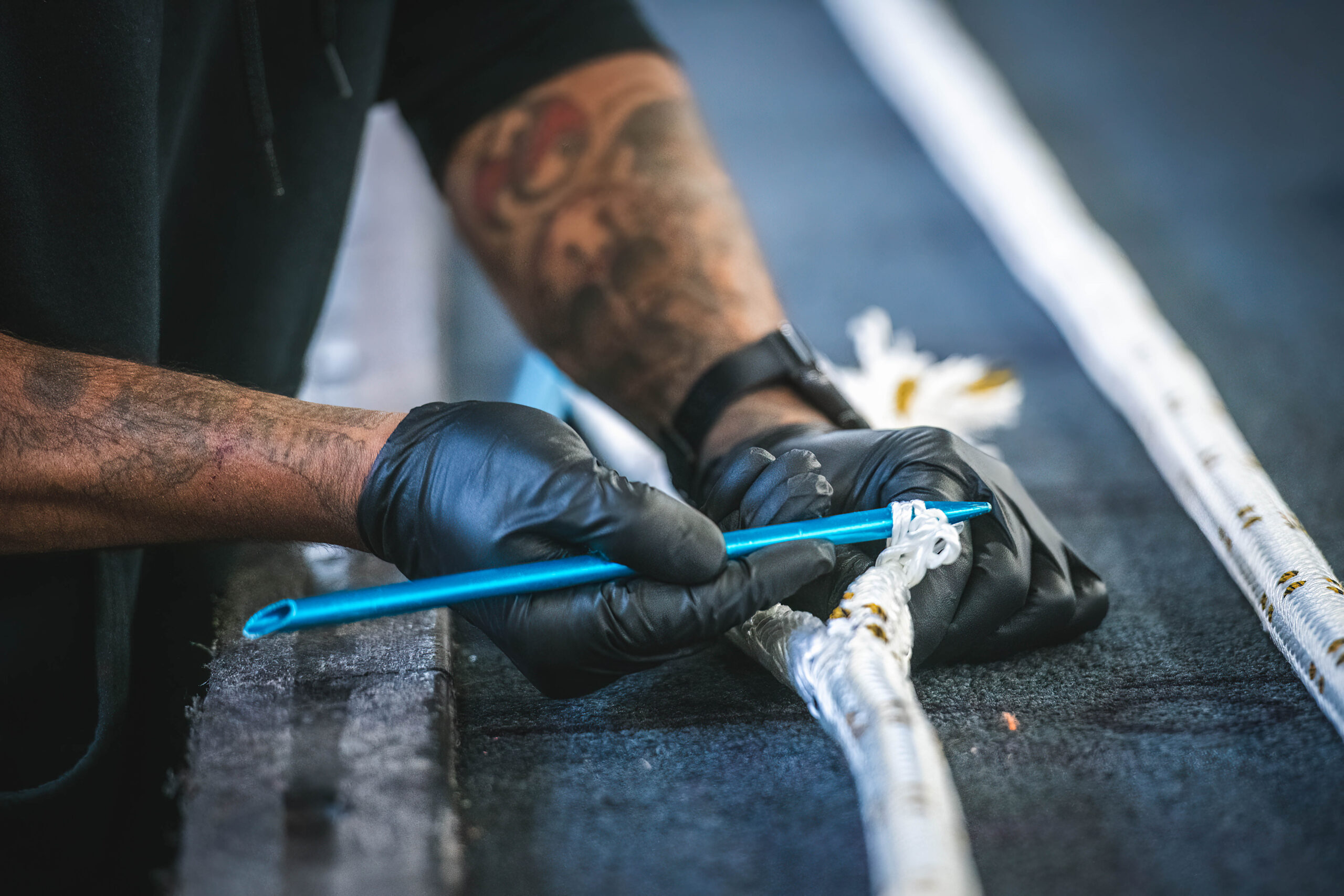
Today, many of Cortland’s products use a plastic material called High Modulus Polyethylene (HMPE), which is similar to nylon, but with extremely high strength, minimal stretch, light weight, and impressive buoyancy. It also resists abrasion, chemicals, and UV damage.
Cortland’s HMPE ropes appeal to many in the maritime industry because of their advantages over steel in terms of weight, strength, safety, and ease of handling. Steel ropes can rust, are inflexible, and can injure handlers with broken strands. Synthetic rope offers greater utility, often with the same or better strength. Cortland International Chief Technical Officer Kris Volpenhein explains that synthetic rope is used for “a whole subset of applications where steel wire really just can’t do it,” he said.
That process of creating a strong and fit-for-purpose rope begins with that hair-thin thread of high performance fiber. The strongest those fibers will ever be is when it’s in they are in their original synthetic fiber form, said Kris. Like how spider thread can be stronger than steel, HMPE can pull with incredible force straight on it, but can be easily broken by bending it sideways, handling incredibly high tensile loads. Once you start to braid and twist the fiber, however, it loses some of that tensile strength but gains performance in other areas, such durability against abrasion, preventing snagging, and improved fatigue. In general, “looser” braids have a higher tensile strength but may need a protective cover; tighter braids are tougher but have trade off tensile strength to achieve that.
“If you look at a rope that’s used in everyday maritime environments, you need to strike a balance between [strength and durability], where you have something that you can grab, it can be abused, it can be dragged along a deck, and that twisting and braiding helps prevent that [rope] immediately deteriorating and falling apart,” said Kris.
Strengthening the ties that bind
Cortland is constantly working to make its ropes and other products safer and more effective for maritime customers. Kris highlighted a recent product, “Aerolock,” used to connect two ropes. The AeroLock replaces a steel shackle on a ship’s mooring line that traditionally could break catastrophically and endanger a ship’s crew. Cortland says its new connector is lighter, safer, and easier to use, and claims a breaking strength about as heavy as a fully loaded passenger airplane.
Because lives are literally on the line, meeting rigorous safety standards is paramount. “Proactive maintenance, managing tension, and all of that equipment is basically a never-ending job,” said Kris. Whether customers come in for an off-the-shelf rope or a custom solution, Kris ensures that Cortland can change their techniques and materials to fulfill the client’s requirements and standards.
Foss Maritime tugboat Captain Katrina Anderson said that she often uses Cortland’s synthetic ropes depending on price and contract. Large HMPE ropes used in the maritime sector can cost $10-35 per foot at a consumer level and can range from 1-inch to 3.5-inches in diameter, said Kris. On a tugboat, ropes are wrapped around a winch at the front of the vessel, and when a ship comes into port, they drop a lightweight line down to the tugboat and use it to lift the heavy tow cable back up, tying the two vessels together. Then, the tugboat can slowly winch the rope tight and pull the container ship into port. Finally, the tow line holds it in place while the container ship’s crew ties it to shore with mooring lines.



Tying together the maritime world
Cortland’s most famous product, “Plasma” rope, is made in Anacortes. It is about 10% stronger and nearly 90% lighter than a steel rope of the same size and can be braided into ropes with diameters up to 8 1/4 inches. In fact, most of the ropes created in Anacortes are larger than one inch in diameter. These thick ropes have few applications for the average consumer but can be very valuable in the maritime sector. After manufacture in Anacortes, a Texas facility completes some products further by adding sleeves and wraps, and by creating slings with uber-high-weight limits. These can then be used to lift entire boats from the water.
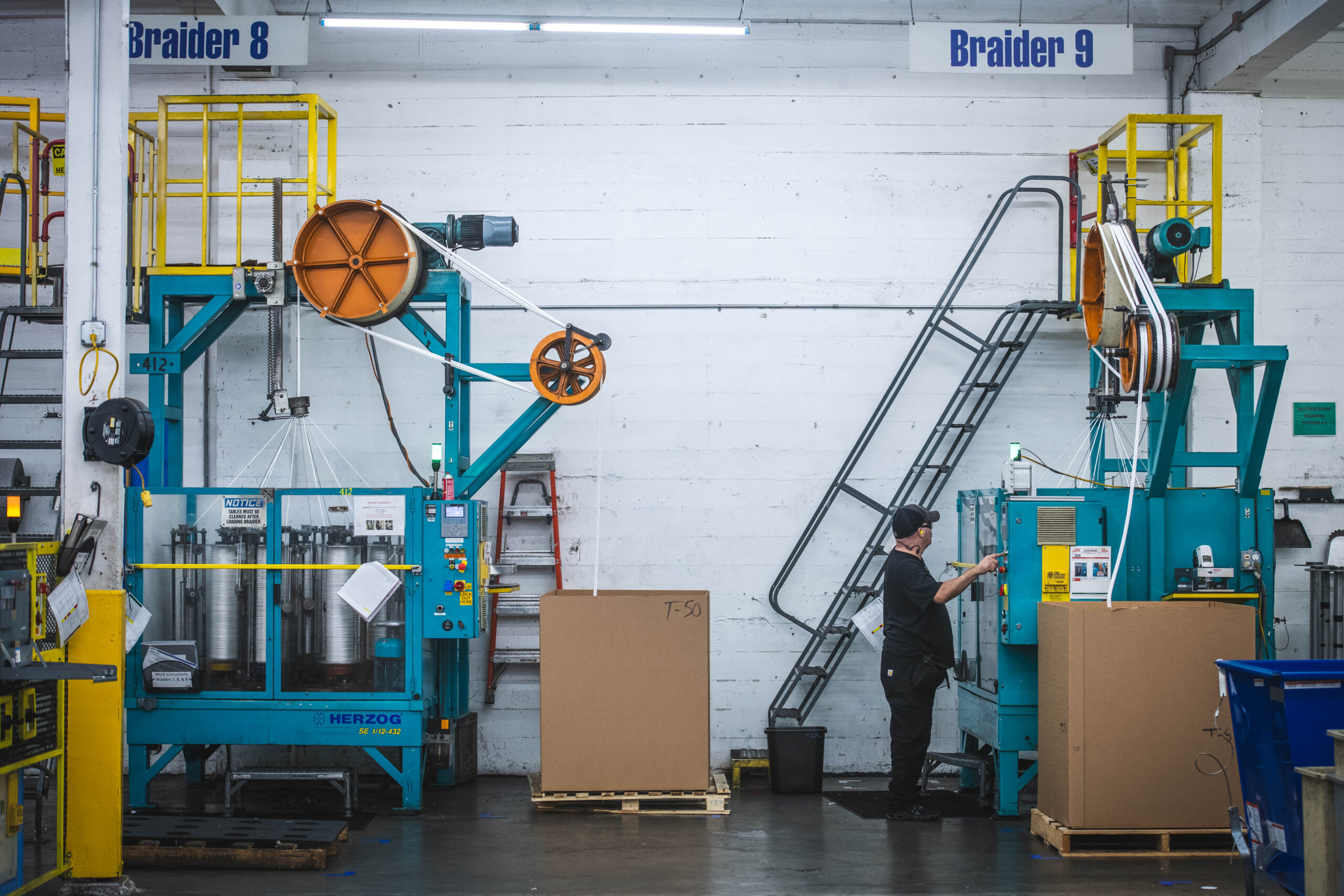
Another set of Cortland-owned facilities in India creates smaller diameter ropes for applications in aquaculture, like net pens that keep farmed fish safe from predators. Bulent Turan, Cortland International Chief Commercial Officer, says that aquaculture and fisheries are their largest market globally. While many of their products are sold overseas, Cortland still boasts a portfolio of loyal troll fishing customers in the Pacific Northwest.
Bulent says that the Cortland legacy business in Anacortes is special because of the long-term team members who work there. Those “industrial professionals,” as Bulent describes them, are “very critical to the success of our business, and without [them], it doesn’t work, because it’s as much an art as it is a science.” He explains that “those journeymen…make the day-to-day quality and performance of our product as great as it is.”
This project was made possible thanks to generous funding from the State of Washington Tourism’s Rural Tourism Marketing and Production Grant Program.