

By Meagan Harden, Maritime Washington National Heritage Area Mellon Humanities Postdoctoral Fellow
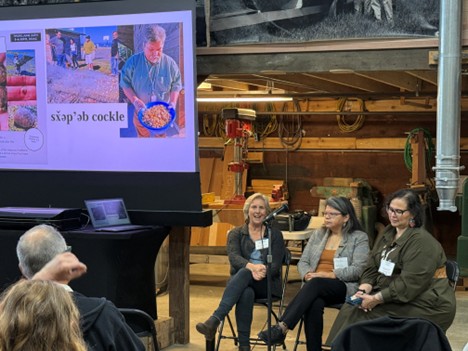
As part of the Maritime Washington National Heritage Area team, I take joy in sharing the sights, sounds, and flavors of Maritime Washington with my out-of-state visitors. Whether we’re boarding the Chelan ferry to San Juan Island or witnessing salmon return to the Ballard Locks fish ladder in autumn, I love showing off our state’s saltwater stories. But my favorite thing to share with guests is the Pacific geoduck, a delicious (and funky!) shellfish that lives burrowed in mud beneath the Salish Sea. A beloved treat in Washington and beyond, most people don’t realize that the geoduck is also a product of Washington’s Indigenous roots: the word “geoduck” itself comes from the Lushootseed word gʷidəq. Each time visitors use the word gʷidəq, they affirm the role that Washington’s Indigenous people play in shaping our maritime heritage.

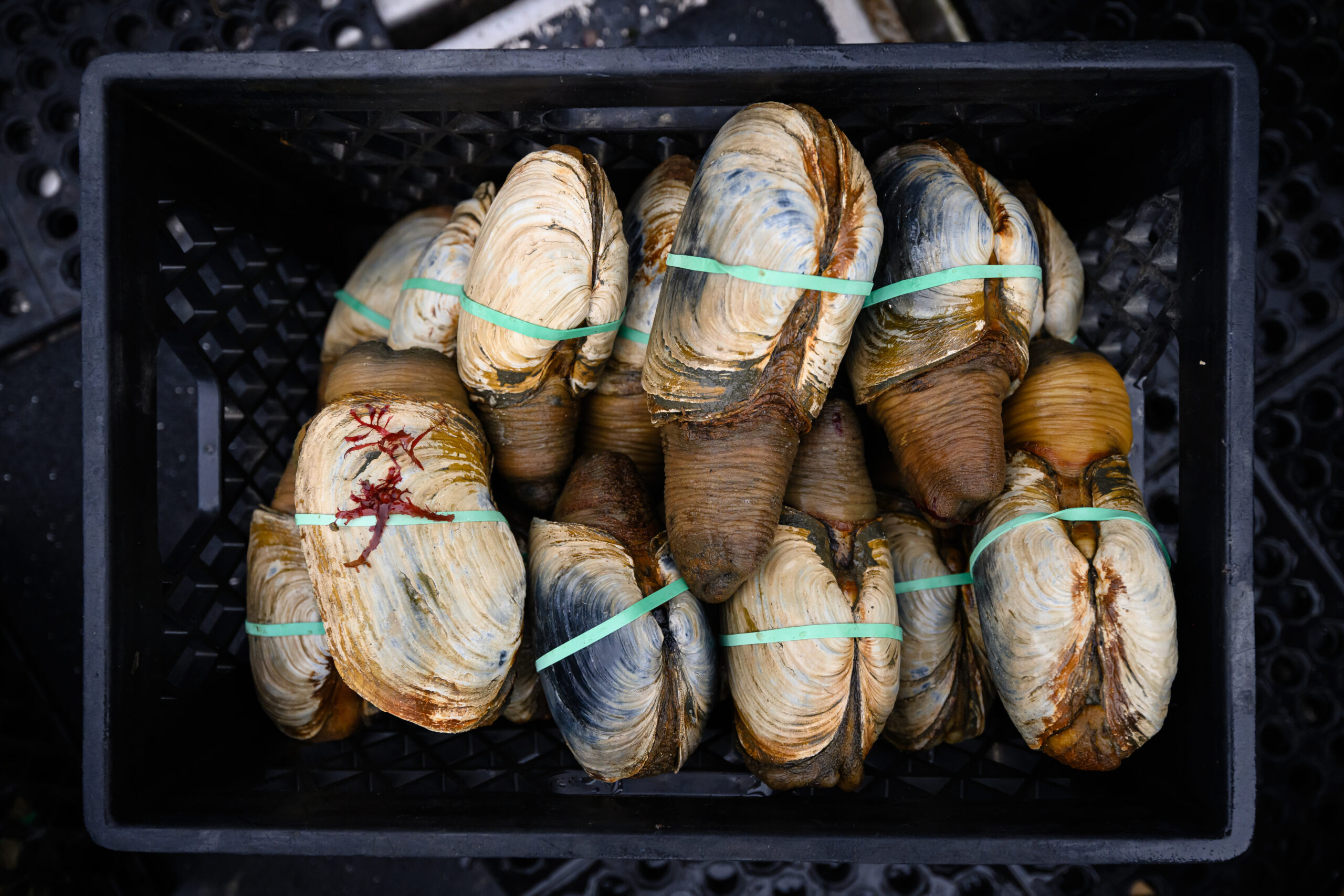
Here at Maritime Washington, we are embarking on a project that will showcase Indigenous connections to the Salish Sea, guided by the power of sea, story, and collaboration. Over the past year, I’ve taken a cue from the gʷidəq, digging deep into the enduring relationships between Tribal nations and Washington’s saltwater shores. The Maritime Washington National Heritage Area spans more than 3,000 miles of coastline, including ancestral homelands and waters belonging to 21 federally recognized Tribal nations. Thanks to generous support from the Mellon Foundation, I’ve joined the Maritime Washington team as a postdoctoral fellow to launch a pilot project in partnership with two of these Tribal nations—the Suquamish and Squaxin Island Tribes—to document, interpret, and amplify Indigenous connections to the Salish Sea.
Expected to launch in summer 2026, the final product will be a Tribal Guide to Maritime Washington: a digital resource that invites Washingtonians to engage with the region’s rich natural and cultural heritage, with Tribal nations’ perspectives front and center. In addition, we’ll work with both of the pilot Tribal nations to identify and create an individual product to further share their stories, such as a video, brochure, or map.
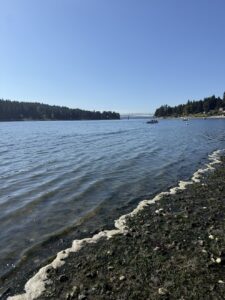
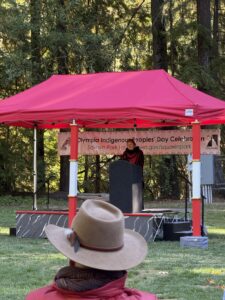
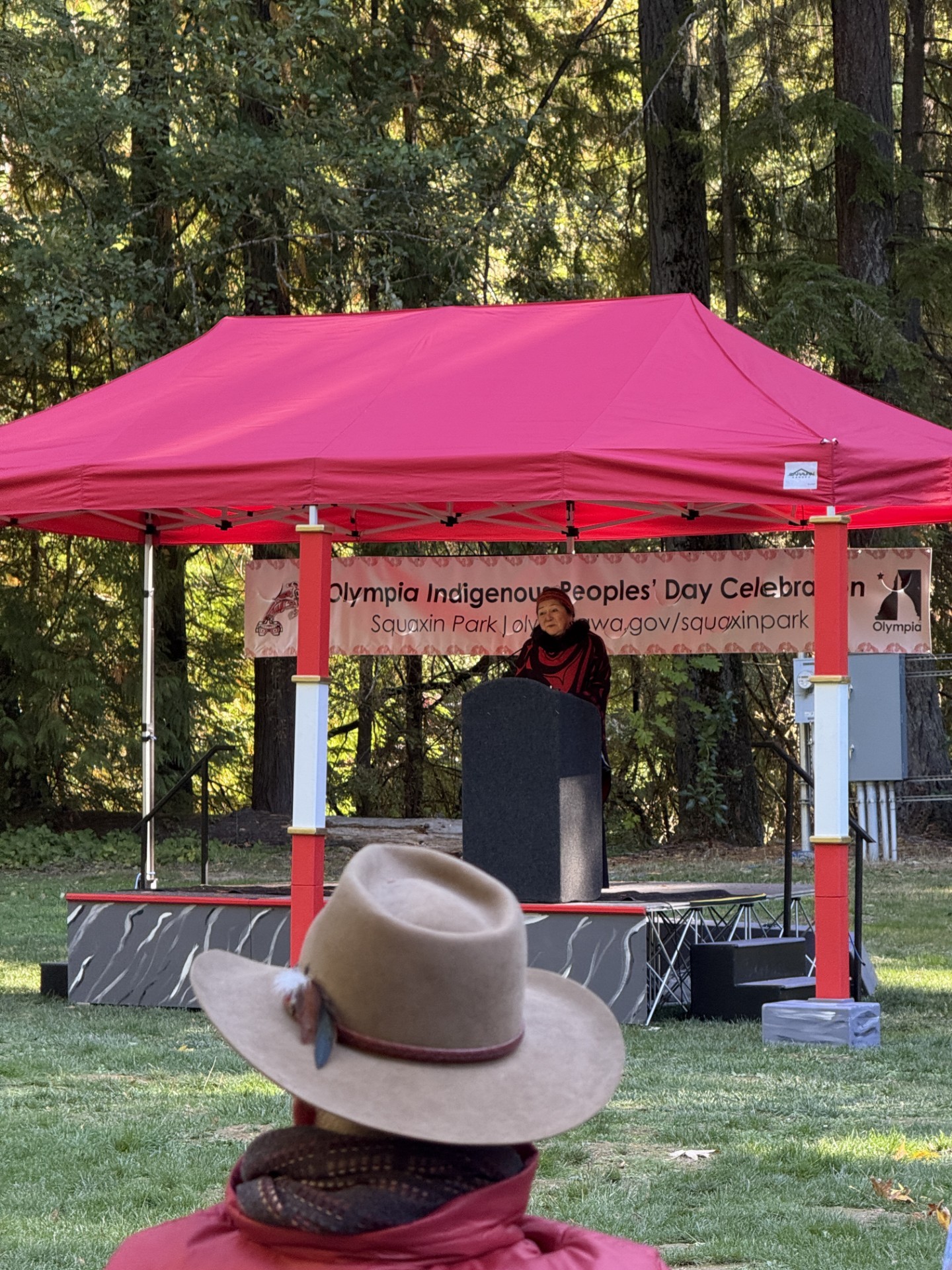
As the project’s coordinator, I’ve had the privilege of learning directly from Suquamish and Squaxin Island Tribal members. I’ve met geoduck divers, fishermen, canoe skippers, and elders who generously share their time, knowledge, and traditions with me. I’ve attended clam digs, honored the legacy of Chief Seattle at the Suquamish Tribe’s Chief Seattle Days celebration, and danced alongside new friends at the Squaxin Island Tribe’s Indigenous Peoples’ Day gathering in Olympia. These experiences, graciously shared by Tribal collaborators, have allowed me to metaphorically (and, when the sun’s out, literally!) dip my toes into the living cultural landscape of the Salish Sea.
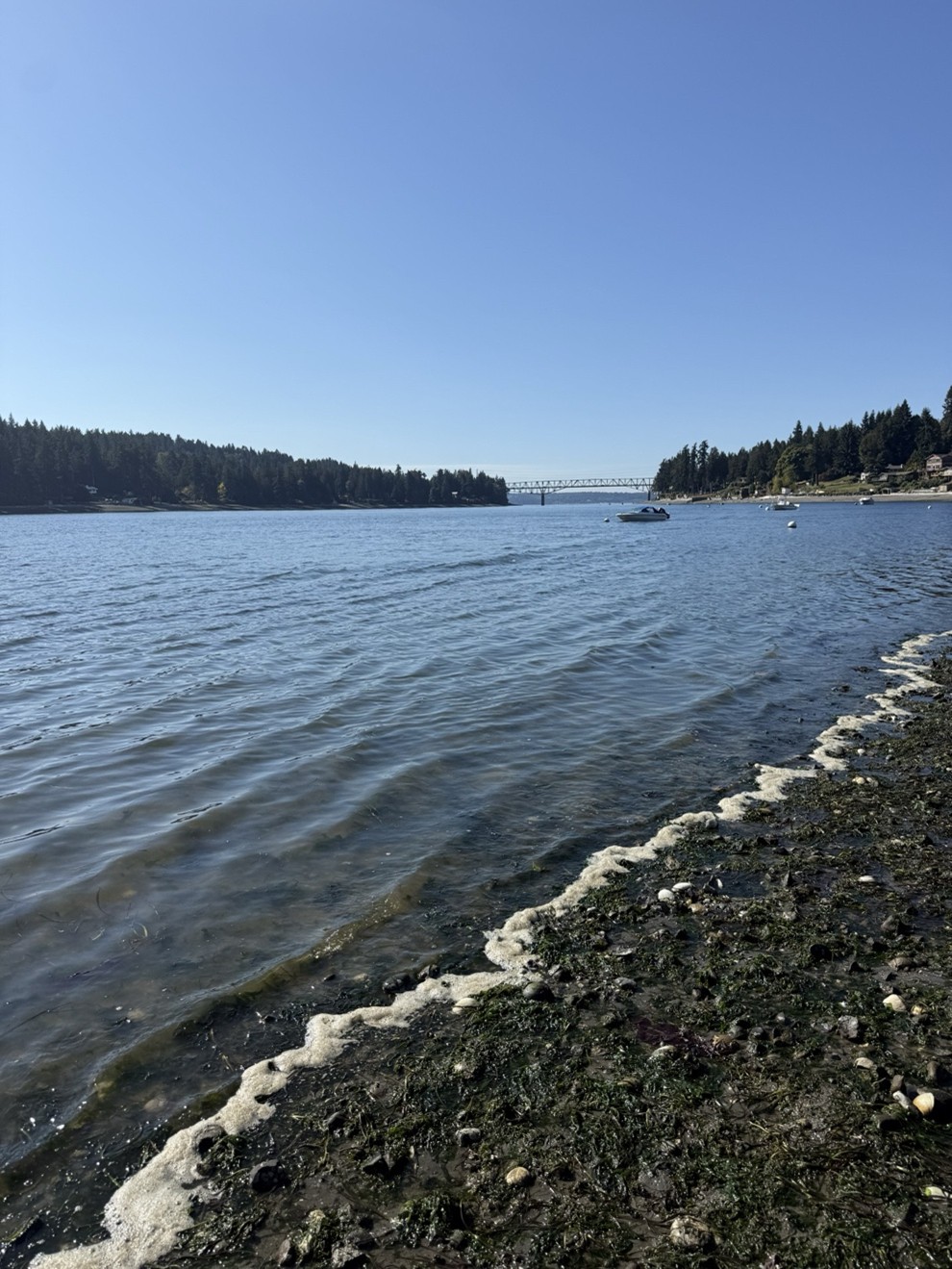
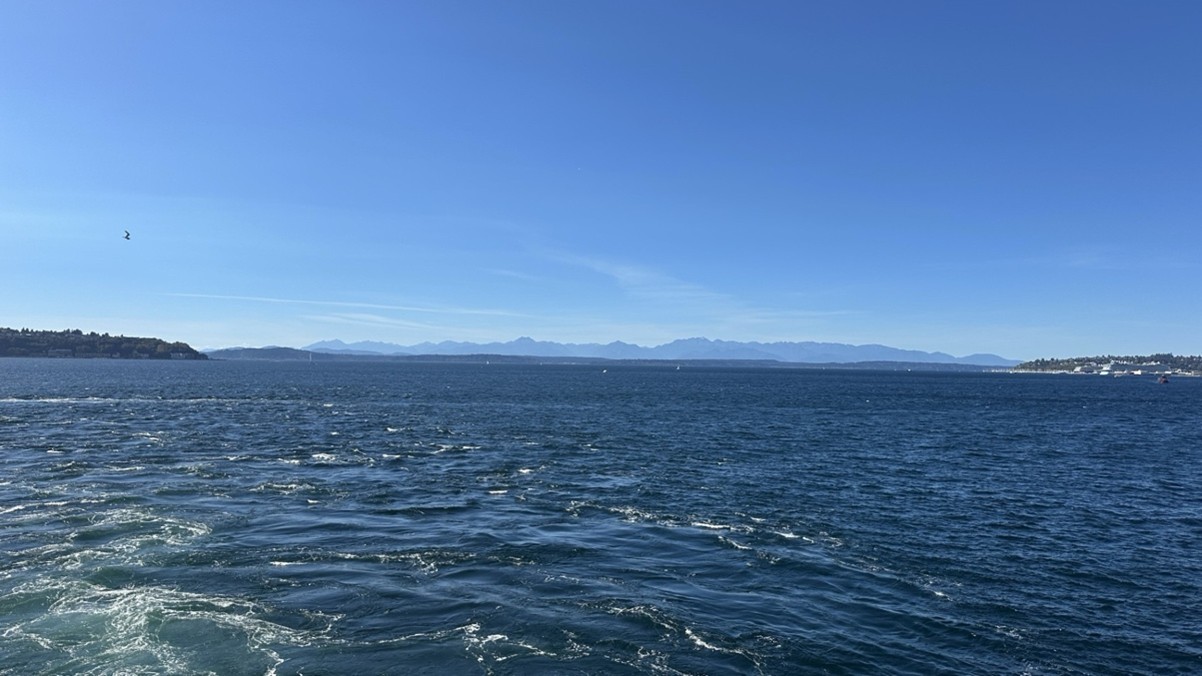
Every visit to Suquamish or Squaxin Island deepens my appreciation for this place: it’s impossible not to be moved by the glitter of sunshine on calm waters or the whisper of salty air through towering cedars. But, as our Tribal partners remind me, the Salish Sea is far more than a beautiful backdrop: it is the center of life for Coast Salish peoples, a relative, provider, and teacher all in one.
Cassy George, the Suquamish Tribe’s Lushootseed Language Program Coordinator, explains, “Generations of our people have been nourished by the ample amount of food that x̌ʷəlč (the Lushootseed word for the body of water we call ‘Puget Sound’) has provided us with. The x̌ʷəlč has been our highway connecting us to other Tribal nations, and the x̌ʷəlč continues to provide for our people today.” For Cassy and others, these waters have provided food, transportation, and lifelong learning since time immemorial.
As Maritime Washington enters the second year of this collaboration with the Suquamish and Squaxin Island Tribes, we continue to follow the gʷidəq’s example by taking time to dig deep. We are listening, learning, and ensuring that our work reflects the richness of Indigenous maritime heritage. “The Suquamish Tribe has been deeply connected to the lands and waters of the Salish Sea for thousands of years,” says Kali Chargualaf, the Suquamish Tribe’s Higher Education Program Manager. “Suquamish’s history, knowledge, and traditions are essential to telling the full maritime story of this region.”

The pilot Tribal Guide to Maritime Washington is just one step in Maritime Washington’s commitment to amplifying Indigenous maritime heritage. We are honored to join the Suquamish and Squaxin Island Tribes in this journey and look forward to sharing the final products of this work with all of you!